
Magaluf: Fire on Punta Ballena — about 50 evacuated and many unanswered questions
Magaluf: Fire on Punta Ballena — about 50 evacuated and many unanswered questions
On Monday afternoon a fire in a shop on Punta Ballena street in Magaluf prompted the evacuation of about 50 people. The Calvià fire brigade extinguished the blaze within an hour. Why such incidents repeatedly occur in tourist centres remains the big question.
Magaluf: Fire on Punta Ballena — about 50 evacuated and many unanswered questions
Emergency call at 16:50, extinguished at 17:50 — what remains besides the smell of smoke?
Key question: Is prevention sufficient on Magaluf's busy entertainment streets, or are we just waiting for the next alarm?
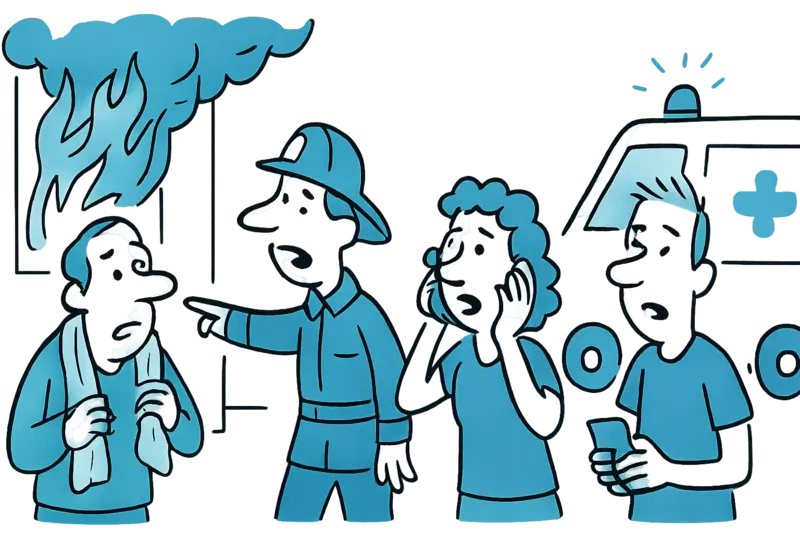
On Monday afternoon a fire broke out in a ground-floor shop on Punta Ballena street in Magaluf. Around 50 people were led to safety from several establishments, several ambulances arrived, and no injuries were reported according to initial information. The professional fire brigade from Calvià extinguished the blaze; the emergency call came in at 16:50, and at 17:50 the crews reported firefighting was finished. How the fire started and the extent of the damage are not yet known, but similar events — such as Fire in a hotel's waste room at Playa de Palmanova: over 300 guests evacuated, all unharmed. — have raised parallel concerns.
The scene is easy to imagine: raindrops on windowpanes, the occasional honk of taxis and the dull thump from opposite bars — and suddenly sirens, excited voices in several languages and the acrid smell that smoke brings. In such moments you see tourists, waiters and residents step out together from venues, some with wet jackets, some with towels over their shoulders, others with phones in hand to inform relatives. It’s an everyday snapshot of Mallorca at its worst: loud streets, cramped business premises and large crowds.
Critical analysis: That the fire brigade was able to extinguish the blaze within an hour is positive and speaks to effective intervention on site. But the operation also exposes structural problems: many businesses in seasonal and party zones operate in cramped spaces, often in older buildings whose technical systems are outdated. Electrical installations, kitchen appliances or improvised wiring are known causes of fires, even if the specific cause in this case is still under investigation. Another issue is the proximity of restaurants, retail spaces and holiday accommodations — the risk of injury increases when escape routes are narrow and poorly signposted. Local decisions about vacant premises are already on the agenda, for example Calvià plans demolition of eleven vacant shops in Magaluf.
What is often missing in public debate is discussion of preventive and administrative measures that go beyond ad-hoc responses. There is much talk about repression, noise and controls, but less about systematic fire safety inspections, obligations for modern electrical installations or financial support for small businesses to retrofit. Also rarely discussed is the responsibility of landlords of commercial properties: who ensures that sockets, fuses and fire doors meet standards? Cases such as Acute Danger in Cala Major: Six Shops Cordoned Off — Who Bears Responsibility? underline that question.
Concrete proposals that could have quick effect: first, regular, not just incident-driven fire safety inspections in tourist hotspots with publication of the results. Second, a clear obligation to install smoke detectors and certified extinguishing equipment in all commercially used rooms, including older buildings — coupled with financial aid for small businesses. Third, mandatory training for staff in hospitality and retail: evacuation drills, use of fire extinguishers and first aid courses, ideally in multiple languages. Fourth, a review of the accessibility of escape routes: sidewalks, outdoor seating and advertising boards must not block escape corridors. Finally, fifth, a seasonal deployment concept: mobile teams for inspections and awareness-raising during months of high footfall — a need highlighted after incidents like Fire in Port d'Alcúdia: Why the big scare is also a wake-up call for fire safety.
Practical measures help too: multilingual orientation signs, fixed assembly points for evacuees, a municipal hotline for neighborhood safety questions and a transparency sheet after each major operation briefly explaining what happened and which steps will follow. That builds trust on site — and avoids rumors that spread quickly at the bar.
What must happen now: The investigation into the causes must not disappear into a file. The responsible authorities in Calvià and the operators of the affected property must clarify quickly whether there were maintenance failures and which measures will follow to limit damage and prevent recurrence. The rapid action of the emergency services was commendable; the focus should now be on drawing real safety consequences from the event.
Punchy conclusion: The fire brigade and emergency services prevented worse at Punta Ballena. That alone is not enough to soothe concerns. If we want to be safer in Magaluf's busy corners in the future, we need more than rapid responses: binding prevention, transparent inspections and practical support for small traders. Otherwise every successful extinguishing will only be the prelude to the next alarm.
Frequently asked questions
When is the best time to visit Mallorca for beaches and outdoor activities?
Is it safe to swim in Mallorca's sea, and what should I watch for on beaches?
What should I pack for a Mallorca trip to cover both beach days and city exploring?
What are the top family-friendly beaches near Alcúdia, Mallorca?
How can I explore Palma's old town and harbor in one day?
Is it easy to get around Mallorca without a car?
What local foods should I try while visiting Mallorca?
What water activities are available in Mallorca beyond swimming?
Similar News
When a Piece of the Sea Disappears: Portixol Pool in Limbo
Portixol in Palma faces a decision: the license for the terrace and pool on public waterfront land expires at the end of...
When the Village Street Became a Flood: What Storm Adam Reveals About Mallorca's Vulnerability
Roaring water turned Carrer de Palma in Consell into a torrent on 19 October; on the coast beachgoers helped prevent a s...
Krümel in a celebratory mood: How Peguera danced at the season closing
With accordion, glitter and an international audience: Marion "Krümel" Pfaff combined her birthday with the season-closi...
After the bathing accident off Formentera: Should the rescue network have acted faster?
The widow of the 64-year-old swimmer levels serious accusations: delayed rescue, no flag on the tower and a 112 that was...
Probation sentence after 575 euros taken from a wallet in Marratxí: Is returning the money a mitigating factor?
A woman took 575 euros from a wallet left at a Marratxí gas station. She confessed, returned the money and received a fo...
More to explore
Discover more interesting content

Can Cap de Bou

Townhouse Lleo 72
