
Fire in hotel at Playa de Palmanova: Evacuation, no injuries — and unanswered questions
Fire in a hotel's waste room at Playa de Palmanova: over 300 guests evacuated, all unharmed. Safety questions remain — especially regarding waste, e‑bikes and fire protection.
Fire in hotel at Playa de Palmanova: Evacuation, no injuries — and unanswered questions
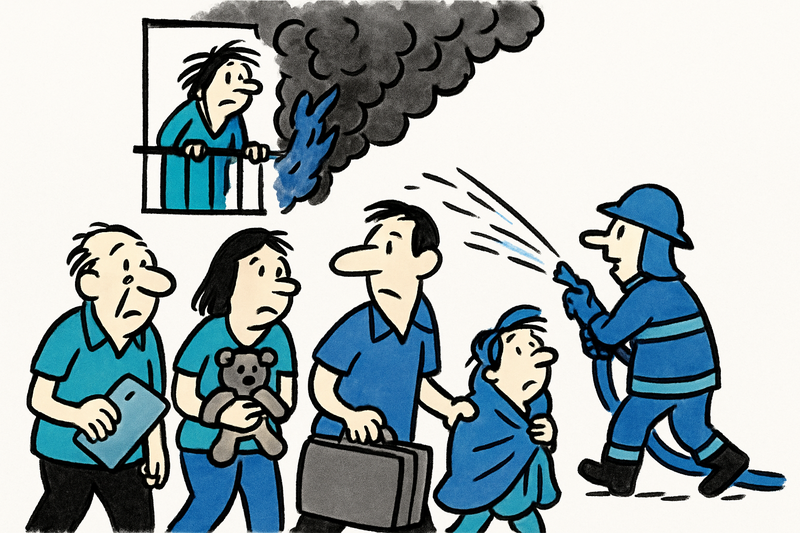
Yesterday around 5 p.m., a fire in the waste room of a larger hotel on the southern edge of Playa de Palmanova turned a quiet afternoon into alarm: thick, black smoke rolled over the courtyard, guests stood on balconies and looked anxiously towards Calle del Mar, as reported in Smoke in the waste room: brief evacuation in Palmanova — what hotels should learn now. Fortunately, after a brief but routine evacuation most people had returned to their rooms after about an hour. There were no injuries.
How did the evacuation go?
Around 300 to 350 holidaymakers — parents with children, older couples, beachgoers in flip‑flops — were moved as a precaution to the parking lot and later into a nearby hotel hall, a movement described in Incendio en el hotel de Palmanova: Más de 300 huéspedes evacuados, nadie herido. The Bombers de Mallorca were quickly on site with several vehicles, supported by the Guardia Civil. Hotel staff distributed blankets, water bottles and provided continuous information. Scenes familiar here: wet towels on benches, children clutching soft toys, and an elderly man looking to see if his passport was still there. Despite the shock, the mood remained calm — less due to luck, more because of training and procedures that apparently worked.
Central question: a one‑off incident or a symptom?
The obvious question is: was this a typical, isolated malfunction — or does the incident point to structural weaknesses in fire safety and waste management at hotel complexes on Mallorca? The fire started in the waste room; what specifically ignited there is still being investigated. But there are points that are often overlooked in public debate: the role of improperly disposed batteries (e‑bikes, scooters), barbecue charcoal after a pool picnic, or technical defects in charging stations. Similar incidents that also required large evacuations have been reported elsewhere, notably Fire in Port d'Alcúdia: Why the big scare is also a wake-up call for fire safety and Fire at Alcúdia Hotel: Evacuation Succeeds — What Lessons Will the Island Learn?.
What is hardly noticed
First: waste rooms are often collection points for very different kinds of refuse — and therefore potential sources of danger. An overheated battery or glowing ash in a bin can produce a lot of smoke within minutes. Second: language barriers and the flood of short‑term guests increase the complexity. Instruction signs in Spanish or English are not always enough; many guests do not know the local rules. Third: the responsibility of the hotelier does not end with room checks — the logistics behind the scenes must also be regularly reviewed.
Concrete lessons and proposed solutions
Practical steps can be derived from the operation. Short term: stricter controls on waste disposal, separate containers for problematic waste, clearly visible notices about chargers and e‑bikes. Medium term: mandatory fire safety checks for waste rooms, regular extinguisher and evacuation drills with staff and external providers, automatic smoke vents and better marking of hazardous areas. Long term: authorities and the industry should discuss binding rules for the storage and disposal of lithium‑ion batteries — a task that goes beyond hotels.
Why this matters
A burning waste room shows how quickly a small flame can turn into a major disruption — mainly because of smoke development. In Mallorca, where many hotels operate in dense buildings with many guests, this can quickly lead to panic and chaos. Well‑organized evacuations, regular training and clearly regulated waste routes minimize risks and protect guests and staff.
For the moment, it's a wait-and-see: the fire department is inspecting the affected rooms and hotel management is cooperating with investigators. Most guests were already talking about the next beach walk — on Mallorca, scares quickly become part of the holiday story. But the experience should not be shrugged off. It is an occasion to review procedures and implement practical prevention so that a happy return does not become a repeat.
Frequently asked questions
What should hotel guests in Mallorca do during a fire evacuation?
How common are hotel fires in Mallorca?
Can a hotel smoke alarm force guests out in Mallorca?
What should you pack for a beach holiday in Mallorca if you want to be prepared for an evacuation?
Is Playa de Palmanova safe after a hotel fire?
Why are hotel waste rooms a fire risk in Mallorca?
What caused the fire in the Palmanova hotel waste room?
What lessons can Mallorca hotels learn from this fire?
Similar News
First Day, First Consequences: What Palma's Rent Freeze Really Means
A new decree stops a planned eviction in Palma — but what really changes for tenants and landlords? A reality check with...
When Housing Becomes a Matter of Survival: Mallorca Between Rental Frenzy and Everyday Life
The case of 87-year-old Maricarmen showed that on Mallorca many people's lives are poised between affordable and uninhab...
Autumn in Mallorca: When Melancholy Gets a Window
Why autumn quietly tightens here — and how to make use of the mood: walks, culture, candles and the light from Palma to ...
Near-miss on Lanzarote: Landing Ryanair Jet and Iberia Takeoff — what really went wrong
On Lanzarote there was a dangerous incident: A Ryanair flight (FR5910) from Dublin landed on runway 03 while an Iberia E...
Eurowings introduces new Premium Business seats on Mallorca routes
From December 1, selected Eurowings flights to Palma and other destinations will feature eight particularly generous sea...
More to explore
Discover more interesting content

Can Cap de Bou

Townhouse Lleo 72
