
Crypto Promises, Ferry, Arrest: How Investors in Mallorca and the Neighboring Islands Fall into the Trap
Crypto Promises, Ferry, Arrest: How Investors in Mallorca and the Neighboring Islands Fall into the Trap
A Swiss man wanted under a German arrest warrant was captured in Ciutadella. The case raises questions about cross-border fraud enforcement, investor education and port checks.
Crypto Promises, Ferry, Arrest: How Investors in Mallorca and the Neighboring Islands Fall into the Trap
A guiding question: Why do high return promises and lax controls help fraudsters operate across borders?
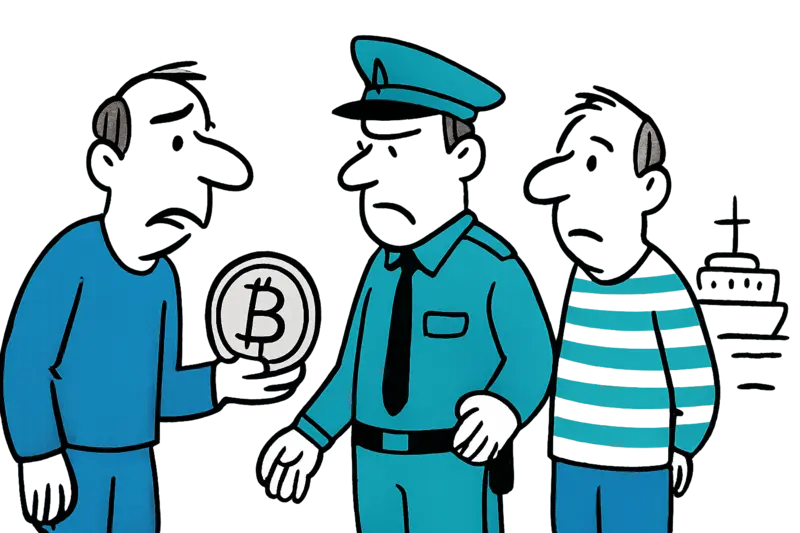
On the quay of Ciutadella, where ferry horns mingle with the squawking of seagulls and the smell of coffee drifts from street stalls, officers from the National Police recently stopped a man who was wanted under a German arrest warrant Arrest in Mallorca after European arrest warrants: How safe is the island as a hideout?. According to authorities, he is suspected of defrauding investors in Germany of around €100,000 with supposedly safe crypto offers. The arrest, made shortly before he was due to cross to Palma, is a clear but incomplete success: he is held in pretrial detention and awaiting further legal steps.
At first glance the case seems simple: promises of guaranteed weekly returns between 0.5 and 3 percent, investors transfer money, and later nothing is returned. But the case shows how complicated the reality is. Such offers exploit three weaknesses: the emotional lure of quick gains, the technical complexity of cryptocurrencies for laypeople, and the obstacle that cross-border procedures pose for criminal investigations.
From a forensic point of view the main points are straightforward: platforms that guarantee fixed profits in a short time are a red flag. At the same time, the use of digital currencies makes tracking funds harder—unless blockchain-analysis specialists are involved early. Agencies like the National Police can arrest suspects, as covered in Balearic Islands Under Attack by Crypto Scammers: A Reality Check for the Island, but money flows, hosting servers, payment providers and users' entry and exit addresses often span several countries. That prolongs investigations and makes victim assistance difficult.
In public debate three things are usually missing: first, concrete tips for potential investors on how to spot dubious offers. Second, a clear presentation of what help victims can actually get on the islands. Third, a discussion about how controls at transport hubs should work without disrupting normal travel. In Mallorca or Menorca warnings are heard, but practical advice is rare.
An everyday scene: on the Passeig in Palma retirees sit with newspapers, restaurant owners discuss upcoming reservations, and in the background a bike courier rings his bell, a scene echoed in Palma: How a crypto scheme nearly swallowed €68,000 — and why victims became helpers. These people are not the main target of highly specialized financial fraudsters, but they are the ones who respond to catchy promises. On Menorca, at the harbor, you can see exactly the mix of tourists and locals hurrying to catch a ferry—hardly a controlled financial checkpoint.
So what can be done concretely? A few practical proposals, without anonymous demands:
1. Local prevention: Authorities and municipal offices should provide simple leaflets—in German, Spanish and English—with clear warning signs (guaranteed returns, pressure to deposit quickly, opaque operators). Hotels, tourist offices, bank branches and ferry terminals could display these.
2. Faster access to expertise: In suspected cases investigators must be given earlier access to blockchain-analysis tools. Cooperation with specialized labs or private providers that can trace transactions would accelerate investigations.
3. Better cross-border communication: German, Swiss and Spanish authorities should develop reporting chains that pass on not only arrest warrants but also information about platforms, payment providers and hosting. Police at ports and airports can perform checks, as in Drug discovery on a ferry from Barcelona: Three arrests in Palma and the questions that remain, but they rely on concrete leads.
4. Victim support: On the islands victims need low-threshold contact points—a phone number or an online form that explains next steps in several languages (filing a report, contacting banks, legal advice).
These measures may sound bureaucratic, but they reduce attack surfaces. The recent arrest shows that detentions are possible—the question is how many perpetrators still use such routes and how many investors have already become victims without reporting it.
A pointed conclusion: the arrest in Ciutadella is not proof that the problem is solved. It is rather a reminder: we live in a time when financial fraudsters operate via digital products and cross-border routes. Anyone talking about investments in cafés on the Passeig should know the basic rules: distrust guarantees, buy time, have things checked. Authorities do their job, but the strongest defense remains an informed community—and a harbor where not only ferries but also warnings arrive.
Frequently asked questions
When is the best time to visit Mallorca for beaches and outdoor activities?
What should I pack for a trip to Mallorca?
Is it safe to swim in Mallorca’s seas?
What’s Mallorca weather like through the year?
What can I see in Palma’s old town and La Seu cathedral?
Is a day trip to Sóller and Port de Sóller worth it?
What makes Alcúdia a good destination on Mallorca?
Is Cala d’Or a good base for exploring east Mallorca?
Similar News
Cala en Brut: Body in the Sea — a Fatal Autumn Day and What’s Missing
In Cala en Brut (Ciutadella) a man's body was recovered during storm Dana "Adam". Why do autumn storms in the Balearics ...

When the road is gone: Port de Valldemossa cut off after storm 'Adam'
After heavy rains a retaining wall gave way and two sections of mountain road MA-1131 became impassable. Why are rural p...
Santa Catalina loses a piece of everyday life: Why Xoriguer must now close — and what it means for Palma
The Xoriguer on Calle Fábrica, a venue with Basque roots and almost half a century of tables and stories, stands empty b...
Body in Cala en Brut: What the disaster with Storm "Dana/Adam" teaches us about emergency preparedness
A man was recovered from Menorca's coast after the storm. The details raise questions about warning systems, beach patro...
More than €450,000 watch seized: What remains from the raid against gangs?
The National Police report 34 arrests and the seizure of a watch worth more than €450,000. A reality check: what do the ...
More to explore
Discover more interesting content

Can Cap de Bou

Townhouse Lleo 72
