
Stormy night in the island's interior: What's missing when rain becomes a problem?
A summer thunderstorm rendered Selva, Inca and Felanitx unable to act for hours. Beyond dramatic rescue operations, the night above all shows one thing: there is a lack of preventive infrastructure and clear rules for construction and everyday life.
Stormy night paralysed the island's interior — and revealed gaps that hurt not only when it rains
Around 11:30 p.m. the spectacle began: distant rumbling, then the drumming of rain on corrugated roofs, the slap of drops against windows. In one and a half to two hours so much water fell that many drainage systems were simply overwhelmed. For the residents of Selva, Inca and Felanitx this was not an ordinary summer thunderstorm but an event that still shaped the next morning, as detailed in After the Thunderstorm: Flooded Streets, Mudslides and the Big Question About Mallorca's Preparedness.
The immediate consequences — more than just wet streets
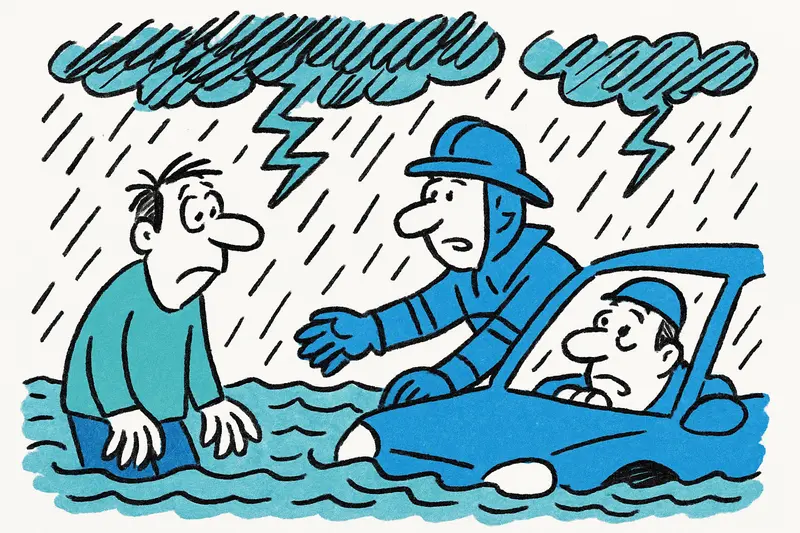
In Selva the narrow Carrer Major in places turned into a rushing stream; residents reported torrents of water jumping over curbs. In Inca washed-up clods of earth blocked access roads and some households were briefly isolated. In Felanitx the situation was most dramatic: a car became stuck in a pool of water and the fire brigade had to free the occupants. Fortunately there were no serious injuries — but the images show how quickly visible puddles can become life-threatening, as illustrated in Una fuerte tormenta eléctrica sorprendió la zona central de la isla: calles inundadas en Selva e Inca.
19 operations — and the question of what that really says
By morning the Balearic government had counted 19 operations due to floods and minor landslides. Fire brigades, Civil Protection, local fire departments and the Guardia Civil worked hand in hand. A firefighter on site summed it up: “We had to be quick so that no one was trapped in basements or underground garages.” The cooperation worked — but the number of deployments is only the tip of the iceberg. The central question is: What is missing when rain becomes a problem?
Aspects often overlooked in the public debate
The headlines focus on closed roads, delayed flights or wet luggage carousels at Palma airport, as shown in Morning storm over Palma and Calvià: What the short storm shock revealed. Less visible are structural causes: clogged and aging sewer and drainage networks, a lack of retention areas in town centres, private cellars located in low spots, and the tight topography of the island's interior with ravines and narrow valleys where water accumulates suddenly. There is also an everyday factor: sealed surfaces around new buildings send rain from roofs directly into the streets instead of allowing it to infiltrate naturally.
Why short-term help alone is not enough
The rapid work of the emergency services prevents worse outcomes — but recurring nights like this show: without preventive measures such deployments remain costly and risky. Temporary sandbag lines and neighbourly help save individual cases, but they do not solve the problems of many municipalities whose drainage systems have been operated for decades without systematic renewal.
Concrete measures that would make sense now
Instead of only documenting the number of deployments, authorities and municipalities need to develop a long-term strategy. In the short term and concretely I propose:
- Regular cleaning and inspection of drainage networks, especially before the rainy season, so that leaves and sediments do not block the outflow.
- Retention basins and temporary floodplains at critical points that can absorb water during heavy rain instead of pushing it into town centres.
- Sensitive zoning and development planning that avoid placing access roads and cellars in low-lying areas, as well as binding rules on sealed surfaces and mandatory retention measures for new builds.
- Local supply pools with sandbags, motorised pumps and a clear distribution system — organised by municipalities, not only through informal neighbourly help.
- Early warning systems and information campaigns that not only send warning SMS messages but provide concrete behavioural advice: where not to park vehicles, how to secure basements, which routes to avoid.
What everyone can do right away
Practical steps help immediately: test basement pumps, prepare emergency kits, avoid parking vehicles in known low spots and stay clear of access routes to ravines during storm warnings. Connected neighbourhoods can often help in the first minutes before professional forces arrive — a simple phone tree or a WhatsApp group is often enough.
Looking ahead — opportunities instead of just alarm
Authorities urge caution: locally there may still be showers, and emergency services ask people to avoid flooded roads. The stormy night is a reminder of how vulnerable the island is to sudden heavy rainfall. But the picture need not remain bleak: with targeted investments in drainage networks, more retention areas and smarter building policies, future emergency deployments can be reduced, a concern also raised after a compact storm in the southwest in Night Storm Hits Andratx and Calvià – Are We Really Prepared?.
After the last drop the scent of wet lemon trees and softened earth lingered in the streets. It is one of those Mallorcan mornings that make you love the island — and at the same time reveal where it is vulnerable. I will continue to speak with emergency personnel and municipalities and watch to see whether this night produces lessons that last longer than the rain itself.
Frequently asked questions
Why do some parts of Mallorca flood so quickly during heavy rain?
What should you do in Mallorca when a storm warning is issued?
Is it safe to drive through flooded roads in Mallorca?
What can residents in Mallorca do before a heavy rainstorm?
What happened in Selva during the storm in Mallorca?
Why were parts of Inca temporarily cut off after the rain?
What do Mallorca’s emergency services usually do during flash floods?
What long-term flood protection would help Mallorca most?
Similar News
Who Bears the Burden? Mallorca Between Tenant Protection and Landlord Fears
Madrid's new housing decrees strengthen tenant rights — but on Mallorca concern is growing: will the law drive small lan...
On the Edge: What Mallorca's Airport Loses If a Major Low-Cost Carrier Falters
The company that operates numerous connections from Palma to France and domestically is negotiating with creditors to re...
Ballermann star Frenzy wins 'Villa of Temptation' and donates prize money to Mallorca animal rescue
Ballermann singer Frenzy won the German reality show and donated the remaining prize money — around €14,080 — to an anim...
70 Trees Removed on Avenida Jaume I: What's Happening in Santa Ponça?
On October 1 the final redevelopment phase on Avenida Jaume I in Santa Ponça begins: 70 trees and old streetlights are t...

When a Boundary Is Crossed: The Case of Isi Glück and the Responsibility of Venue Operators
The singer from Mallorca reports an assault backstage in Halle. A clear guiding question, analysis of missing protective...
More to explore
Discover more interesting content

Can Cap de Bou

Townhouse Lleo 72
