
Morning storm over Palma and Calvià: What the short storm shock revealed
A short, intense morning storm exposed gaps in the everyday resilience of Palma and Calvià: flooded streets, fallen trees and delays at the airport — time for a concrete infrastructure check.
Storm in the morning: Short, intense — and a wake-up call
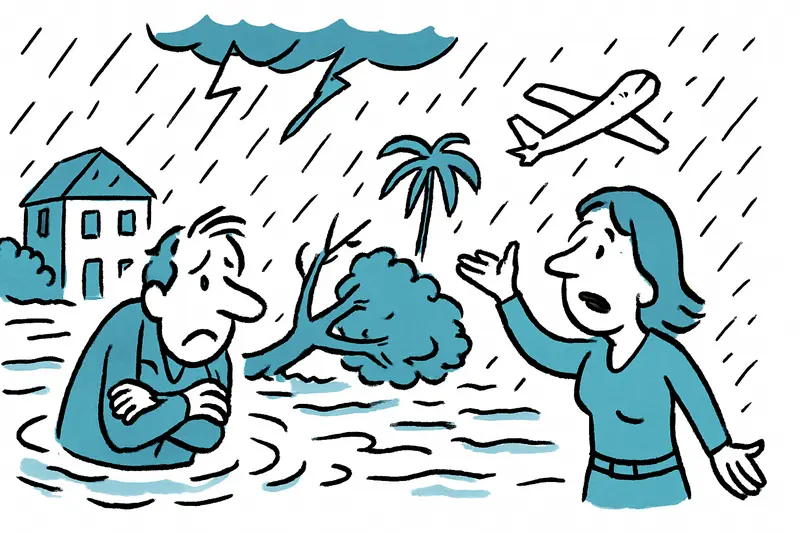
Around 7:30 a compact Sudden Storm in Palma snapped Palma and Calvià out of their half-sleep. In a few minutes rain turned to hail, side streets became little streams, and awnings fluttered like nervous flags. On the Vía de Cintura lanes were standing under water, a palm tree crashed down on the Plaça — a dull thud, the hissing of rain on wet stone and immediately the feeling: this was not a normal shower.
The key question: How resilient is our infrastructure?
The short answer: for everyday life it was enough in many places, but not everywhere. The brief but intense downpour revealed a central question: how well is Palma really prepared for such heavy rainfall — and how quickly can municipalities like Calvià respond to local crises? (see Night Storm Hits Andratx and Calvià – Are We Really Prepared?).
The event made clear where the weak points are: toppled trees blocked access roads, mud and leaves turned intersections into slippery slides, and in some building entrances water collected so quickly that neighbors spontaneously helped with pumps. For affected families these are not small matters but tangible damage to belongings, as illustrated in After the Thunderstorm: Flooded Streets, Mudslides and the Big Question About Mallorca's Preparedness.
Firefighters and municipal teams were quickly on the scene: tree trunks were removed, manhole covers dug out, cars towed. Still, long traffic jams formed as drivers cautiously navigated around flooded spots. Commuters, parents with children, and people who rely on public transport felt the impact immediately.
Son Sant Joan airport under pressure
Son Sant Joan was not spared either. Delays piled up, departures were postponed, and travelers stood with wet shoes in queues at check-in. Authorities' advice to check Son Sant Joan airport information early is sensible — but it does not replace the challenges when ground staff, baggage handling or access roads are affected by the weather.
What is often missing in reporting
In the rush three aspects often fall through the cracks: first, the situation of people in basements and underground garages — especially older residential communities or tenants without private reserves are at risk. Second, public transport: canceled bus lines quickly reveal how thin the backup network is. Third, the condition of older streets and their drainage systems — many problem spots developed historically, but the consequences are acute today (see Orange storm cripples Palma: parks closed, markets cancelled – Is the city well prepared?).
You could hear the rush of traffic, the clatter of wet leaves against street lamps and distant sirens. The smell of wet earth mixed with exhaust — typical for Palma on such a morning, and yet a warning sign.
Concrete improvement measures
What can be done in the short term? Better information chains help: targeted SMS and app alerts for residents, commuters and airport guests can speed up evacuations and detours (consult the national weather agency AEMET for warnings). Bus companies should have easily accessible emergency timetables so passengers can identify alternatives. At the airport there need to be plans for when ground staff arrive late — for example additional shifts or flexible redistribution of tasks.
In the medium term technical investments are necessary: upgrading drainage networks at known problem spots, permeable surfaces on heavily affected access roads and regular tree inspections along main arteries. Such measures cost money but pay off through fewer damages and a faster return to normalcy.
Urban planning and neighborhood structures should be thought of together. Local assembly points equipped with pumps, blankets and lists of affected addresses can provide quick help. In many neighborhoods this morning exactly that worked: neighbors pumped out cellars, shared tools and organized transports. That is not a substitute for professional help, but a valuable element in a place's resilience.
What citizens should do now
For anyone still on the road: drive slowly, keep your distance and expect delays. Make room for emergency vehicles — photographing the scenes is less helpful right now than keeping the way clear. Check your flight status early if you need to get to the airport. And report damage immediately to the responsible authorities: precise information helps emergency teams set priorities.
Small, practical tip: collect contact details of neighbors and prepare a small emergency kit: torch, batteries, rubber boots, a shovel and numbers for municipal services. Such items save time when things need to move fast.
The short morning storm was a reminder: small, intense weather events are becoming more frequent. Mallorca must become more resilient not only as a tourist destination but also in terms of infrastructure. That does not mean spreading panic — but investing, planning and including the people on site. Then the next raindrops may only sound like breakfast noise and no longer like a stress test for the city.
Frequently asked questions
What happens in Palma during a short but intense morning storm?
Are streets in Mallorca safe to drive on after heavy rain?
What should travelers do if a storm affects Son Sant Joan airport?
Why do some parts of Palma flood so quickly after rain?
What kind of storm damage should residents in Calvià watch for?
What should people do if their basement or garage floods in Mallorca?
When is the weather in Mallorca most likely to cause sudden storms?
What should households in Mallorca keep ready for a storm?
Similar News
By Boat Instead of the Road: Palma's Water Bus — a Reality Check
The 'Bus Nàutic' launches in two stages — but questions remain over interim operations, fares and environmental requirem...
Several Days of Rain Approaching: How Well Is Mallorca Prepared?
Aemet says: rain from Thursday until at least Tuesday, especially heavy on Monday. Temperatures remain mild. A reality c...
Nervous Reaction at a Traffic Stop: Why Campos Is Not Just a Sniffer-Dog Problem
At a traffic stop in Campos a 37-year-old German was arrested with a bag full of drugs. Our reality check explains why s...
Cameras Against Illegal Dumping: Porto Cristo Monitors Problem Areas – a Reality Check
Manacor has installed four surveillance cameras at particularly problematic waste spots in Porto Cristo. A local check a...
Reality check: Palma's "white" torrent — harmless salt or neglected warning sign?
White crusts on the Torrent de Sa Riera are causing a stir. Emaya describes them as salt deposits. Our reality check: wh...
More to explore
Discover more interesting content

Can Cap de Bou

Townhouse Lleo 72
