
Manacor: Chain, Coercion and House Handover – How Long Did This Remain Hidden?
A domestic violence case in Manacor involving chains, coerced property transfers and an alleged ankle monitor has caused unrest. How could this remain undiscovered for so long?
Manacor: Chain, Coercion and House Handover – How Long Did This Remain Hidden?
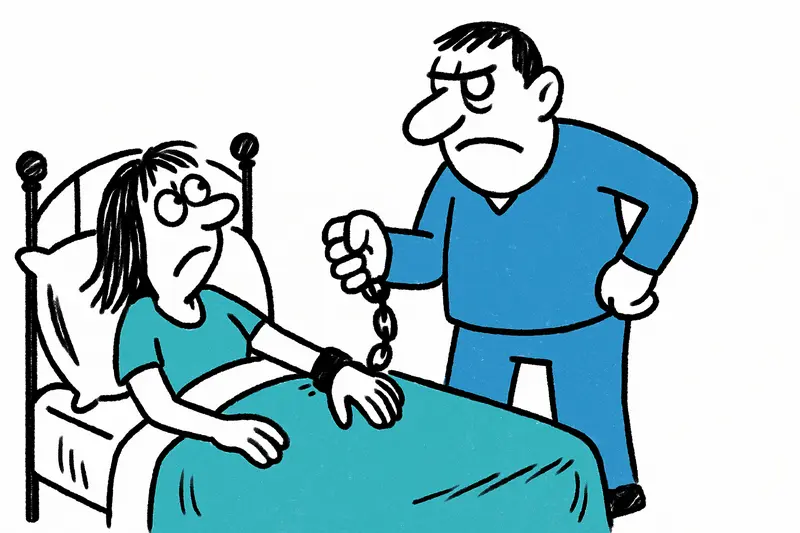
The Calle de la Vila looks the same in the morning: a delivery van honks, an espresso cup clinks somewhere, an elderly neighbor wipes the doorstep. Yet behind one door something apparently happened that the small town cannot simply shrug off. A man was arrested, urgently suspected of abusing and coercing his partner, as reported in Manacor arrest accused of chaining his partner and forcing transfer of house and car. The reports are stark: the woman is said to have been chained to a bed, her freedom of movement severely restricted, and house and car possibly handed over against her will.
Key Question
How can this happen over an extended period in a small place like Manacor without help intervening earlier? This question runs like a red thread through conversations with neighbors, relatives and professionals. It is not an accusation against individuals, but an indication of structural failures — in police work, in social networks and in the way we deal with conflicts in small communities.
What Makes the Facts More Difficult
Investigations speak of systematic psychological and physical violence: bans, isolation, forced signatures before a notary to transfer house and vehicle. The combination of physical control and economic violence is dramatic — someone who no longer owns property becomes existentially vulnerable. Also striking is the mention of an electronic ankle monitor on the accused and a court-ordered restraining order that was apparently ignored.
The arrest during a traffic stop and the court’s decision to order pretrial detention send a clear signal. Still, the question remains: why did the existing order not lead to effective protection for the victim earlier?
Why Did It Go Undetected for So Long?
Several factors came together here. First: dependency and intimidation. When a person is intimidated, they remain silent — out of fear of escalation, shame, or concern for children or relatives. Second: economic pressure. The transfer of property is an instrument of control often carried out behind closed doors and wrapped in notarial formalities. Similar economic coercion was reported when a landlord in Manacor was arrested for cutting off tenants' electricity and water and threatening them, described in Manacor landlord arrested for cutting off tenants' electricity and water and threatening them. Third: neighborhood blindness. Voices in the stairwell, noises at night — many hear them, few intervene. In small towns like Manacor there is a tendency not to take conflicts public; however, that does not protect the most vulnerable.
Aspects That Receive Too Little Attention
Those who only look at bruises overlook the power of economic violence. A property transfer carried out under pressure is a form of abuse with long-term consequences. Equally problematic are technical and organizational gaps in enforcement: an ankle monitor alone is not protection if violations are not immediately sanctioned or if monitoring agencies are not connected. Other local reports document threats and utility shutoffs that left tenants unprotected, as in Manacor case of threats and utility shutoffs that left tenants unprotected. And finally, there is often a lack of cultural willingness to see outsiders’ help as a legitimate intervention — “it’s a private matter,” people say.
Concrete Solutions for Manacor
A patchwork of individual solutions is not enough. We need coordinated, locally anchored measures: rapid checks and alarm protocols for violations of ankle monitors, linked to mobile response teams from police and social services; prioritized court procedures to secure property and, where possible, to reverse coerced transfers; immediate, uncomplicated emergency financial aid for those affected so they do not remain dependent.
At the municipal level, confidential reporting channels can help: pharmacies, small supermarkets and bakeries whose staff are trained should be able to recognize and pass on discreet signals. Schools and neighborhood centers must invest in education — not moralizing, but practical: How do I recognize violence? How do I help safely? Where can I get legal advice nearby?
Where the Opportunities Lie
Manacor now has the opportunity to become visible — and to set an example. An open inventory of the gaps, better networking between the judiciary, police and aid organizations on the island and visible protection offers could strengthen local ties. That family support in this case ultimately paved the way to the police shows how important personal networks are. But we must not rely on chance alone.
For the victim, the most important thing is to find protection, accept support and seek legal assistance. For the rest of us: look instead of look away. Not as voyeurism, but as a communal duty. In acute cases the emergency number remains 112. Otherwise: local counseling centers and the willingness to do more than listen when a faint call for help is heard.
If you or someone around you is affected: seek help. There are routes, even in a small town like Manacor.
Frequently asked questions
What should I do in Mallorca if I suspect someone is being abused or controlled at home?
Can domestic abuse stay hidden for a long time in a small town like Manacor?
What is economic coercion in a Mallorca abuse case?
Does an ankle monitor protect someone from a restraining order violation in Mallorca?
What can neighbors in Manacor do if they hear signs of violence next door?
How can someone in Mallorca be forced to transfer a house or car?
Why is domestic abuse harder to detect when it involves financial control in Mallorca?
What help is available in Mallorca if someone needs to leave an abusive home?
Similar News
The End of the Cheap Ride? Why Mallorca Is Hit Harder by the Fuel-Price Shock
Gasoline and diesel average close to two euros per liter. What this means for commuters, supply chains and renters in Ma...
Relaxed liquid rules in Munich: What Mallorca travelers will notice
At Munich Airport the 100-milliliter rule will be lifted at all checkpoint lanes — thanks to new CT scanners passengers ...
For 45 Years on Mallorca — and Then This: How a Market Visit in Santa Ponsa Became a Lesson
A woman who has lived on the island for decades lost money and important documents at the Mercat Setmanal in Santa Ponsa...
10 percent surcharge on the beach: How legal and transparent is the extra charge at Playa de Muro?
A German part-time resident noticed days after a restaurant visit in Playa de Muro that the bill included a flat ten per...

Body near the Llevant Market: What this death says about our city
A man was found dead on Sunday afternoon near the Llevant Market. Police say the death appears natural. The scene raises...
More to explore
Discover more interesting content

Can Cap de Bou

Townhouse Lleo 72
