
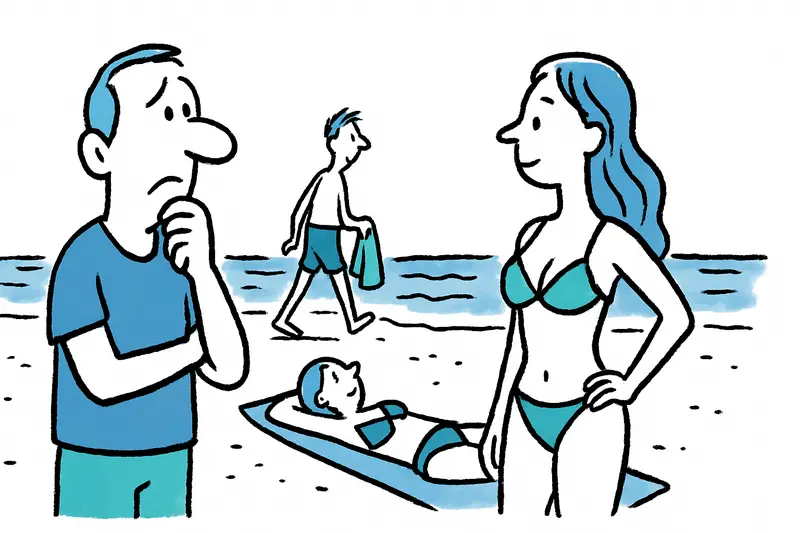
Am I old-fashioned? Why revealing swimwear in Mallorca is a small cultural debate
A presenter is surprised by skimpy bikinis in Cala Santanyí. An opportunity to talk about gaze, respect and everyday life on the beach.
Am I old-fashioned? Why revealing swimwear in Mallorca is a small cultural debate
Guiding question: What does our feeling say about revealing beachwear — and who actually owns the beach?
The scene is easy to imagine: Cala Santanyí, sparkling water, cicadas humming, somewhere it smells of sunscreen and fried fish. On the beach lie people of all ages, Germans, Mallorcans, tour groups. A well-known German presenter notes in a short video that many women are wearing very skimpy bikinis, and asks whether she may have become too old-fashioned. That triggers likes, frowns and discussions.
In short: it's not only about the fabric of a bikini. It's about directions of gaze, social norms and expectations. In Mallorca, revealing beachgoers are nothing unusual; for many locals it is part of beach culture. For visitors with different habits this can seem surprising or alien. The question is why it affects us so quickly.
Critical analysis: the feeling is a mixture of generational norms, media images and personal well-being. An episode on the beach becomes for many a proxy debate: do you see self-determination and body positivity in it, or do you feel sexualized by the portrayal? Both are legitimate reactions, but context and perspective shifts are often missing. Instead of talking to one another, the internet comments — quickly a yes or no, praise or reproach.
What is missing from the public discourse is the issue of gaze and respect. The discussion focuses on clothing as provocation or virtue, rarely on manners: do not film without consent, no derogatory comments, treat older people as well as younger ones with kindness. Also scarcely present is the question of how tourism shifts perceptions of social norms. When beaches are full of international guests, norms clash more strongly.
A small everyday picture from Palma: on the paseo in the early evening you see families with shopping bags, pensioners on benches and groups of young people with towels over their shoulders. The sounds of the city — bicycle bells, market vendors, boats in the harbor — mix with holiday stories. In such moments you notice that tolerance is often practiced in small ways: a smile, stepping aside, a polite remark instead of a judgment.
Concrete suggestions for making the debate less loud and hurtful: first, respect personal boundaries. If someone feels uncomfortable, they may do so privately without publicly shaming others. Second, social media users could ask themselves before posting: would I share this photo with consent? Third, host businesses (hotels, beach bars) can give guests short notes about local beach culture in the welcome folder without being patronizing. Fourth, local initiatives could start educational actions: workshops on respectful behavior in public spaces, moderated by associations and municipalities.
Conclusion: between outrage and enthusiasm a third way can be found: respect. Beachwear is an expression of self-determination, fashion and personal well-being. At the same time everyone has the right to feel safe and respected on the beach. A little more curiosity and a little less show-judgment would do the island society good — and might make the next summer day at Cala Santanyí a bit less loud.
If you still want to answer the guiding question: it's okay to be unsettled; it's helpful not to turn that unease into a judgment of others.
Frequently asked questions
What's the best time to visit Mallorca for warm weather and manageable crowds?
What should I pack for a comfortable Mallorca trip and sun protection?
Are Mallorca beaches safe for swimming, and how should I judge conditions?
What outdoor activities are popular in Mallorca besides swimming?
Are there family-friendly options in Mallorca for kids?
Car or public transport in Mallorca—what’s the best way to get around?
Which Mallorca day trips are worth making from Palma?
What should I expect weather-wise in Mallorca across the seasons?
Similar News
20 Years of 'Goodbye Deutschland' – Why the Anniversary Episode Also Celebrates Mallorca
The 20-year special of "Goodbye Deutschland" brings well-known Mallorca emigrants back into view. A warm-hearted look at...

Too Much for the Street: Large TV Production Paralyzes Bahía Grande
A German TV crew set up at the Bahía Grande viewpoint — trucks, tents and vehicles blocked Carrer Cristòfor Colom. Who p...
Chaos over Solar Eclipse Glasses in Mallorca: How Safe Are the Last Remaining Pairs?
Shortly before the total solar eclipse, tourists and locals are emptying the shelves of pharmacies and opticians. One cl...

Vacation in Port de Soller: Thomas Tuchel spotted outside a car rental office
Football coach Thomas Tuchel was seen in Port de Soller. A photo shows him outside the Sixt office. Since buying a villa...

Short and striking: Whale sighted between Mallorca and Menorca
For a few seconds a large whale, probably a fin whale, surfaced off Mallorca. A brief moment, much wonder — and a remind...
More to explore
Discover more interesting content

Boat Tour with BBQ along Es Trenc Beach

Private transfer from Mallorca Airport (PMI) to Pollensa
