
Horse Falls in Palma: Do Carriages in the Old Town Need Rethinking?
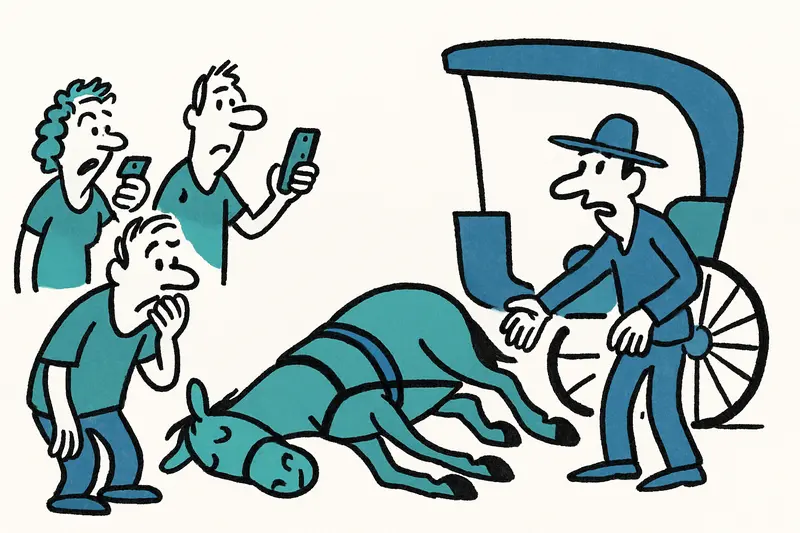
A horse falls on the cobblestones of Calle Carnisseria in Palma — an incident that not only arouses sympathy but also reopens the old question: How much tradition is acceptable when animals suffer?
Sweltering morning, cold cobblestones
On Monday around 11:30 a.m. the dull thud of hooves and a groan startled passersby in Palma's old town. At the junction of Calle Carnisseria a horse pulling a tourist carriage toppled onto the cobblestones and lay motionless for minutes. Tourists pulled out their phones, café tables fell silent, only the distant bells of San Nicolás continued to toll. After five or six minutes the animal got up again — exhausted, breathing shallowly according to eyewitnesses, tended by residents and the coachman. The local police later documented the scene in reports such as Horse collapses in front of San Nicolás: A wake-up call for Palma.
The key question: tradition or animal welfare?
The debate quickly became charged, as covered in After Two Collapsed Horses: Palma Faces a Decision — Rethinking Carriage Rides. The central question is: May the city of Palma protect a tradition if it requires living animals to work under questionable conditions? For many locals the carriages are a familiar sight, for others they are a daily nuisance — and for animal welfare advocates simply unacceptable. Recent incidents, including the collapse near the church of San Nicolás last Saturday reported in Carriage horse collapses in front of San Nicolás: Heat, animal welfare and the question of the future, have given critics fresh ammunition.
What is often overlooked in the debate
There are aspects that have so far been neglected: the economic dependence of the carriage drivers, the quality of veterinary checks and the actual enforcement of rules. Drivers do not earn the same as hoteliers; some families have worked in this trade for generations. At the same time reliable figures are missing: How often do horses actually collapse? Which routes are particularly problematic? And how much does the rough cobblestone surface — the notorious mix of pitfalls and slip hazards — affect hoof growth and the joints?
Concrete, pragmatic proposals
Some measures could be implemented immediately and would significantly reduce the risk:
1. Operating ban during the hottest hours: On hot days (or when certain temperature/heat index thresholds are exceeded) carriages should not be allowed to drive through the old town between 11:00 and 17:00.
2. Rerouted paths and shaded routes: Avoid paths across sunny plazas, allow more trips along wider streets with smoother surfaces.
3. Technical adjustments: Softer horseshoes, shock-absorbing harnesses and significantly shorter load times per tour.
4. Immediate emergency rules: Mandatory water breaks, shaded rest points at designated stops, mobile veterinarians during peak times.
5. Alternative sources of income: Subsidies or retraining programs for drivers, support for electric carriages or small eco-friendly shuttle services that spare animals.
Who needs to be brought on board?
A successful solution requires more than bans. It is about bringing drivers, residents, tourism businesses and authorities to the same table. Drivers need social security so they have financial alternatives. Authorities must strengthen controls and make them transparent — a public register for incidents would be a start, a context discussed in Palma Struggles to End Horse-Drawn Carriages: Majority but No Final Decision. And tourists need information: many climb in unaware because they romanticize the image of the carriage.
Conclusion: Not an easy decision — but action is needed
The scene at Calle Carnisseria was a warning sign: it is not enough to appeal emotionally to traditions when animals visibly suffer. At the same time the economic reality of the drivers must not be ignored. A blanket ban would hit many families harder than well-thought-out transitional solutions.
Perhaps Palma's future lies in a mix of respect for tradition and the courage to modernize: shaded routes, shorter stints, stricter requirements — and real support for those who want to switch. Until then the topic will continue to be debated, at a café on the Plaça, in the town council (Palma city council) and during daily walks through the old town, where the clacking of hooves repeatedly evokes memories — and leaves questions unanswered.
Tags: Horses, Palma, Animal welfare, Carriages, Old town
Frequently asked questions
Are horse-drawn carriages still operating in Palma’s old town?
Why is Palma debating whether to change or stop carriage rides?
How hot is too hot for horse carriage rides in Mallorca?
What can help reduce stress for carriage horses in Palma?
Are the cobblestones in Palma’s old town hard on carriage horses?
What happened near Calle Carnisseria in Palma?
What alternatives are being discussed for horse carriages in Palma?
Can tourists still take a carriage ride in Palma without knowing the welfare debate?
Similar News
First Day, First Consequences: What Palma's Rent Freeze Really Means
A new decree stops a planned eviction in Palma — but what really changes for tenants and landlords? A reality check with...
When Housing Becomes a Matter of Survival: Mallorca Between Rental Frenzy and Everyday Life
The case of 87-year-old Maricarmen showed that on Mallorca many people's lives are poised between affordable and uninhab...
Autumn in Mallorca: When Melancholy Gets a Window
Why autumn quietly tightens here — and how to make use of the mood: walks, culture, candles and the light from Palma to ...
Near-miss on Lanzarote: Landing Ryanair Jet and Iberia Takeoff — what really went wrong
On Lanzarote there was a dangerous incident: A Ryanair flight (FR5910) from Dublin landed on runway 03 while an Iberia E...
Eurowings introduces new Premium Business seats on Mallorca routes
From December 1, selected Eurowings flights to Palma and other destinations will feature eight particularly generous sea...
More to explore
Discover more interesting content

Can Cap de Bou

Townhouse Lleo 72
