
Carriage horse collapses in front of San Nicolás: Heat, animal welfare and the question of the future
A carriage horse collapsed exhausted onto the cobblestones in front of the San Nicolás church in Palma in the afternoon. The incident sparks debate: protection for animals or preservation of a tradition?
Collapse in front of San Nicolás – a moment for reflection
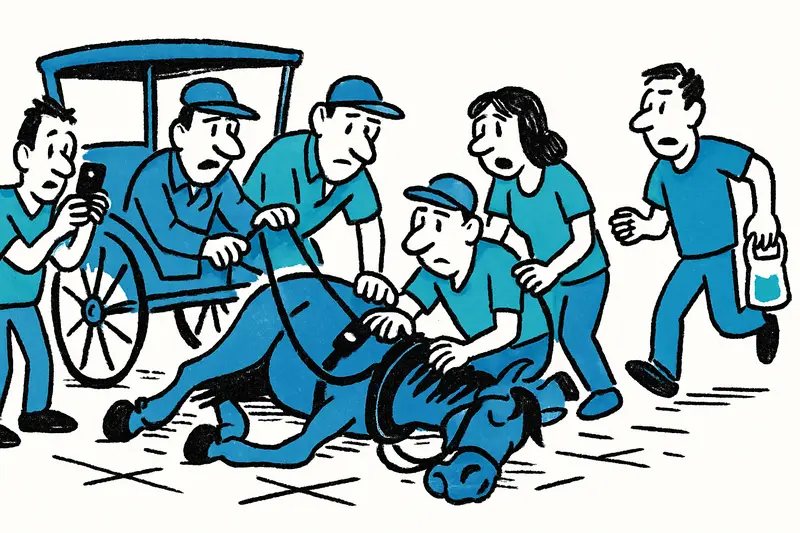
It was one of those oppressive afternoons when the old town breathes heavily: the air hangs still, tourists seek shade under budding canopies and the stones radiate the heat back. At around 16:20 a carriage horse in front of the small church of San Nicolás suddenly fell onto the cobblestones. For a few seconds it was silent, then the clicking of phones, the rattle of a moped in the distance and the voices of those who wanted to help. The event revived memories of previous collapses documented in Horse Falls in Palma: Do Carriages in the Old Town Need Rethinking?.
What was seen and what was quickly assumed
The horse lay there, people brought water, and the coachman and passers-by tried to calm it. After a few minutes and with shade and drinking water the animal stood up again. Monitoring stations in the city showed temperatures over 34 °C that day. 'You could clearly see that the horse was exhausted,' said an eyewitness.
It is likely that the heat played a role. But heat alone is rarely the whole explanation: dehydration, circulatory problems, the strain from pulling loads, lack of rest breaks or unsuitable ground conditions can contribute. How much each factor weighed will have to be determined by experts. Until then the clear question remains: at what point is the use of horses in Palma no longer justifiable?
The key question: protection of animals or protection of a tradition?
Immediately after the incident the discussion flared up. For animal welfare advocates the collapse is a clear sign that human interests must no longer take precedence over the well-being of animals. They call for a ban on driving in high temperatures and stricter controls. Others point to tradition and livelihoods: carriage rides have been part of the old town's image for decades, they provide income for families and are a tourist experience. This debate intensified after earlier incidents, for example After Two Collapsed Horses: Palma Faces a Decision — Rethinking Carriage Rides.
Both sides touch on important points. The balance between cultural identity and animal protection is not new, but rarely as visible as on a hot September afternoon in front of San Nicolás, when the slabs radiate heat and the alleys trap the sun like a large sauna.
Aspects that are often overlooked
Public debate often lacks technical and organizational details: the microclimate of the paved old town, the high humidity, the strain from constant starting and braking in narrow streets, and the question of training and working hours for coachmen. Emergency protocols for such situations are also rarely publicly known: who is allowed to act, which first aid measures are permitted, and how quickly can a veterinarian be on site?
Added to this is the economic dimension: for some coachmen the horse is not only a partner but a means of livelihood. An abrupt ban without a transition arrangement would destroy incomes and create social conflict.
Concrete opportunities and practical suggestions
The incident is an opportunity to create clear rules instead of reacting on short notice. Proposals that seem sensible are:
- Temperature and load limits: bans on operation at high humidity and heat, better measured by scientific indicators (e.g. heat stress indices) rather than by a fixed hour alone.
- Infrastructure: shaded areas and water supply along the routes, designated rest spots on cooler surfaces.
- Control and prevention measures: mandatory veterinary checks, compulsory first aid training for coachmen, sensors (e.g. temperature loggers on the carriage), stricter inspections by authorities. Recent steps toward such measures are reported in Palma orders medical checks for carriage horses — turning point for horse-drawn carriages?.
- Alternatives and transitions: subsidised retraining, promotion of horse-free sightseeing options (electric carriages, shuttle services) and time-limited seasonal permits.
What should happen now
In the short term, more caution is needed: quick rules for shade and drinking breaks, mandatory reporting channels for emergencies and a public information campaign for tourists and coachmen. In the medium term, politicians, animal welfare organisations and representatives of the coachmen must sit at the table to agree on realistic rules — including social protection for those affected.
It is good that the horse in front of San Nicolás stood up again. Nevertheless, the incident remains a wake-up call: Palma must decide how the city deals with animals in the heat — with heart, reason and consideration for the people who depend on them.
Frequently asked questions
Is it safe to ride in horse carriages in Palma during hot weather?
What happens when a carriage horse collapses in Palma?
Why do carriage horses struggle more in Palma’s old town?
Should carriage rides in Mallorca be banned during extreme heat?
What rules could protect carriage horses in Palma better?
How hot was it in Palma when the horse collapsed near San Nicolás?
What can tourists do if they see a horse in distress in Palma?
Is there a future for horse-drawn carriages in Palma?
Similar News
First Day, First Consequences: What Palma's Rent Freeze Really Means
A new decree stops a planned eviction in Palma — but what really changes for tenants and landlords? A reality check with...
When Housing Becomes a Matter of Survival: Mallorca Between Rental Frenzy and Everyday Life
The case of 87-year-old Maricarmen showed that on Mallorca many people's lives are poised between affordable and uninhab...
Autumn in Mallorca: When Melancholy Gets a Window
Why autumn quietly tightens here — and how to make use of the mood: walks, culture, candles and the light from Palma to ...
Near-miss on Lanzarote: Landing Ryanair Jet and Iberia Takeoff — what really went wrong
On Lanzarote there was a dangerous incident: A Ryanair flight (FR5910) from Dublin landed on runway 03 while an Iberia E...
Eurowings introduces new Premium Business seats on Mallorca routes
From December 1, selected Eurowings flights to Palma and other destinations will feature eight particularly generous sea...
More to explore
Discover more interesting content

Can Cap de Bou

Townhouse Lleo 72
