
Autumn Is Coming — When the Rain System Will Cool Mallorca and What We Must Learn
Autumn Is Coming — When the Rain System Will Cool Mallorca and What We Must Learn
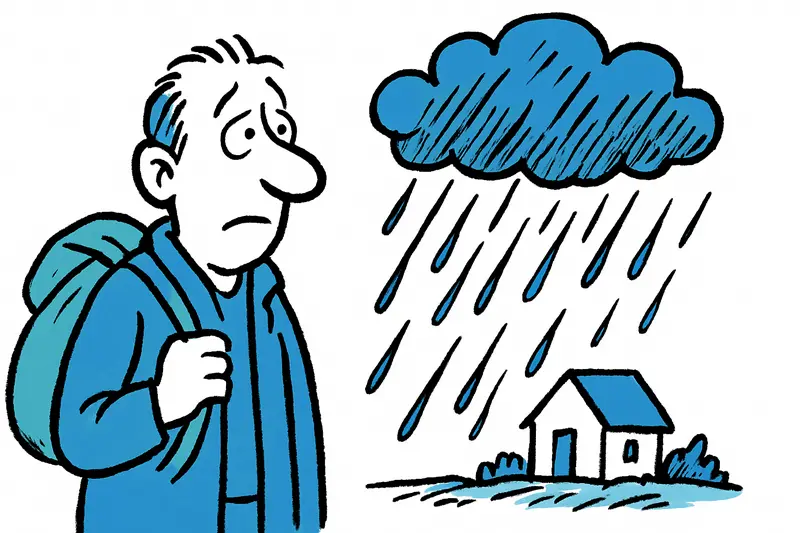
AEMET warns: the chance of rain increases on Thursday and Friday — temperatures will fall. An opportunity to prepare our island for wet weeks.
Autumn Is Coming — When the Rain System Will Cool Mallorca and What We Must Learn
The forecast: briefly sunny, then a risk of rain. What does this mean for daily life, traffic and agriculture?
Key question: Are we prepared for the next round of wet days, or will heavy rain surprise us again in streets and fields?
AEMET reports that after a few late-summer days a new rain system is heading toward the island and may push temperatures down further, as discussed in Weather Change in Mallorca: Are We Ready for a Longer Rainy Period?.
Until Wednesday the highs will remain around 30 degrees, nights cool to just under 20 degrees — pleasant conditions many Mallorcans still use for a final beach visit or an evening walk. At the same time, the probability of rain increases toward the end of the week; Thursday and Friday are forecast at about 70 percent, and AEMET has issued a yellow weather warning for Thursday.
On site you notice the change in small things: the coffee on Passeig Mallorca still smells of sun in the morning, but the fishermen in the small harbour of Port de Pollença increasingly glance at their weather apps. On Saturday only Llucmajor cracked the 30-degree mark; Ses Salines and Port de Pollença followed just under it (each 29.6), Campos 29.5 and Cap Blanc 29.1 — figures that show the heat is not completely gone but vulnerable to a cool front, as noted in Thursday will be cooler and wetter — but is Mallorca really prepared?.
Critical analysis: the weather shift scenario is familiar, the question remains how robust our infrastructure and routines are. In recent weeks heavy rain events have already caused local problems: clogged street gullies, washed-up driveways and overloaded drainage channels. These incidents repeat in many municipalities because regular cleaning and investment in sewer systems often fall behind the tourism and construction business, and a recent storm alert on Friday underlined the potential for heavy showers.
What is often missing in public discourse is the perspective on preventive measures that are actually noticeable on the street. It is not only about warnings, but about scheduled gutter cleanings, priority lists for repairing street drains and fixed inspections before the rainy season. Farms and olive groves outside larger towns need clear information about how much water is expected and how streams can be regulated without endangering neighboring properties.
An everyday scene: at the Santa Catalina market the market woman packs her still-warm almonds into a bag despite light clouds. She knows a heavy shower could arrive in an hour — so she sets up tents and tarps and informs regular customers via a WhatsApp group. Such small, improvised solutions are helpful, but they are not enough for larger incidents.
Concrete solutions are on the table and practicable: 1) Municipalities should introduce fixed pre- and post-season checks for drainage systems and publish the dates. 2) AEMET warnings must be linked to local action recommendations — forest owners, fishermen and hoteliers need tailored guidance. 3) Mobile pumps and sandbag depots at critical points (low-lying roads, access roads to rural properties) are cost-effective and quickly deployable. 4) For agriculture simple measures like ditches along paths or staggered harvest plans when storm warnings are issued are helpful. 5) Municipal coordination, for example via a seasonal response team, would bundle everyday actions: who clears gullies, who brings pumps, who informs neighborhoods?
Some of these steps do not require large budgets but rather better planning and clear responsibilities — and the willingness not to postpone maintenance simply because it is peak season. This also includes transparency: citizens should know when streets were cleaned and which locations are considered particularly at risk.
Conclusion: the announced rain system is not an apocalyptic event, but it is a wake-up call. Anyone living on or visiting Mallorca benefits from a combination of good weather forecasts, practical preparation and visible municipal work. If Thursday and Friday really turn out wetter, it will not only be because of the raindrops but because we are better prepared — less hecticness, fewer closures, less morning trouble.
Frequently asked questions
What does Mallorca's upcoming rain system mean for daily life and travel?
How prepared is Mallorca for the upcoming heavy rain and urban drainage issues?
What practical measures can towns in Mallorca adopt to improve street drainage before the rainy season?
How could rain warnings affect olive groves and farms around Mallorca?
How are Santa Catalina market vendors in Mallorca adapting to incoming showers?
What role do fishermen in Port de Pollença play as rain approaches?
When is Mallorca likely to see rain, and how should visitors plan for autumn?
What should residents know about transparency and information on public drainage during rainier days in Mallorca?
Similar News

Eurowings in Palma: Expansion, Approval Chaos and the Reality Test for Island Planning
Eurowings is significantly increasing its presence in Palma and is even considering technical maintenance on site. The i...

A.M.Y.: Between Finca, Cornfield and Schoolyard – a 13-Year-Old Who Gets Mallorca Humming
With sunglasses, a rock guitar and the courage to sing over nagging voices: Amy Horber, 13, lives with her family on Mal...

Palma Waterbus Disaster: A Lesson in Procurement Chaos
Planned water routes in Palma's bay failed due to rigid standards, unrealistic prices, and a lack of coordination with p...

He's building again: Crane on Cala rocks in Cala Egos — who protects our coast?
A crane has returned to the rocks of Cala Egos to launch a motorized inflatable boat. Why can a resident repeatedly appr...

25 Years Since September 11: A Critical View from Mallorca
How do we commemorate a distant shock on our own doorstep? A Mallorca perspective on the media, everyday life and what i...
More to explore
Discover more interesting content

Boat Tour with BBQ along Es Trenc Beach

Private transfer from Mallorca Airport (PMI) to Pollensa
