
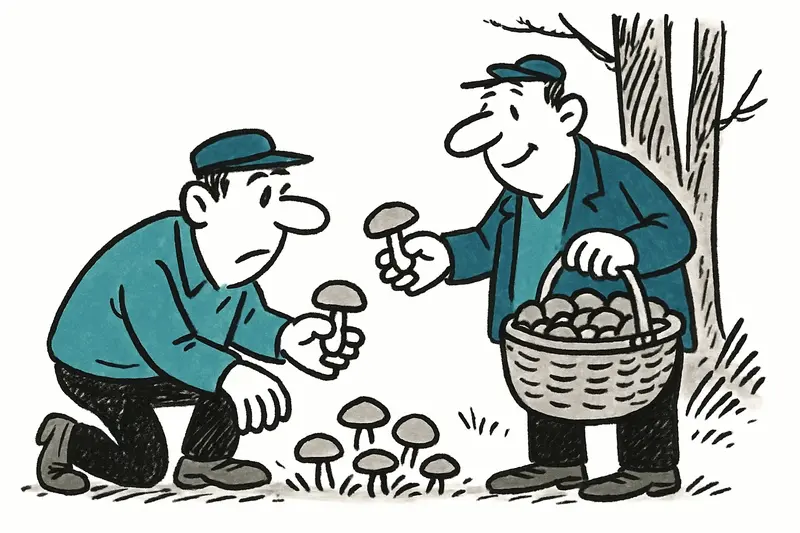
Mushroom Season in Mallorca: Foraging with Respect — Risks, Rules and Useful Tips
Autumn mushrooms in the Tramuntana lure with Esclata-sang and yellow webcaps. But how can you forage safely, sustainably and without risking health or nature?
When the forests smell of rain: a question of responsibility
Last Saturday, after breakfast by the sea and a later detour into the cool Tramuntana, the air was heavy with the scent of wet earth and pine needles. This is the time when the island suddenly fills with small orange and yellow caps, as described in Temporada de setas en Mallorca: recoger con respeto — riesgos, normas y buenos consejos. But the question remains: how do we collect mushrooms now without endangering people and nature?
Where it pays to search — and what remains unanswered
The usual suspects are found in pine and holm oak forests, but also in some valley floors inland. Places like Sóller, Deià, Valldemossa or the heights around Escorca yield good finds after rain. Typical species include Esclata-sang (saffron milk cap) and yellow webcaps (Camagroc). Yet alongside the collecting luck, questions arise that are often overlooked: who checks quality and origin at the markets? How sustainable is removal when many people forage at once? And how do we avoid health risks from contaminants?
Recognize, but don’t overestimate
An Esclata-sang reveals itself by an orangey-red hue and the red-oozing milk; the yellow webcap has a yellow to ochre-yellow cap. Still, identification is not always easy. Mushrooms change color, smell odd or grow deformed — in such cases: leave them. Besides classic poisonous species there are nonspecific risks like heavy metal contamination in low-growing mushrooms, especially at roadsides or near industrial sites.
A critical look: markets, health and ecology
At weekly markets in Palma or Inca fresh goods and semi-professional advice are offered now. But origin information and quality checks are often informal. Mushrooms accumulate pollutants — this is not a myth but biology. Added to this is the risk of overuse: in heavily frequented woods you often see trampled paths, crushed young plants and less undergrowth. The Tramuntana is protected, as noted in the Serra de Tramuntana UNESCO World Heritage listing, but localized pressure from intensive collecting can arise quickly.
Concrete solutions — what would help now
A few sensible measures could be implemented quickly: clearer signs at popular foraging spots (where collecting is allowed and where it is not), mandatory labeling of “wild” at market stalls, regular contaminant checks and training offers for vendors. Locally, municipalities and forestry offices could work with mycologists to test collection quotas or time-limited conservation areas — not as bureaucracy, but as protection measures. Even simpler: more guided excursions and identification days where finds are examined. That spreads knowledge widely.
Practical rules — for searching and afterwards
Do not pack trash, avoid plastic bags (a basket is better), cut mushrooms rather than tearing them out and never collect at the roadside. If unsure, take finds to an expert or consult NHS guidance on mushroom poisoning or local identification services. When buying: ask about origin and request storage advice. For cooking the rule remains: fry briefly at high heat, discard if in doubt. For drying, use low heat sources in airy, dust-free environments rather than sun or uncontrolled heaters.
A look ahead: opportunities for the island
The mushroom season is a genuine autumn highlight in Mallorca — it connects people with landscape and cuisine. If we forage responsibly, improve information and promote local checks, this can become more than a short-lived trend: educational offers for residents and visitors, certified market vendors, and perhaps even a small network of mushroom testing stations in the island’s interior. That is feasible, down-to-earth and would benefit the Tramuntana in the long run.
Conclusion: Foraging is enjoyable — as long as respect for nature and health prevails. The best motto remains: know, check, and when in doubt, leave it. A practical tip: if you are unsure, buy consciously from a market stall with clear origin information rather than risking a hazardous do-it-yourself identification.
Frequently asked questions
When is mushroom season in Mallorca?
Which mushrooms are commonly found in Mallorca?
Is it safe to forage mushrooms in Mallorca if you are not an expert?
Where can you look for mushrooms in Mallorca after rain?
Can you pick mushrooms in the Serra de Tramuntana?
Where can you buy mushrooms in Mallorca and what should you ask?
How should you collect mushrooms responsibly in Mallorca?
What is the best way to prepare mushrooms from Mallorca?
Similar News
Nipping Sea Creatures: Why Bathers in Cala Major and Elsewhere Should Be Cautious
In Cala Major, bathers have reported being nipped by small fish. What is behind it, how can problems be avoided — and wh...
Forced eviction in Santa Catalina: When a 65-year-old slept in her car and showered on the beach — a question of responsibility
The story of Pilar López from Santa Catalina represents a problem affecting many Mallorcans: How can an island with a bo...
New traffic rules from October 1: What Mallorca visitors and locals need to know
From October 1, 2026, Spain will implement far-reaching changes to traffic regulations. Important for Mallorca: greater ...
More water than last year: Mallorca's reservoirs breathe easier
September rain refilled the Tramuntana's reserves: overall fill around 35 percent, Cúber at 40.42 percent, Gorg Blau at ...
Three Luxury Hotels in Banyalbufar: Lots of Money, Many Questions
A Danish investor plans three exclusive accommodations in Banyalbufar — including the historic Son Valentí. The announce...
More to explore
Discover more interesting content

Can Cap de Bou

Townhouse Lleo 72
