
Deadly Frontal Crash on the Ma-1 near Peguera: A Reality Check
Deadly Frontal Crash on the Ma-1 near Peguera: A Reality Check
A 75-year-old woman died and three other occupants were seriously injured in a head-on collision at the entrance of the Peguera tunnel. What is missing from the public debate?
Deadly Frontal Crash on the Ma-1 near Peguera: A Reality Check
Key question: Why do we have to ask the same questions after every serious accident on the Ma-1, and why do the answers not really improve the traffic situation in Mallorca, as seen in Serious Head-On Crash in Paguera: Why Does the MA-1 Remain So Dangerous??
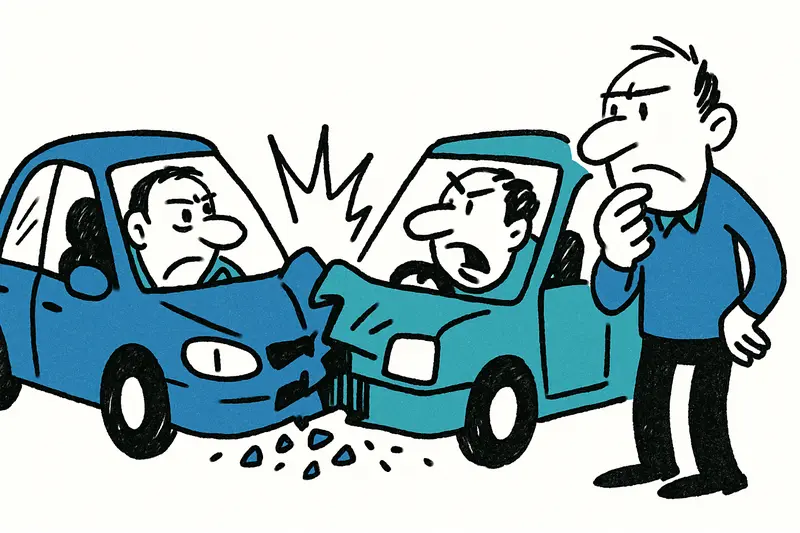
On Wednesday afternoon at around 5:15 pm, a Citroën C3 and a Peugeot Partner collided head-on at the entrance of the Peguera tunnel (kilometre 22) heading towards Andratx. A 75-year-old woman who was sitting on the rear seat of the van died despite prolonged resuscitation attempts by the emergency doctors. Three other occupants suffered serious injuries; after the polytrauma protocol was triggered, they were taken to Son Espases University Hospital and the Juaneda clinic. Four ambulances, including two with extended intensive care capacity, were on site. The Guardia Civil traffic police carried out evidence collection, tow services and the road maintenance crew cleared the debris — the Ma-1 was temporarily closed during recovery operations.
Short and sober: one life lost, several families changed, a highway that became a field of wreckage for an afternoon. The technical facts and procedures are obvious: emergency service 061 alerted, polytrauma alarm triggered, evidence collection by the Guardia Civil. Still, that is not enough when you look deeper.
Critical analysis: The official procedures worked — and that is important — but the system around them often appears to be piecemeal. The Ma-1 is a heavily used axis between Palma and Andratx, with sections that invite high speeds and risky overtaking manoeuvres. The accident happened in a zone where visibility can be problematic due to the tunnel approach and the road geometry. It is certain: two vehicles collided head-on. What we do not know — and what is often lost in public discourse — are details about speed, braking or evasive actions, or the condition of the vehicles and occupants before impact. These gaps prevent a debate that goes beyond questions of blame.
What is missing from the public exchange so far: first, a systematic analysis of similar accidents on the Ma-1; such coverage includes Head-on Crash on the Ma-11: Three Injured — and the Uncomfortable Question of Greater Safety and Head-on Crash near Manacor: Two Dead, Questions Remain; second, transparency about causes beyond the immediate investigations (for example technical defects, distraction, the health of older drivers); third, a concrete discussion about structural safety measures at critical sections such as guardrails, central separation, or speed-reducing measures before tunnel approaches.
An everyday scene from the island: that afternoon residents in Peguera stood at the junction by the bar next to the hairdresser, heard the sirens, saw the blue lights at dusk and smelled petrol residues that lingered in the air for hours. Drivers who normally use the Ma-1 as a through route stopped, called each other, shook their heads. Such moments remain in memory: not only as a headline, but as a topic of conversation in supermarkets and on the beach when you consider whether to take that route again tomorrow.
Concrete solutions that achieve more than Sunday speeches:
1) Targeted structural improvements: Before and after tunnel approaches, clearer physical separations between directions should be considered. Median barriers prevent head-on collisions; crossing areas can be improved with reflective markings and wider shoulders.
2) Speed controls and automatic early-warning systems: Mobile and fixed speed controls, coupled with electronic warnings before accident hotspots, could reduce risky behaviour. Cameras that not only issue warnings but also provide targeted statistics would be helpful.
3) More police on important corridors, but smarter: Not just showing presence, but conducting data-driven enforcement. Identify time windows for dangerous behaviour (holidays, rush hour) and increase intervention there.
4) Vehicle and insurance checks: Regular technical inspections for older vehicles and information campaigns for older drivers about risks and adapting driving behaviour. Insurers could provide incentives for safety-related retrofits.
5) Analyse and optimise the rescue chain: The emergency response was fast, but rural roads and motorway sections need designated assembly points for the injured, better markings for emergency vehicles and regular joint exercises between 061, the Guardia Civil and hospital centres.
Such measures cost money and sometimes nerves. But they are concrete and can be phased: short-term more controls and better markings, medium-term expanded camera networks and information campaigns, long-term structural changes at danger points.
Pointed conclusion: A tragic accident like this is more than a statistic. It is a wake-up call to see the Ma-1 not only as a transport corridor but as a public space where people commute, shop, work and age. We need fewer buzzwords and more concrete steps: measure, analyse, rebuild, enforce. If the island takes this seriously, we can prevent the next dusk rush from again being defined by blue lights and a death certificate.
Frequently asked questions
Why is the Ma-1 between Palma and Andratx often seen as a dangerous road in Mallorca?
What happens when there is a serious road accident in Mallorca?
Is it safe to drive near the Peguera tunnel on the Ma-1?
What should drivers in Mallorca do to reduce the risk of a head-on crash?
Why are traffic accidents on Mallorca roads so often linked to speed and overtaking?
What road safety improvements could help the Ma-1 in Mallorca?
What should tourists know before driving in Mallorca during busy afternoon traffic?
How can Mallorca improve emergency response after serious crashes?
Similar News
The Maricarmen Case: Why an Eviction Is Forcing Spain's Housing Debate
Images of an 87-year-old woman on a stretcher have sparked a debate in Spain that also runs deep in Mallorca. Who protec...
Parking dispute in Els Hostalets: When a gap leads to violence
A parking dispute on Calle Aragón escalated into a mass brawl at night. Why do trivial conflicts here turn bloody so qui...
Bodycams in Palma: More clarity needed so surveillance doesn't become the norm
Palma's local police equip UII officers with Axon Body 4 cameras. Useful for evidence collection — but specific rules on...
When the Bread Door Closes: Why Maria de la Salut Lost Its Last Bakery
The only bakery in Maria de la Salut, a sales outlet of Forn de ca'n Joan Terès from Palma, has permanently closed. What...
Ancient Piece Brought to Light: Guardia Civil Recovers Roman Anchor Fragment off North Coast of Mallorca
Divers from the Guardia Civil recovered a massive iron piece from Roman times off Mallorca's north coast. The roughly 35...
More to explore
Discover more interesting content

Can Cap de Bou

Townhouse Lleo 72
