
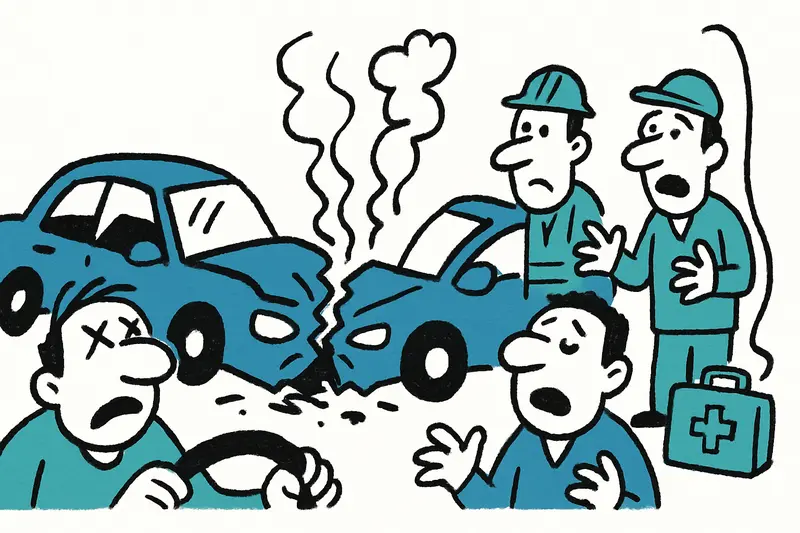
Head-on Crash near Manacor: Two Dead, Questions Remain
Two cars collided head-on during the night between Manacor and Portocristo. Two men died and several people were injured. The rise in fatal accidents on Mallorca raises urgent questions about road safety.
Head-on collision between Manacor and Portocristo: Two dead — and many unanswered questions
On Sunday night the usually quiet country road between Manacor and Portocristo was turned into a scene of horror. Around 1 a.m. two cars collided head-on; two men — aged 27 and 38 — later succumbed to their injuries, four others were injured, and one person remains in critical condition. For family and friends a period of mourning begins; for the island, a time of reflection.
An image that lingers
Eyewitnesses describe the short, brutal sequence: first the flash of headlights, then a dull impact, later smoke and the sharp smell of fire foam in the air. One of the vehicles was on fire; the heat was still palpable as firefighters in breathing apparatus forced open the doors. Blue lights reflected on the wet road; somewhere the faint sound of the sea near Portocristo mixed with the wail of ambulances — this is how a night sounds that no one will forget.
Major operation on a narrow road
Firefighters, Guardia Civil and paramedics worked by torchlight while forensic teams secured the scene. The road was closed for hours; residents watched from windows and some lit candles. Early indications suggest one vehicle may have veered into the oncoming lane. Whether alcohol, driver error, technical faults or road conditions were decisive is currently under investigation, as reported in Manacor: No murder — but many questions remain.
Why does this happen so often? The key question
This crash is not an isolated case: within a week there have been several fatal road accidents on Mallorca, including Fatal head-on crash near Alcúdia: What needs to change on the MA-3460 and an earlier After head-on crash in Palma: Fleeing and many questions – 31-year-old dies. That raises the central question: what is going wrong on our country roads — and what are we ignoring out of convenience? On narrow, winding rural roads like those in the east of the island several risk factors add up: poor night visibility, absent or inadequate street lighting, tight curves, often high speeds and frequently drivers unfamiliar with local roads, such as rental car users.
Less noticed is how strongly seasonal fluctuations and tourist traffic worsen the accident situation. In heavily visited areas many inexperienced drivers are on the road during the day — in the evenings, after festivities, alcohol, fatigue and unfamiliarity with the route then combine. Maintenance backlogs also play a role: broken guard posts, faded markings and missing reflectors. All this cuts reaction time in the single second when a decision can mean life or death.
What is often overlooked: the work after the accident
Less visible but no less important is the strain on the emergency services. Firefighters and paramedics regularly encounter scenes that stay with them for a long time. Psychological aftercare for helpers and relatives often starts with a delay — here there are still gaps. Investigations also require personnel and time: night accident reconstruction, technical inspections of vehicles and toxicological analyses.
Concrete steps needed now
The debate must not stop at expressions of sympathy. In the short term, increased night-time controls, mobile speed checks and targeted lighting at critical junctions could help. Medium-term solutions include better road markings, reflective posts, rumble strips before dangerous bends and obligations for rental companies to explicitly inform customers about local traffic rules and night-time hazards.
An improved emergency response concept is also important: faster communication between control centers, more trauma training for rescue personnel and quicker psychosocial support for the bereaved. And yes — an honest look at speed, smartphone distraction and alcohol is essential. Technical measures must go hand in hand with prevention and enforcement.
A quiet plea
The events of Sunday morning are sad and alarming. Our thoughts are with the families of the deceased and with those still fighting in hospital. For everyone traveling on Mallorca: drive slower, keep your distance and don’t take risks even on short trips. The narrow, winding country roads here have their own rules — and they rarely forgive mistakes.
The island will have to clarify the causes of this tragedy. In the meantime, we should all consider how to be safer on the road — not out of fear, but out of respect for the people who wake up each morning hoping to see their loved ones again.
Frequently asked questions
What makes Mallorca country roads so dangerous at night?
Is it safe to drive between Manacor and Portocristo at night?
What should I do if I see a serious car crash in Mallorca?
Why are fatal road accidents in Mallorca a concern for locals and visitors?
What road safety problems are common on Mallorca’s rural roads?
How can rental car drivers stay safer on Mallorca roads?
What happens after a major crash on a Mallorca road?
What can be done to make Mallorca’s roads safer at night?
Similar News

Caro Robens: 15 kilograms lighter — and again in the crossfire of online comments
Bodybuilder Caro Robens, who lives in Mallorca, has lost 15 kilograms. Her success on Instagram was met with applause — ...
Meager Industry in Mallorca: How the Island Can Be More Than Just Tourism
The industrial sector in Mallorca is shrinking, productivity is falling and firms remain tiny. The key question: can the...
Pre-Nit de l'Art: Galerie Mensing invites to a special evening with Tom Boston
Before the big art night, Galerie Mensing opens its doors: pop art, champagne, a DJ and a hand-signed print by Tom Bosto...
Sea view and more seats: Cappuccino Grand Café reopens in Port d'Andratx
After a long renovation, the Cappuccino Grand Café on the Port d'Andratx harbor promenade has quietly reopened. Larger t...
Enric Mas wins the Vuelta – a triumph that resonates in Mallorca
Mallorcan Enric Mas has won the 82nd Vuelta — the first Spanish overall victory since 2014. Cyclists and neighbors on Ma...
More to explore
Discover more interesting content

Can Cap de Bou

Townhouse Lleo 72
