
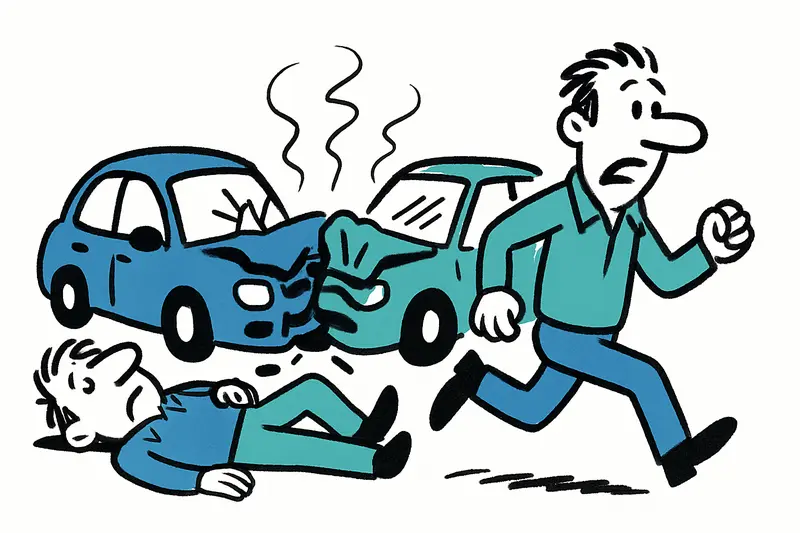
After head-on crash in Palma: Fleeing and many questions – 31-year-old dies
At night, two cars collided head-on near Es Coll d'en Rabassa. A 31-year-old died and the other car fled the scene. The police have identified the suspected driver — but the investigation raises broader questions about road safety.
Head-on crash at Es Coll d'en Rabassa: One fatality, a fleeing driver, many uncertainties
Shortly after midnight the quiet road toward Son Banya in Palma turned into a crime scene: around 12:45 a.m. two vehicles collided in the roundabout by the Fan shopping center (Es Coll d'en Rabassa), as reported in Fatal Head-on Collision in Son Banya — More Than Just an Accident?. An Opel Corsa apparently overturned and suffered such severe damage that the 31-year-old driver died at the scene. Streetlights flickered, blue lights reflected in the puddles — neighbours stood on balconies, hearing only the distant hum of air conditioners and the shrill wail of sirens.
Fleeing after the collision – what was left behind
The second vehicle, a VW Golf with two occupants, initially continued driving. A short time later the 27-year-old passenger was found in El Molinar — injured, bloodied and suffering strong chest pains. His wife alerted emergency services after he had dragged himself to an acquaintance on Calle Llucmajor. His condition was described overnight as serious but not life-threatening. Similar coverage can be found in Nighttime collision at the border of Son Banya: One dead, several fleeing — questions remain.
Investigators suspect the passenger first sought help while the alleged driver kept driving. According to police, they have identified the possible driver of the Golf; an arrest is said to be "imminent." No concrete information about alcohol or drug influence has been released so far. Morning evidence collection secured debris, clearly visible skid marks and vehicle parts — clues that an expert report must now evaluate in detail.
The central question: Why the flight?
It is the question that preoccupies many in the neighbourhood: why would someone not get out after such a severe accident and provide help? The obvious answers come quickly: panic, fear of punishment, possibly no driving licence or alcohol and/or drug use. But that explains only part of it. In many cases a culture of looking away also plays a role — a societal problem that cannot be solved by harsh penalties alone.
Police sources emphasise that forensic reconstruction must now clarify how the rollover occurred: was it excessive speed in the curve, an evasive manoeuvre or a technical defect? The skid marks indicate delayed reaction, but only experts can determine the cause and approximate speed; similar investigations were central to coverage of incidents such as Head-on Crash near Manacor: Two Dead, Questions Remain.
What is often missing in the public debate
Less discussed is how urban infrastructure and nighttime traffic management can promote such accidents. The roundabout by the shopping centre is narrow in places, and visibility can be restricted by parked delivery vans or poorly positioned traffic signs. In the evening visibility worsens due to flickering streetlights and blinding high beams. Traffic psychologists say such combinations increase risk — especially when speed and attention are not adequate.
The role of prevention also receives little public attention: speed controls, better lighting, clearer markings and more presence from the Policía Local could save lives at night. That investigators are asking for witness information shows: often it is residents and passers-by who provide crucial pieces of the puzzle.
Concrete approaches to make such nights less frequent
The tragedy exposes several levers: more fixed or mobile speed controls on Palma's entry and exit roads, improved lighting especially on curves, additional traffic signs and possibly physical measures such as speed islands or lane narrowing to slow traffic. An intensified awareness campaign — not only through fines, but via neighbourhood work and prevention programmes — could also lower the barrier to helping after an accident.
For immediate aid, fast medical care, clear emergency numbers and a coordinated emergency chain are crucial. That the injured passenger had to make his way to get help himself highlights gaps in immediate assistance.
Neighbours, authorities, and the bitter void
Residents reported a loud bang, flickering streetlights and the rapid arrival of emergency services. A dog owner said he felt a deep emptiness: "Something like this shocks you. You know these streets, it rarely happens." Many stayed awake for a long time to understand what had happened — and to grasp that a familiar face will not return.
The authorities are requesting information about the Golf's journey after the accident and ask witnesses who saw the car or the movements of those involved to come forward. Such information can make the difference between a theory and a court-ready reconstruction.
Our thoughts are with the relatives. This night leaves questions, anger and the quiet hope that the investigation sheds light quickly — and that the city draws the right lessons so that such incidents become less likely.
Frequently asked questions
What happened in the fatal crash in Palma near Es Coll d'en Rabassa?
Why would a driver leave the scene after a serious crash in Mallorca?
What happens when someone dies in a traffic accident in Palma?
Is it safe to drive at night around Palma and the Fan shopping area?
What should I do if I witness a crash in Mallorca?
Where is Es Coll d'en Rabassa in Palma?
What is known about the injured passenger found in El Molinar?
What traffic safety measures could help prevent serious crashes in Palma?
Similar News

Maribel: Five Decades of Service – Housekeeper from Peguera Celebrated with a Special Honor
Over 50 years in the hotel business: María Isabel “Maribel” Molinos was honored in Palma at the Nit del Turisme by Unive...
Orange Alert over Parts of Mallorca: Are We Prepared?
Dark clouds and an announced wet spell have triggered an Orange alert in parts of Mallorca. A reality check: what's miss...
Sundair & Co.: Sale speculation and what it could mean for Mallorca
Rumors about a possible sale of the airlines Sundair and Fly Air 41, which belong to Schauinsland-Reisen — and whether b...
Anne Wünsche in Mallorca: A job offer with a catch — who fits the role of personal assistant?
Influencer Anne Wünsche has left Berlin and is urgently looking for a full-time personal assistant in Mallorca. Why the ...
Daily from New York: Palma Between Boom and Strain
United will increase the Newark–Palma route to daily flights in 2027 using Boeing aircraft (231 seats). What does the in...
More to explore
Discover more interesting content

Can Cap de Bou

Townhouse Lleo 72
