
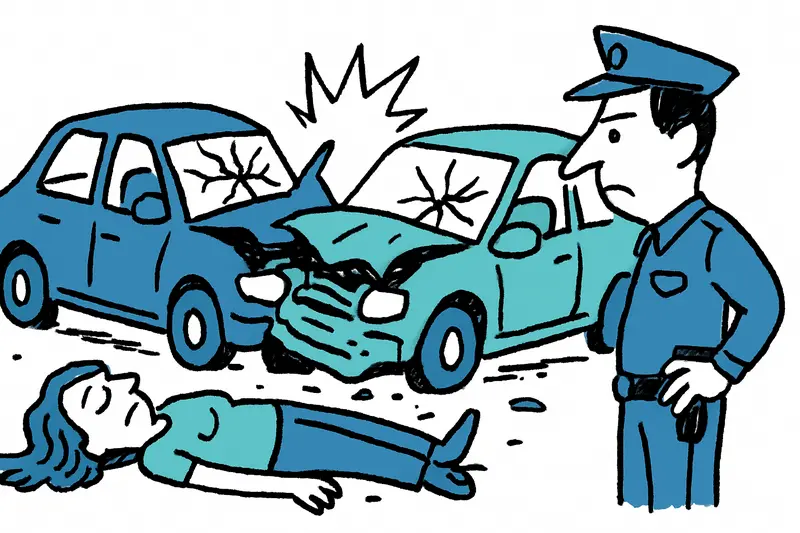
Fatal head-on crash near Alcúdia: What needs to change on the MA-3460?
In the early morning hours two vehicles collided head-on near the horse sculpture at Alcúdia. One person died, four were injured. Our central question: How can this stretch be made permanently safer?
Fatal head-on crash near Alcúdia: An accident that leaves questions
The sounds at night are often silent: a moped, the distant cries of seagulls, the occasional engine hum on the MA-3460. It was exactly there, just outside Alcúdia and close to the well-known roundabout with the horse sculpture, that a head-on crash near Alcúdia that left one dead and four injured occurred in the early morning hours. One person died at the scene, four others were injured – one seriously. The time: shortly before two o'clock. Neighbors who saw flashing blue lights around 2:15 a.m. still describe the smell of diesel and petrol. We ask: How can this section of the MA-3460 be made safer so that this does not happen again?
Why the central question matters
This location is not an anonymous stretch of highway: residents, commuters and tourists know the roundabout with the horse sculpture – for many it is a landmark on the way to the coast. But familiarity can lead to routine, and routine is a poor companion in wet conditions, fatigue or poor visibility. The Guardia Civil has begun securing evidence; what is still needed is a view beyond the accident investigation and the questions raised in Fatal accident in Alcúdia: Who is responsible — and what needs to change?: on infrastructure, speed, lighting and on road user behavior in the early hours of the morning.
Factors examined – and those often overlooked
Investigators routinely check braking distances, tire wear and vehicle positions. They also consider visibility and possible evasive maneuvers. Less noticed, but equally relevant, are subtle factors: the road drainage after light drizzle – residents described the road as “slick and shiny” –, reflections from faded road markings, missing or inadequate lighting at the roundabout and the condition of the edges of the MA-3460. The human element is also often missing from public debate: fatigue in the early morning hours, distraction by smartphones or monotonous stretches that reduce reaction times.
Concrete measures that should be considered now
It is not enough to measure and write reports after an accident. Concrete opportunities are on the table:
Improved lighting: Well-lit roundabouts and approaches reduce glare and improve visibility in drizzle.
Road surface and drainage: Asphalt with a grippier surface and functioning drains prevent aquaplaning on short stretches.
Reflective markings and roadside posts: New, highly visible road markings and marker posts provide clear guidance, especially at night.
Speed limits and enforcement: Temporary or permanent speed reductions combined with increased enforcement by the local police can change driving behavior.
Audible warnings: Rumble strips or warning signs before the roundabout signal a hazard and can wake fatigued drivers from autopilot.
Similar recommendations appear in Fatal head-on crash near Alcúdia: What needs to change on the MA-3460?.
What residents and road users can do
Every observation counts: anyone who saw anything or has dashcam footage should inform the Guardia Civil. At an individual level, defensive driving, adjusting speed in wet conditions and avoiding distractions help – especially between 1 and 5 a.m., when reaction times are worse. Local drivers know the route: a brief pause at the thought of the horse sculpture can already help.
A call to those responsible
The tragedy must prompt a local road safety review: the municipality, the traffic authority and the Guardia Civil should jointly carry out a rapid assessment and order short-term emergency measures – better lighting, visible markings and increased controls. In the medium term, permanent improvements to the carriageway and smarter traffic management should be prioritized.
Our thoughts are with the families and friends of the victims. Nights like these leave scars in small communities: the whir of ambulances, the flicker of lights on wet roads and the quiet conversations at the front door. If mourning leads to prevention, a small step toward fewer nights like this can be taken. We will follow developments and report as soon as the investigation yields new findings.
Frequently asked questions
Why is the MA-3460 near Alcúdia considered a road safety concern?
What can make driving in Mallorca more dangerous at night?
Does wet weather make roads around Alcúdia more slippery?
What road safety improvements are being discussed for the MA-3460?
What should drivers in Mallorca do if they see an accident or have dashcam footage?
Why are roundabouts on Mallorca sometimes treated as accident hotspots?
Is driver fatigue a real risk on Mallorca roads in the early morning?
Where is the horse sculpture roundabout near Alcúdia?
Similar News
After Being Admitted to Hospital Again: Heinz Hoenig and the Questions We Should Ask in Mallorca
Long-time Mallorca resident Heinz Hoenig was admitted to hospital again. A clear “what next?” is missing from the covera...
Yellow Alert: Is Mallorca Prepared for the Next Rain Band?
Aemet has issued a yellow alert for the south, southwest and the island's interior. Thunderstorms and heavy rain are for...
Kegel brothers trial postponed: Why Mallorca must wait for a verdict
The trial of 13 German holidaymakers will not begin until May 2028. The long wait raises questions — for victims, defend...
Chaos on Palma's Runway: Why the Summer at the Airport Was So Disrupted
This summer laid bare where Palma airport is faltering: only just over half of departures were on time and seven percent...
Cocaine Offer on Ham Street: Why the Open Trade Should Ring Alarm Bells
In the middle of Pare Bartomeu Salvà a tourist was offered a packet of cocaine as part of a sunglasses deal. A short int...
More to explore
Discover more interesting content

Can Cap de Bou

Townhouse Lleo 72
