
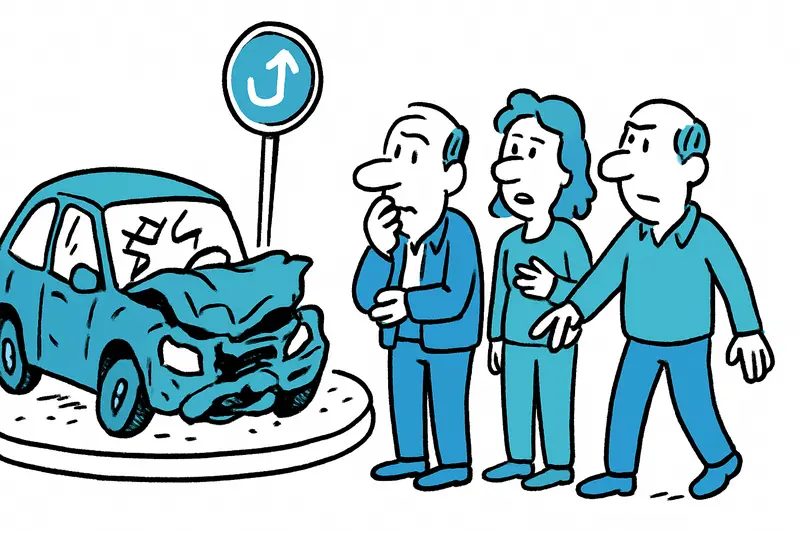
Fatal accident in Alcúdia: Who is responsible — and what needs to change?
The nighttime collision in Alcúdia cost one life and raises hard questions: Was it a tragic isolated case — or a failure of infrastructure, information and prevention?
Key question: Could this tragedy have been prevented?
The night in Alcúdia was chilly with wind, the gulls’ cries long silenced, when a bang shattered the calm. Blue lights reflected on the wet road, the smell of petrol still hung in the alleys — and the next morning a community was in shock. One driver died, several people were injured, as detailed in Head-on crash near Alcúdia: One dead, four injured – Is the MA-3460 safe at night?. The investigations by the Guardia Civil official website are ongoing, but they only address the immediate causes. The real question is systemic: Could a better interaction of infrastructure, information and prevention have prevented this incident?
What we now know — and what remains open
According to official statements, a foreign couple entered a roundabout the wrong way at around 1:30 a.m. and collided head-on with a vehicle that was driving correctly. Despite resuscitation efforts, the man died at the scene; other occupants were injured. Tests for alcohol, signs of fatigue and technical inspections are part of the ongoing investigation.
These facts are tragic enough. Local reporting such as Fatal head-on crash near Alcúdia: What needs to change on the MA-3460? highlights questions about signage and lighting, but they do not answer why, in a comparatively narrow traffic space like Alcúdia’s, a wrong entry into a roundabout was possible at all. Was the signage clear? Was the lighting adequate? Or was it simply confusion by a driver who had little time to get used to Mallorcan traffic habits?
Not just lone perpetrators: Shedding light on systemic gaps
In summer, Alcúdia is a mosaic of illuminated signs, rental car lots and tourists returning late from beach bars. In this mix it becomes clear: road safety here is not just a technical problem but an organizational one. GPS directions that confuse in the dark; roundabouts that are not clearly marked in construction practice; poor lighting at entrances and exits — all these factors can interact.
Less attention is paid to the responsibility of those who convey mobility to tourists: rental companies, tour operators and booking platforms. Many guests rent a car often without local briefing. A short information sheet at check-in with tips on night driving, roundabouts and typical Mallorcan traffic rules would not overburden anyone — but could save lives. Other incidents, such as Dead E-Scooter Rider in Alcúdia: Roads, Lighting and Protection — the Uncomfortable Questions, have raised similar concerns about lighting and protection.
Practical measures: Short-term and long-term
It is not enough to just secure evidence after accidents. We need concrete measures:
Short-term: Increased nighttime controls by the Policia Local and Guardia Civil for alcohol and speed, temporary additional signs at critical points and mobile lighting at poorly lit roundabouts. Rental companies should be required to display digital safety notices before driving — visible, brief and in multiple languages. Hotels could point out local danger spots at check-in.
Medium-term: Review of all roundabouts in tourist centers for approach guidance, high-contrast markings, reflective posts and improved lighting. GPS providers and navigation apps could be alerted to problem spots so that routes for night driving become clearer.
Long-term: A systematic reporting system for dangerous locations — run by the municipality and island government — that incorporates reports from taxi drivers, bus drivers, rental companies and residents. Prioritized investments in infrastructure at repeatedly problematic sites and a mandatory safety briefing for rental car customers would also be conceivable.
Who bears responsibility?
Responsibility cannot easily be attributed to a single group. Of course, the specific question of guilt in the individual case must be clarified by the investigation. Beyond that, however, local politics, road authorities, the tourism industry and rental companies share a common duty: to make public roads safer. When responsibilities become blurred, the risk that the same mistakes will recur increases.
An appeal to pragmatists and decision-makers
There is no absolute safety — but many sensible steps. Small interventions like additional lamps at roundabouts, clearer signs, reflective markings or mandatory information leaflets are inexpensive and immediately actionable. They cost less than an accident and they save lives. The voices of locals matter here: taxi drivers, hotel staff and neighbors know the dangerous spots best and should be actively involved.
The investigations are ongoing. The Guardia Civil asks witnesses to come forward. For Alcúdia there remains mourning and questions — but also the chance to learn from this night and design roads so that fewer people suffer in similar situations.
Conclusion: The accident is not just the tragedy of one night, but a wake-up call. It is not about blaming people, but about questioning structures. Clear signage, better lighting, targeted information for tourists and a reporting system for danger spots are concrete steps that should follow now.
Frequently asked questions
Was the fatal crash in Alcúdia caused by a wrong-way entry at a roundabout?
Are roundabouts in Mallorca difficult for drivers who are unfamiliar with local roads?
What should tourists know before driving at night in Alcúdia or elsewhere in Mallorca?
What road safety improvements are being discussed for Alcúdia after the crash?
What responsibility do rental car companies have for road safety in Mallorca?
Where should authorities look for dangerous traffic spots in tourist areas like Alcúdia?
Does poor lighting make driving more dangerous in Mallorca at night?
What can Mallorca hotels do to help guests drive more safely?
Similar News
After Being Admitted to Hospital Again: Heinz Hoenig and the Questions We Should Ask in Mallorca
Long-time Mallorca resident Heinz Hoenig was admitted to hospital again. A clear “what next?” is missing from the covera...
Yellow Alert: Is Mallorca Prepared for the Next Rain Band?
Aemet has issued a yellow alert for the south, southwest and the island's interior. Thunderstorms and heavy rain are for...
Kegel brothers trial postponed: Why Mallorca must wait for a verdict
The trial of 13 German holidaymakers will not begin until May 2028. The long wait raises questions — for victims, defend...
Chaos on Palma's Runway: Why the Summer at the Airport Was So Disrupted
This summer laid bare where Palma airport is faltering: only just over half of departures were on time and seven percent...
Cocaine Offer on Ham Street: Why the Open Trade Should Ring Alarm Bells
In the middle of Pare Bartomeu Salvà a tourist was offered a packet of cocaine as part of a sunglasses deal. A short int...
More to explore
Discover more interesting content

Can Cap de Bou

Townhouse Lleo 72
