
Why the demolition of the rock pool in Mallorca is still pending – a reality check
Why the demolition of the rock pool in Mallorca is still pending – a reality check
Four years after a court order the private pool on the coast remains. Who is blocking the enforcement — and how could the administration finally solve the problem?
Why the demolition of the rock pool in Mallorca is still pending – a reality check
Key question: Why does a court-ordered demolition on the coast of Mallorca remain unenforced for years?
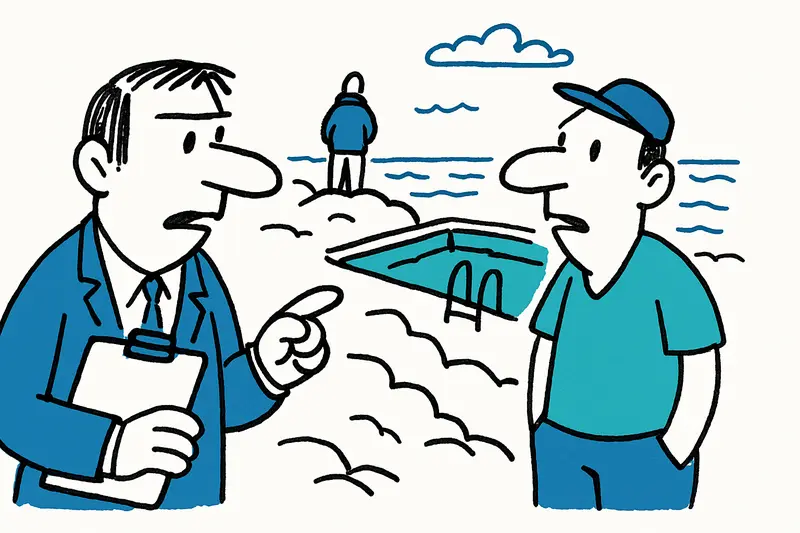
At first glance the scene is familiar: in the late afternoon the Tramuntana wind hits the rocks at Costa dels Pins, fishermen sort their nets and walkers stop to look at the sea. And in the middle of it all — hard to miss — stands a swimming pool for which the courts have demanded removal. Four years after a judgment that ordered the demolition, nothing has happened. Emails from the owner’s lawyer to the responsible Balearic ministry dated 15 October 2025 and 19 January 2026 went unanswered. Activist pressure led to further legal steps, enforcement has already been initiated in the past; nevertheless the structure remains untouched.
Critical analysis: Several factors interact and explain the apparent failure of the administration. First: institutional reluctance. When specialist agencies and ministries do not respond clearly and promptly to inquiries, legal uncertainty arises — which those affected use to buy time. Second: technical and ecological effort. A demolition on a steep coast requires detailed reports, safety measures and precise logistics so that adjacent protected areas are not damaged. Third: legal tactics by owners. Submitting revised demolition plans delays enforcement because authorities must check whether these solutions meet the requirements. Fourth: financial questions. Who pays for the removal, how are costs recovered — these are practical hurdles that often make officials hesitate and cause delays; similar responsibility issues were discussed in Medusa Beach: Who Bears Responsibility After the Collapse?.
What is missing in the public debate: The discussion usually revolves around symbolism — access to the sea, prominence of those involved — and not administrative practice. There is a lack of transparency about deadlines, internal reviews and the actual obstacles to implementation. Also rarely discussed is how often administrations actually carry out compulsory measures in comparable cases and what cost consequences arise. Without this information criticism remains generic and trust in law enforcement is undermined; high-profile cases such as Court Hearing After Terrace Collapse: Who Is Responsible? show the intense public scrutiny that follows similar disputes.
Everyday scene: If you drive along the coastal road on a Saturday morning you see families by the roadside, dog owners, a few older men with coffee cups on a bench — for them the pool has long been part of the coastal scenery. They wonder why a decision from Madrid apparently has no visible effects on site, while the sea view continues to be impaired by private uses.
Concrete solutions: 1) Deadlines with transparency obligations: Authorities should publish binding time windows for responses and decisions (the island council’s recent acceleration proposals are a reference point: Why Mallorca's New Fast-Track Procedure Against Illegal Holiday Rentals Is Only a Beginning). 2) Independent assessment: An external technical commission with coastal protection experts could review within clear deadlines whether submitted demolition plans meet the conditions. 3) Predefined safety and environmental requirements: Standardized checklists for demolition at sensitive coastal locations would shorten review times. 4) Securing costs: Establishment of a security account or demolition bond that authorities can use in enforcement cases and later claim back. 5) Public enforcement registry: An online portal that documents cases, deadlines, submitted documents and enforcement measures would increase pressure and traceability. 6) Staged measures: If a complete removal is technically risky immediately, temporary securing measures (fences, anchoring) should be required until enforcement can take place.
A practical example: The administration could set an official time window of four weeks after a confirmed court judgment for the submission of a fully executable demolition plan. If this window is missed or queries remain unanswered, the authority must trigger enforcement and immediately register costs for recovery. At the same time a third-party technical report should guarantee the protection of neighboring biotopes — removing the argument that one must wait out of consideration for the surroundings.
Pointed conclusion: When court judgments fall victim to simplistic reasoning and bureaucratic obstacles, not only the law suffers but also the trust of local people. In Mallorca, where coastal access and landscape often collide, it is not enough to issue rulings. Clear, transparent enforcement mechanisms and an administration that implements uncomfortable decisions promptly are needed. Otherwise the pool remains a symbol of the gap between law and reality — and the sea the short, daily protest placard.
Frequently asked questions
Why is the demolition of the rock pool in Costa dels Pins still pending?
Can a court-ordered demolition in Mallorca still take years to enforce?
What makes demolishing a structure on Mallorca’s coast so complicated?
What happens if the owner of an illegal structure in Mallorca submits a new demolition plan?
Who pays for a demolition ordered by a court in Mallorca?
What is special about Costa dels Pins on Mallorca in this demolition case?
How can Mallorca authorities make demolition enforcement faster?
Why does this Mallorca demolition case matter to local residents?
Similar News

The Maricarmen Case: Why an Eviction Is Forcing Spain's Housing Debate
Images of an 87-year-old woman on a stretcher have sparked a debate in Spain that also runs deep in Mallorca. Who protec...

Parking dispute in Els Hostalets: When a gap leads to violence
A parking dispute on Calle Aragón escalated into a mass brawl at night. Why do trivial conflicts here turn bloody so qui...

Bodycams in Palma: More clarity needed so surveillance doesn't become the norm
Palma's local police equip UII officers with Axon Body 4 cameras. Useful for evidence collection — but specific rules on...
When the Bread Door Closes: Why Maria de la Salut Lost Its Last Bakery
The only bakery in Maria de la Salut, a sales outlet of Forn de ca'n Joan Terès from Palma, has permanently closed. What...
Ancient Piece Brought to Light: Guardia Civil Recovers Roman Anchor Fragment off North Coast of Mallorca
Divers from the Guardia Civil recovered a massive iron piece from Roman times off Mallorca's north coast. The roughly 35...
More to explore
Discover more interesting content

Can Cap de Bou

Townhouse Lleo 72
