
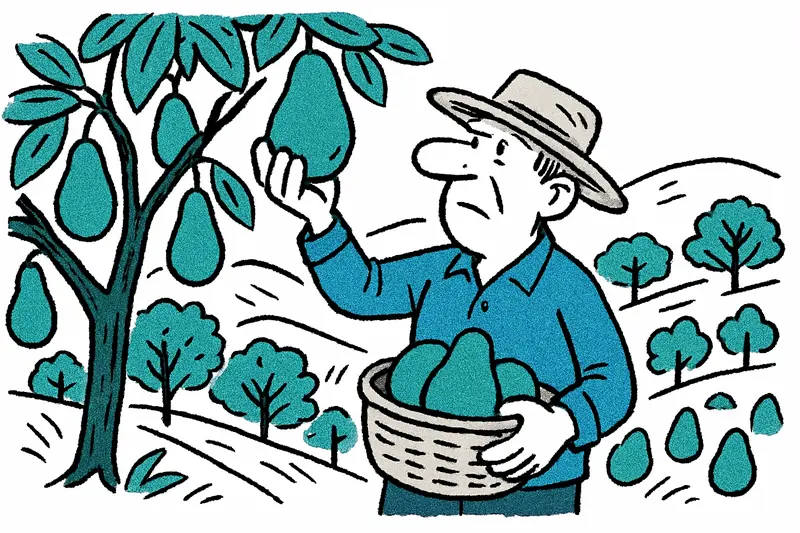
Avocados from the Tramuntana: Sóller between a Harvest Boom and a Water Dilemma
On the switchbacks above Port de Sóller more and more avocados are ripening — small plots, hand-picked fruit. But the boom raises questions: How much water can the fruit be allowed to use?
Avocados from the Tramuntana: Not an Import, but a Piece of Mallorca
If you drive up the switchbacks above Port de Sóller on a cool morning, the wind cracks through the pines, it smells of damp earth and citrus, and between orange and olive groves dark foliage suddenly appears: avocado trees. Small plots, often behind low walls, farmers in boots with a coffee cup in hand. The fruit here feels different from what you find in the supermarket: firmer, creamier, with a nutty aftertaste — almost a little luxurious.
Why the Tramuntana works — and what that means
That is no coincidence. The soils are mineral-rich, springs supply cool mountain water and many valleys are sheltered from the wind. These microclimates allow avocados to grow without the heat and salt stress of the coast. Smallholders often pick by hand and sell at the weekly market in Sóller or at the village shop in Fornalutx. The price per kilo can be as much as eight euros — expensive, but for some customers who appreciate the quality, acceptable.
But the question currently being debated in Sóller is: What does this enjoyment cost ecologically? According to estimates, one hectare of avocado trees requires between 6,000 and 8,000 cubic meters of water per year, a scale discussed in the water footprint literature. That is a lot — especially in dry summers, when the valley's reservoir becomes scarcer and market discussions grow louder, as documented in Sóller Facing a Drinking Water Emergency: Ten Days Until the Crisis?.
The little-noticed consequences
Beyond the pure consumption there are downsides that rarely make headlines: converting extensive cereal fields or pasture into higher-yielding tree crops changes the landscape, biodiversity and soil structure. Small valleys that were once open dry grassland become greener — and therefore more susceptible to pests and diseases if monoculture develops. Work patterns also shift: harvest and care require more manual labor in summer, which for some families means additional income, but for others increases labor pressure.
Another, less illuminated point is the competition for water between agriculture and tourism. When hotels and pools report high consumption on hot days, farmers feel it in their pipes, a dynamic explored in When the Tap Runs Scarcer: Mallorca Between a Tourism Boom and a Dwindling Water Source. This allocation is politically and locally sensitive: who gets priority, who pays the price?
Concrete opportunities and solutions
The answer cannot simply be "more or less cultivation." In Sóller, practical steps are already being discussed and implemented:
More efficient irrigation — Drip irrigation instead of flooding, coupled with moisture sensors, significantly reduces water use. Many small farmers now install simple measurement systems or join purchasing groups for equipment.
Water storage and reuse — Cisterns, small retention ponds and rainwater collection systems near the farm can create buffers in wetter months. Controlled use of greywater (after simple treatment) would also be conceivable.
Soil building and mulching — More organic matter in the soil retains moisture better. Mulch layers reduce evaporation; shade crops and tree strips stabilize the microclimate and promote insect diversity.
Variety selection and research — Certain avocado varieties cope with less water. Cooperation with universities and regional advisory services can help identify suitable clones and cultivation techniques for the Tramuntana.
Local value creation — Higher prices for local quality justify investments in sustainability. Direct marketing, certified production or small processing operations (oils, purees) create income without expanding cultivation area.
Between pragmatism and principles
It is heartening to see how farmers in Sóller are getting creative: they work with drip irrigation, build cisterns and exchange experiences at the bar after the market. Yet a fundamental conflict remains: avocados bring money, but they tie up water. The decision is not only ecological but also social and economic.
If you walk through the market hall in the afternoon, you hear the clinking of glass bowls, the murmur of buyers and sellers — and again and again the question: how much do we want to produce locally without endangering the common good of water? The answers lie in a mix of technology, policy and lived neighborhood help.
If you have a local avocado toast in Sóller in the morning, you are not just enjoying the fruit but an entire piece of landscape policy.
Frequently asked questions
Why are avocados grown in Mallorca’s Tramuntana Mountains?
Are avocados from Sóller different from supermarket avocados?
Why is avocado farming in Mallorca raising water concerns?
What is the best time to buy local avocados in Sóller?
Can you buy Mallorca avocados at the Sóller market?
How do farmers in the Tramuntana save water when growing avocados?
Is avocado farming good for the local economy in Sóller?
What should I know before trying local avocados in Mallorca?
Similar News

Rats in Llucmajor: How Uncollected Garbage Became a Health Problem
In Llucmajor, uncollected trash bags, overflowing containers and rain are leading to increased rat sightings. An assessm...
Sly Distraction Scam at Ballermann: How Tourists Became Targets — and What Must Be Done Now
Five suspected pickpockets were arrested. Their method: distract, secure the loot, return the wallet — without the cash....

Eviction in El Arenal: Who protects neighbors — and who protects the homeless?
A vacant hotel on Carrer Girona was cleared and secured. The neighborhood breathes a sigh of relief. But the action trea...
'La Tapita' loses its home: Who will protect Palma's last affordable meeting places?
The bar 'La Tapita' on Simó-Ballester Street will close at the end of December. For neighbors, police officers and small...

Million Heist at Bulgari: Who Is Responsible for Palma's Security Gaps?
Three men stole jewelry worth around one million euros – the crime series began at the end of September and was likely c...
More to explore
Discover more interesting content

Can Cap de Bou

Townhouse Lleo 72
