
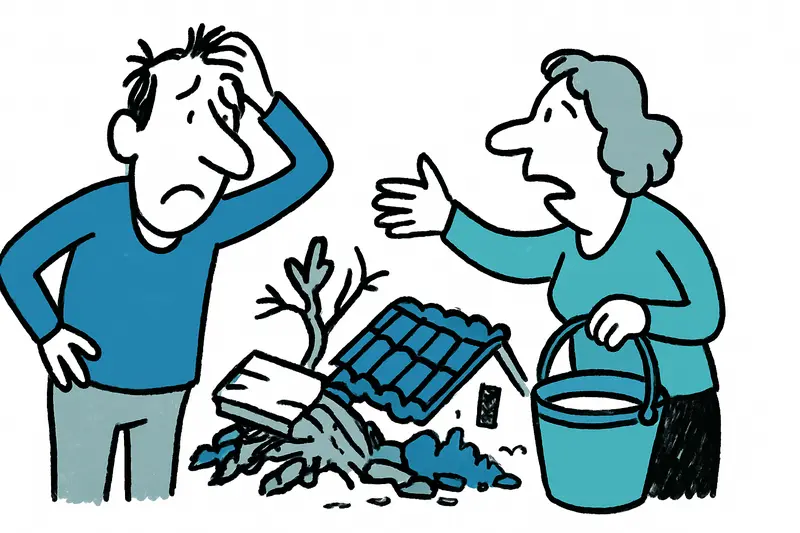
Who helps after the storms in Ibiza? A reality check for those affected
The Balearic government has allocated five million euros. Is that enough to make up for the damage on Ibiza — and who falls through the cracks? A critical look.
Who helps after the storms in Ibiza? A reality check for those affected
What do the emergency payments cover - and where does the emergency logic fail?
On 5 December 2025 the Balearic government announced an initial aid package: five million euros, fixed lump sums for damaged apartments (€2,500), lost cars (€1,500 in case of total loss) and aid for self-employed people and small businesses of up to €10,000. According to the announcement, those affected can submit applications to the Ibiza island council or online, likely until 8 January. Those are the facts. The key question remains: Who can really stabilise their situation with this money - and who will fall through the cracks?
The numbers sound good on paper. Two thousand five hundred euros per damaged apartment in many cases do not even cover the safety and drying work that is immediately necessary after a flood damage. Anyone living in port towns like Sant Antoni or in the narrow streets of Dalt Vila knows: repairs quickly cost twice or three times as much. That €1,500 per car in the event of a total loss is nice for people without a second vehicle, but it is no substitute for lost tools that were stored in many workshops, with self-employed people or in agricultural businesses in the vehicle.
And yes: the lump sums are administratively simple - that is intentional. Quick help means less bureaucracy. But here lies the second question: What about follow-up costs? Power outages, mold, psychological strain, temporary accommodation, lost seasonal orders for restaurateurs and craftsmen - none of this appears in the first calculation. Looking across the island from Port de Sóller to Palma you see the logistics chains: lorries, cargo ships, people transporting relief goods. Ibiza often lacks the capacity to respond comprehensively immediately.
What rarely appears in the public debate is the timeline of recovery. The lump sums are conceived as short-term measures. For medium- and long-term damage - buildings with structural problems, lost business years, foregone rental income - other instruments are needed: low-interest loans, tax relief, advisory services for claims settlements or legal costs. Also: who monitors whether the money reaches those who need it most? Transparency in allocation and independent audits are often missing in such programmes.
A slice-of-life scene you can observe in Palma and at the ferry terminals: a farmer from the Raiguer rolls by with a trailer loaded with mattresses and blankets for relatives on Ibiza; in a bar in Santa Catalina two friend contractors sit and discuss whether to keep workers on for half a year even though few orders are coming in. These small pictures show: the disaster is not an isolated bill, it is connected to work, family, tourism and what materials the market can supply.
Concrete solutions are obvious and should run in parallel now: first, a transparent, multi-tiered relief organisation that combines short-term lump sums with medium-term loans. Second, a local advisory service - mobile teams that assist those affected with applications, insurance questions and construction priority assessments. Third, stockpiles of building materials and infrastructure equipment that do not have to be ordered only when the rain clouds return. Fourth: an emergency fund for rent and accommodation costs so families are not pushed into precarious situations.
For the self-employed and small businesses a graduated system would help: immediate aid for running costs (utilities, rent), bridging grants for lost income and grants for replacement of business equipment - not just a single maximum lump sum. Tax deferrals and the option to prioritise public contracts could also accelerate recovery.
One final, hard truth: five million is a start, but it is limited. When resources are distributed, a criteria catalogue decides. The more precise the criteria, the firmer the grid - and the greater the risk that people with "unusual" damages fall through the net. More flexibility in individual cases is therefore important.
Conclusion: It is necessary and right that the Balearic government provides funds. However, the gap between quick, simple help and true recovery is large. Those queuing up in Ibiza now need more than a one-off lump sum: transparent procedures, targeted advisory services, funds for the following months and a perspective for businesses that cannot survive without seasonal turnover. Locally organised initiatives, swift coordination between the island council, municipalities and relief organisations and an eye on allocation practices are what will make the difference now. The next rainy season may not be around the corner - but the bill for what we did not think through will eventually arrive at the door.
Frequently asked questions
What kind of help is available in Mallorca after serious storm damage in Ibiza?
Does emergency storm aid in Ibiza cover all repair costs?
How can self-employed people in Ibiza apply for storm relief?
What should you pack for a trip to Mallorca in stormy weather?
When is storm damage in Mallorca or Ibiza usually hardest to deal with?
Is it common for storm aid in Mallorca or Ibiza to come with fixed amounts?
What are the biggest gaps in storm recovery after floods in Ibiza?
Where should people in Ibiza turn first after flood damage?
Similar News
Two Children on a Windowsill: A Nightmare Raising Questions About Supervision Duty in Mallorca
In Palma, two minors balanced on a narrow third-floor windowsill while the grandfather responsible for supervision slept...
Lightning Strike Ignites Brush Fire Between Alaró and Consell: A Reality Check
A lightning bolt sparked a fire on Saturday afternoon near Es Putxet. 2.1 hectares burned; six aircraft and 34 personnel...
Plaza of Biniaraix: When a Party Overshadows the Village Fair
In Biniaraix a private party on the central village square during the patron saint's day substantially disrupted the off...

Chromed Jaguar on the Bow: the "Kismet" Appears off Palma
The 122-metre superyacht "Kismet" of industrialist Shahid Khan is anchored off Mallorca. A look at the technology, luxur...
Beach emergency in Portals Nous: What went wrong during the rescue?
A roughly 60-year-old woman was recovered from the beach at Portals Nous on Friday evening with cardiac arrest. This tex...
More to explore
Discover more interesting content

Boat Tour with BBQ along Es Trenc Beach

Private transfer from Mallorca Airport (PMI) to Pollensa
