
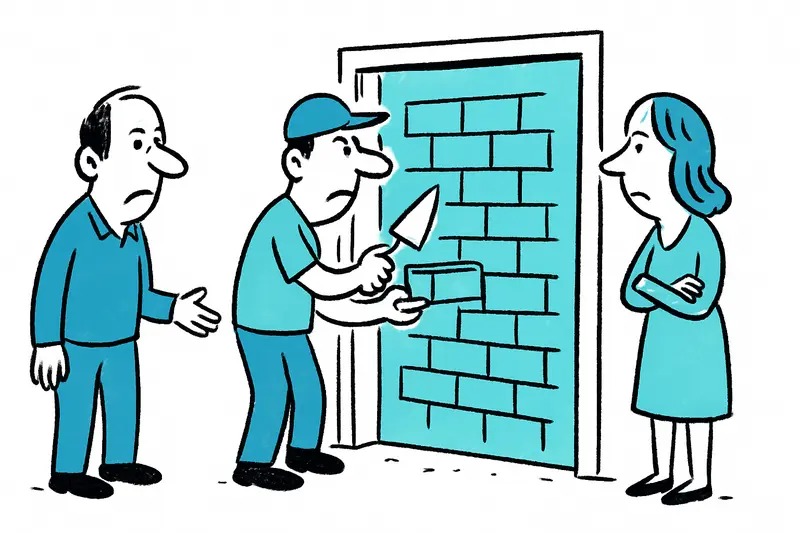
More Forced Evictions on Palma's Calle Joan Miró: Who Pays the Price?
More Forced Evictions on Palma's Calle Joan Miró: Who Pays the Price?
Forced evictions of basement dwellings are planned again on Palma's Calle Joan Miró. Two units are to be sealed off. Who loses, who ends up outside — and why isn't a million-euro fine enough?
More Forced Evictions on Palma's Calle Joan Miró: Who Pays the Price?
Key question: Do evictions on Calle Joan Miró truly restore order to the housing situation — or does the city merely shift the problem a few blocks away? In Palma the administration has announced the closure of more basement dwellings deemed uninhabitable, a trend explored in Living in Crisis: Why Tenants Are Now Paying the Price on the Balearic Islands. Social workers have prepared residents; two of the units are to be sealed in the coming weeks. These are the facts; the consequences remain largely unclear.
The images are easy to imagine: an early, grey morning on Calle Joan Miró, vans roll by, market sellers' voices mix with the rattling of wheeled suitcases. In front of a building entrance stands a woman with a plastic bag; she works part-time and receives a small pension. Next to her a young man in a construction helmet says he has no affordable alternative. These are not isolated cases — those affected work, receive pensions or try to keep afloat, and such scenes have been documented before in When Doors Are Bricked Up: Reina, Luna and the Escalating Housing Crisis in Palma. At the same time the city cites hygiene, water and mold problems in the basements as reasons for closures. The owner has already been fined one million euros, a situation reminiscent of Manacor clears settlement: When rental profits push people into shacks.
Critical analysis
Evictions are legally possible when housing is uninhabitable. Still, they are not a magic tool against housing shortages. The city acts within its duty to avert danger — but the measure hits people who are already on the margins. Two problems stand out immediately: first, it removes refuges but creates no replacement housing. Those who leave a basement unit are usually left without a transition. Second, a large fine against the owner sends an important signal — but whether it forces investment in safe housing or simply acts as a bureaucratic nuisance is unclear.
What is missing in the public debate is a discussion about replacement offers and prospects for those affected. The news of sealed basements attracts brief attention, then the doors are closed and people are out on the street. Short-term inspections without accompanying accommodation are socially, medically and economically risky: mold and hygiene problems lead to health costs; CDC guidance on mold and health outlines associated risks; homelessness increases pressure on emergency services; employment relationships break down when people are left without a stable address.
Missing building blocks in everyday life
In conversations on-site one hears the same sentences: 'I work, but I can't find anything affordable', 'My pension isn't enough for a flat in Palma'. These voices show that it's not only about law enforcement, but about accessible, affordable housing for people in marginal jobs, retirees and those with precarious contracts. In Mallorca, where tourism and holiday rentals drive up prices, grey zones emerge — basements, rooms and unclassified sublets.
Concrete solutions
A few proposals, practical and realistic: first, the city must provide guaranteed transitional accommodation before sealing doors. Mobile emergency beds, short-term social housing or contractually secured hotel rooms pay off in the long run. Second, a central fund should help precarious tenants in the short term — rent vouchers, placement in shared flats, transport costs for moving. Third, there needs to be a mapping of vacant apartments and a temporary reactivation regulation: higher taxation on vacancies, making empty properties available and defining simple standards for short-term use. Fourth: mandatory landlord monitoring with accompanying measures — fines combined with renovation orders and access to advisory and funding programs.
Practically this also means cooperation with welfare organizations, parishes and local neighborhood groups. Medical checkpoints for households affected by mold, mobile shower and laundry facilities, on-site legal advice — these are measures that could mitigate the hardship of an eviction.
What remains to be done
One point is clear: the million-euro sanction against the owner is necessary but not sufficient. It punishes responsibility but does not create new housing. Those in a transition need a plan, not a stamp on the door. The city must link enforcement of closures with social work, health services and temporary accommodation. Otherwise the problem will only move to the margins — louder, more visible and more expensive for everyone.
Conclusion: Evictions on Calle Joan Miró are a sign that the regulatory machine is working. The decisive question remains whether, as an urban society, we turn mere rule enforcement into a system that prevents housing and health risks instead of shifting them. If, in the end, people with jobs and pensions end up on the street, the measure has failed.
Frequently asked questions
What is the weather usually like in Mallorca in late May?
Can you swim in Mallorca in late May?
Is late May a good time to visit Mallorca?
What should I pack for Mallorca in late May?
What is Cala Mesquida like in Mallorca?
What makes Santanyí worth visiting in Mallorca?
Is Sineu a good place to explore in Mallorca?
What is Artà known for in Mallorca?
Similar News

More water than last year: Mallorca's reservoirs breathe easier
September rain refilled the Tramuntana's reserves: overall fill around 35 percent, Cúber at 40.42 percent, Gorg Blau at ...
Three Luxury Hotels in Banyalbufar: Lots of Money, Many Questions
A Danish investor plans three exclusive accommodations in Banyalbufar — including the historic Son Valentí. The announce...
2.1 tonnes of cocaine on sailing yacht off Spain's coast – a reality check for the coastguard
A 14-metre yacht was seized with 2.1 tonnes of cocaine. Who monitors the ports, how does the international hunt succeed ...

Heat Bonus in Mallorca: 100 Euros Extra for Outdoor Staff at MarSenses
MarSenses pays employees who worked outdoors in August an extra €100 as recognition. Lighter uniforms, reduced hours for...
Renovating in Mallorca: What You Really Can Do Without Neighbour Consent
Many think they can do whatever they want in their apartment. That's partly true — but only as long as structural elemen...
More to explore
Discover more interesting content

Can Cap de Bou

Townhouse Lleo 72
