
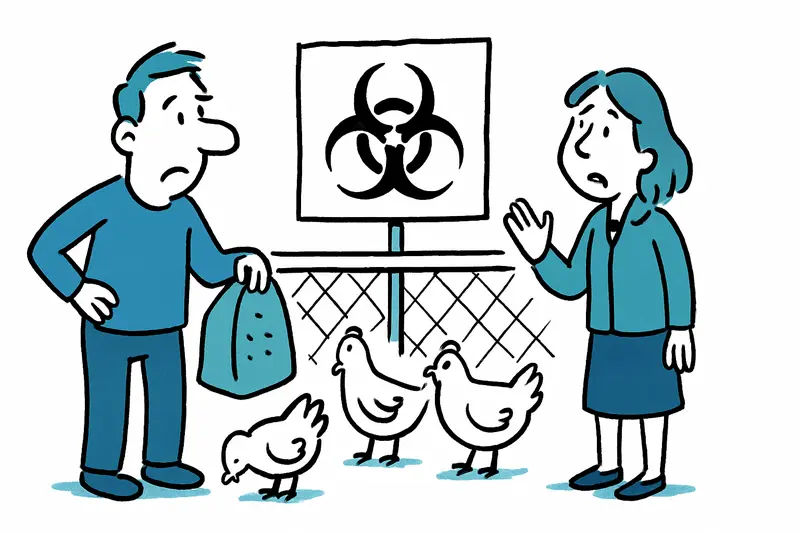
Balearic Islands Tighten Rules Against Bird Flu – Feeding Only in Protected Areas
The Balearic Islands are now a high-risk zone for bird flu. Feeding is only permitted in protected areas. What this means for small keepers, markets and tourists — and which gaps remain.
Balearic Islands declare high-risk zone: more protection, more responsibility
At dawn on the Plaça Major the smell of freshly brewed café con leche drifted over the market stalls, and between olives and almond biscuits the new rules were hotly debated. Since this week, the Balearic Islands have officially been designated a high-risk zone for avian flu. Authorities' message is clear: contact between wild birds and domestic poultry must be prevented as much as possible. But how does that work here, between ancient stone walls, small courtyards and the large wetlands of the island?
The new rules in everyday life
At its core it says: feeding only in protected areas. No more open feeding spots at the field edge, no bread for ducks at ponds, no loose grain mixes in the backyard. Poultry keepers — whether in Sóller, Campos or Llucmajor — must now take measures to keep wild birds out. This includes simple steps like coverings for feeding troughs, but also organisational measures: separate footwear and clothing for stable work, regular cleaning and disinfection, and close observation of the animals.
Unlike on the mainland, no general indoor confinement has been imposed; for local coverage see Avian flu in the Balearics: Compulsory housing in 14 municipalities – is the measure sensible?. That may initially sound like a relief, but it shifts the burden of prevention onto the shoulders of small holders. Those who let their hens roam outdoors now carry the responsibility — and the risk.
What remains in the shadows: gaps that pandemic policy barely addresses
The guiding question, rarely spoken aloud: Are these rules enough when inspections and resources are lacking? Public debate is dominated by bans and notices. Less attention is paid to structural problems that are particularly acute in Mallorca: the multitude of small, informal holdings, seasonal workers, often cramped building conditions in villages and the proximity to wetlands where migratory birds stop.
Inspections need personnel. Many municipalities have little capacity for widespread checks, education and rapid sampling. Who will check whether a cover is truly secure against outbreaks or whether hygiene rules are being followed on a small farm in Santanyí? And how quickly are suspected cases tested and results communicated? See ECDC guidance on avian influenza.
Concrete opportunities and solutions
The situation is serious, but not hopeless. There are practical steps that can work locally:
1. Mobile advisory teams: Small veterinary teams that can be deployed at short notice could visit municipalities, inspect holdings, demonstrate practical coverings and distribute starter kits with gloves, disinfectant and information signs. Especially in rural areas like Campos or Petra this would build trust. See FAO avian influenza resources.
2. Subsidised protective measures: Grants for simple modifications — covers, sealed feeding troughs, better ventilated coops — would be an investment that prevents outbreaks in the long term. For hobby keepers the costs are often otherwise too high.
3. Clear local communication: Not just websites and press releases, but posters at markets, loudspeaker announcements at the weekly market and conversations at the town hall bring the rules to those who need them most. Today at the Son Ferriol market I hear a hen keeper explain: "I'm locking my three hens in at night and covering the feed now." Small successes like this need visibility.
4. Regional reporting chains and testing capacity: Rapid tests on site, simple reporting forms and designated contacts in each municipality would drastically reduce response times.
What visitors and neighbours can do now
For holidaymakers and residents little changes about beach walks or tapas evenings. But please: no bread for wild birds, no selfies with duck feed; see WHO avian influenza overview. If you see signs or municipal staff giving advice, follow them. If you rent a country house and see chickens there, ask the owner whether protective measures are in place.
The new classification as a high-risk zone is a wake-up call: it's not just about rules, but about practical implementation. With mobile advice, targeted funding and local engagement the weaknesses could be closed. Otherwise much uncertainty remains — and silence on the farms if an outbreak threatens animals and festivities. The little hen keeper in Son Ferriol has already taken one step: night confinement and covered feed. More of that, please.
The question is not whether we have rules — but how we live and enforce them here. That is the real challenge for Mallorca.
Frequently asked questions
What do the new bird flu rules mean for Mallorca residents?
Can I still feed ducks or wild birds in Mallorca?
Do I need to keep backyard chickens indoors in Mallorca?
How can small poultry keepers in Mallorca protect their hens from avian flu?
Is avian flu a bigger risk near wetlands in Mallorca?
What should holiday home owners in Mallorca do if there are chickens on the property?
Are there local bird flu checks for farms in Mallorca?
Can visitors in Mallorca still go to beaches and markets during the bird flu alert?
Similar News
After Being Admitted to Hospital Again: Heinz Hoenig and the Questions We Should Ask in Mallorca
Long-time Mallorca resident Heinz Hoenig was admitted to hospital again. A clear “what next?” is missing from the covera...
Yellow Alert: Is Mallorca Prepared for the Next Rain Band?
Aemet has issued a yellow alert for the south, southwest and the island's interior. Thunderstorms and heavy rain are for...
Kegel brothers trial postponed: Why Mallorca must wait for a verdict
The trial of 13 German holidaymakers will not begin until May 2028. The long wait raises questions — for victims, defend...

Chaos on Palma's Runway: Why the Summer at the Airport Was So Disrupted
This summer laid bare where Palma airport is faltering: only just over half of departures were on time and seven percent...

Cocaine Offer on Ham Street: Why the Open Trade Should Ring Alarm Bells
In the middle of Pare Bartomeu Salvà a tourist was offered a packet of cocaine as part of a sunglasses deal. A short int...
More to explore
Discover more interesting content

Can Cap de Bou

Townhouse Lleo 72
