
Balearic Islands: When the Average Wage Becomes an Alibi
Balearic Islands: When the Average Wage Becomes an Alibi
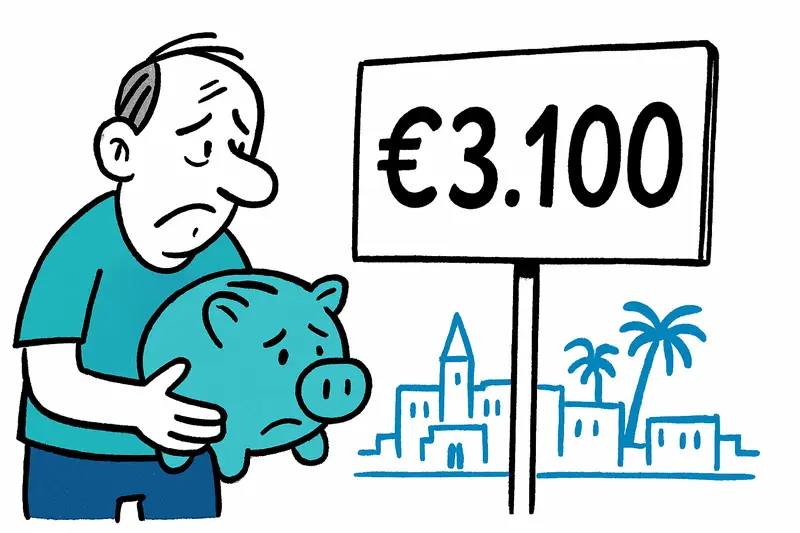
A study shows: €23,100 gross is no longer enough on the Balearic Islands for housing, food and utilities. Housing consumes almost 78 percent of the average income. A reality check between Paseo Marítimo and Mercat de l'Olivar.
Does the average wage on the Balearic Islands still suffice for a normal life?
The sober numbers are on the table: around €23,100 gross per year is the Balearic average wage, but a household would need about €31,600 to pay rent, food and basic costs. For contrast see Valldemossa Tops the List: What Does the High Average Income Really Mean?. And one more detail: housing now swallows almost 78 percent of this average income. These are not abstract statistics, this is everyday life in Palma, Alcúdia or Cala d'Or.
Critical analysis: Where the money disappears
When cafes open on Avenida Jaime III in the morning, you see waiters with buses full of tourists and cleaners with mop buckets side by side. Many of these people have full-time jobs—and yet at the end of the month barely the essentials are covered, as shown in Why so many people on the Balearic Islands have two or three jobs. The calculation is simple: high rents, rising energy prices, more expensive groceries, a pressure examined in Why Food Is So Much More Expensive in the Balearic Islands — A Reality Check. When almost four fifths of income goes to housing, there is little room left for transport, childcare or unexpected bills.
Tourism brings jobs, but often segmented, seasonal employment and pressure on the housing market. Short-term rentals attract investors seeking returns; housing becomes a business. The consequences: local families are pushed to the outskirts, young people can't find affordable housing and skilled workers consider whether to stay, a disparity explored in Two Palmas: Why the wage gap in Palma is growing — and what should happen now.
What's missing in the discourse
Conversations often lack the concrete accounting: how many households are actually over-indebted? Where is the biggest gap — among single people, families with children or older people? There is a lack of transparent figures about the effect of existing aid and how much affordable housing is municipally owned. It is also rarely clearly stated how much short-term holiday rentals drive rents in certain neighborhoods; there are local anecdotes but too little systematic recording.
A daily scene from Palma
At Mercat de l'Olivar a seller discusses price increases with regular customers. Next to her a delivery van is parked; two young people, new to the city, carry boxes into a small third-floor apartment without an elevator. They work in restaurants but pay a rent that once would have covered two people. The air smells of freshly brewed coffee, and yet you can see the unease on faces — the island is beautiful, but tight for many.
Concrete solutions
- Tighten rental policy: clear limits for short-term rentals in the most affected neighborhoods and stronger enforcement. Municipalities could make conversions of apartments into tourist units more difficult and register vacant apartments.
- Social housing: targeted investments in cooperative and municipal housing rented at affordable long-term rates.
- Wage policy: negotiations to raise lower income brackets and sector-specific minimum wages, linked to indexation for rents and energy.
- Steering tax benefits: tax incentives for landlords who rent long-term to locals instead of focusing on short-term lets.
- Relief on basic costs: tiered energy and food subsidies for low-income households as well as expansion of childcare places so more people can work full time.
Conclusion
The facts are not new, but they are becoming more urgent: an average wage that barely covers basic needs is not an accident but the result of political and economic decisions. If the Balearic Islands want people to not only vacation but live here, they must plan bolder. It's not just about more money for individual workers — it's about a system that rebalances housing, work and the common good. Otherwise Palma remains a beautiful place where few live and many only visit.
Frequently asked questions
Can you live normally in Mallorca on the average wage?
Why is rent in Mallorca so hard to afford?
Why do so many people in Mallorca work two or three jobs?
Is Mallorca still affordable for young people and families?
What is the situation like for workers in Palma’s city center?
How do short-term holiday rentals affect housing in Mallorca?
What solutions are being discussed for the housing problem in Mallorca?
What are everyday living costs like in Mallorca beyond rent?
Similar News
Why the End of "Los Últimos Mohicanos" Is More Than the Closing of a Bar
With squealing tires and one last glass, an icon on the Palma–Manacor expressway closes. Why the demise of this German b...

Protest camp on Plaza España: Who asks for solutions to the right to housing?
Around 30 activists set up a tent camp on Palma's Plaza España to push for stronger tenant rights. Our analysis asks: Ar...

In the Name of a Gang: Alleged Extortion in El Molinar and What It Reveals About the Protection of Sex Workers
A man is accused of posing as a member of the Hells Angels and extorting two women at accommodation in El Molinar. The s...

When Chile Meets the Mediterranean: A New Flavor at Can Bordoy
At Can Bordoy in Palma's old town, Chilean chef Jhonatan Maldonado combines Patagonian seafood with Mediterranean island...
End of an Era on the Ma-15: Why the Biker Hangout at Son Gual Is More Than Just a Restaurant
"Los Últimos Mohicanos" closes unexpectedly. A meeting place for motorcyclists on the Palma–Algaida border is disappeari...
More to explore
Discover more interesting content

Can Cap de Bou

Townhouse Lleo 72
