
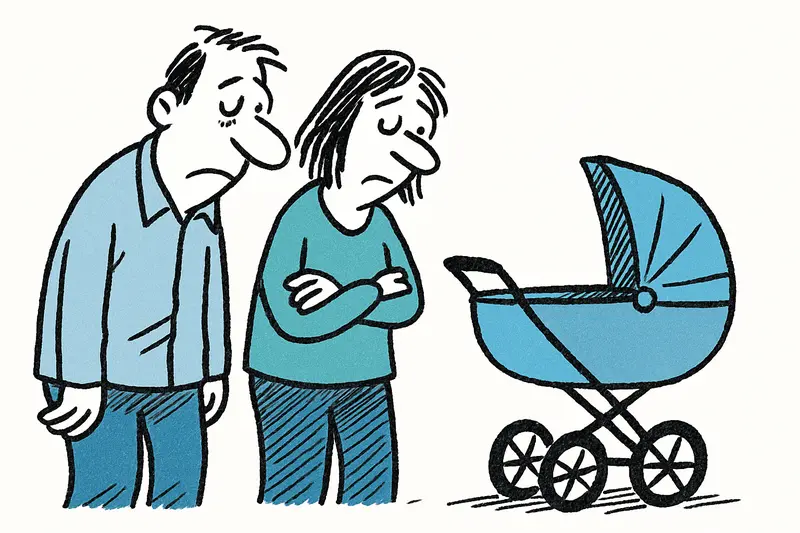
Birth Crisis in the Balearic Islands: What Does the Decline Mean for Mallorca?
The Balearic Islands recorded a noticeable drop in newborns in the first half of 2025. Why this is more than just a statistic for Mallorca — and which steps are now needed.
Drop in births in the Balearic Islands: A wake-up call for Mallorca
The numbers sound sober, but they speak clearly: in the first half of 2025 only 4,145 children were born in the Balearics — about five percent fewer than the previous year. At the same time, deaths rose slightly to 5,510. The result is visible: natural population change turns negative — a trend also highlighted in When the strollers are missing: Mallorca's quiet demographic wake-up call. For an island group that relies heavily on tourism and local communities, this has consequences.
Who becomes a mother anymore? Late family formation
One figure stands out: most mothers were between 30 and 34 years old. That is not surprising, but it is significant. Many couples postpone having children because of work, housing costs or lack of childcare — an issue explored in Population boom in the Balearic Islands: What does it mean for Mallorca?. In Palma's market you hear the clinking of coffee cups in the morning more often than prams. The baker on the corner half-jokingly notes that “baby rolls” are asked for less often. Such small observations reflect larger decisions: when rent consumes a large part of income, planning another child becomes less likely.
The problem behind the statistics
Fewer births plus more deaths does not only mean fewer children on schoolyards in ten years. It means fewer young workers, greater strain on care and health systems, potential shortages in sectors that rely on young, flexible staff — from construction to hospitality. In small communities the effects are felt even faster: schools with half-empty classes, clubs that miss new members, villages where the average age is rising.
What is often left out of the discussion
We talk a lot about daycare places and nursery fees. Important, no question. But there are aspects that rarely appear in the public debate: the role of holiday rentals and speculative housing markets, seasonal employment that makes it hard for young families to find secure full-time jobs, and how second-home ownership reduces the availability of permanent housing. The psychological component also plays a role: anyone living in a neighborhood where few children play will think twice about planning a family.
Concrete opportunities and solutions
The good news: many measures are known and effective — they just need to be implemented locally and boldly. In the short term, more nursery places, flexible care hours and subsidies for young families help. One experiment worth trying: municipal housing projects with rent controls for families, combined with co-working and childcare offers. In the long term, a housing strategy is needed that promotes the construction of family-friendly apartments and curbs speculation.
The world of work also has to cooperate: incentives for year-round employment in tourism businesses, training programs for young people and stronger support for home office infrastructure in smaller towns could help families stay rather than move away. Care and senior infrastructure must be expanded in parallel to maintain the balance between old and young.
Who pays, and how quickly will it help?
Many of these measures cost money — that is indisputable. But costs are also the consequences of inaction: empty schools, closed shops, an aging island economy. It is about setting priorities differently: directing public funds more strategically toward family-friendly infrastructure, cooperating with the private sector and pragmatic solutions at municipal level. Examples would be grants for new buildings with family apartments, tax breaks for small businesses that provide childcare, or temporary rent-control measures in particularly affected areas.
A call from the neighborhoods
On the Plaça Major and in small towns like Alaró you hear the same concerns: young couples complaining about rents, parents waiting months for a daycare place, grandparents increasingly having to step in. The weather changes, the beaches remain full — a contrast also discussed in Have the Balearic Islands really become less crowded? A look at the August 2025 numbers — and yet island society is changing. The challenge is not just to smooth the statistics but to shape life in Mallorca so that families can plan and stay here.
The numbers are not an immediate drama, but they are a clear wake-up call. The central question is: do we want an island that in 20 years still features lively villages and full schoolyards — or do we accept that the map will look different soon? If you have local experience with finding childcare, job hunting or housing problems: write and tell what is really going on. Stories from the neighborhoods are often the best compass for smart, local solutions.
Frequently asked questions
Why are fewer babies being born in Mallorca and the Balearic Islands?
What does a negative birth trend mean for Mallorca’s future?
At what age are women in Mallorca having children now?
Is childcare in Mallorca a problem for young families?
How does the housing market affect families in Mallorca?
Why do smaller towns in Mallorca feel the population decline faster?
What is being discussed in Palma about falling birth rates?
What solutions could help families stay in Mallorca?
Similar News
The End of the Cheap Ride? Why Mallorca Is Hit Harder by the Fuel-Price Shock
Gasoline and diesel average close to two euros per liter. What this means for commuters, supply chains and renters in Ma...
Relaxed liquid rules in Munich: What Mallorca travelers will notice
At Munich Airport the 100-milliliter rule will be lifted at all checkpoint lanes — thanks to new CT scanners passengers ...
For 45 Years on Mallorca — and Then This: How a Market Visit in Santa Ponsa Became a Lesson
A woman who has lived on the island for decades lost money and important documents at the Mercat Setmanal in Santa Ponsa...
10 percent surcharge on the beach: How legal and transparent is the extra charge at Playa de Muro?
A German part-time resident noticed days after a restaurant visit in Playa de Muro that the bill included a flat ten per...

Body near the Llevant Market: What this death says about our city
A man was found dead on Sunday afternoon near the Llevant Market. Police say the death appears natural. The scene raises...
More to explore
Discover more interesting content

Can Cap de Bou

Townhouse Lleo 72
