
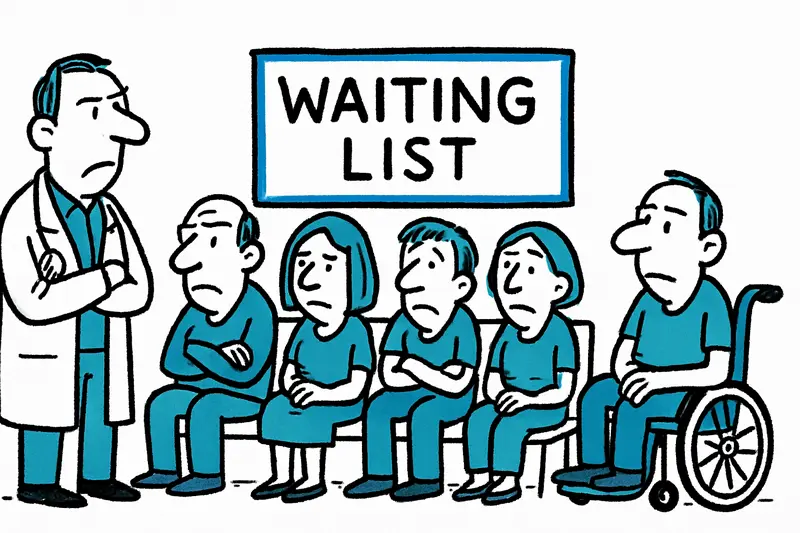
Waiting lists in the Balearic Islands: Too many patients, too little OR time — and what must be done now
More and more patients in Mallorca and the neighboring islands are waiting longer than six months for scheduled operations. Why the lists are growing — and which concrete steps could improve the situation in the short term.
Waiting rooms, the smell of coffee and quiet despair
In the early morning a few people sit on hard chairs in the corridor outside the operating area of Son Llàtzer, the coffee machine's cup clinks, a bus rolls by outside, somewhere a monitor beeps — and the clock seems to stand still. This scene can now be observed on several islands: in Inca, Mahón or Ibiza scheduled procedures are being postponed for longer and longer.
Numbers that hurt
Almost 2,800 patients in the Balearic Islands are currently waiting longer than six months for a planned operation. The average waiting time is around 105 days — and compared to last year this is a sharp increase of almost 50 percent. These numbers are not abstract; they mean postponed hip and knee replacements, prolonged pain, limited mobility and growing worry in family corridors, as reported in Baleares: cada vez más pacientes esperan más de medio año para operaciones.
The guiding question: How can waiting times be reduced sustainably?
This is the central question behind the sober figures. The answer is not a magic button but a mixture of personnel policy, organizational changes and political priorities. We need to look more closely: which causes are known — and which aspects are too rarely discussed in the debate?
More than just a staff shortage
Clearly, specialists are lacking: operating room nursing staff, anaesthetists, medical specialists. But there are several layers behind this. The aftermath of the coronavirus pandemic led to catch-up effects, the tourist season adds extra strain in the summer months, and many clinics have changed their internal procedures — not always for the better. In addition, higher wages or more flexible conditions on the mainland are drawing staff away from the local market.
Little attention is paid to working conditions: short-term contracts, night and weekend shifts without a clear perspective, and the constant rotation of high-value cases between islands lead to burnout and migration. The infrastructure of some island hospitals is also not designed to quickly ramp up additional operating days.
What affected families really experience
In Palma a daughter tells: the mother is waiting for a hip replacement, appointments are postponed, phone calls lead nowhere (Hospital hotline crippled: Why appointment scheduling on the Balearic Islands is failing). Others travel to the mainland and pay privately — if they can afford it. For many this is not an option: travel costs, additional tests and the uncertainty whether a mainland appointment is really better add further burden.
Concrete approaches — immediately implementable
Some measures would bring short-term relief without taking years:
1. Additional operating days with targeted compensation: Clinics could offer targeted extra shifts — evenings or weekends — if staff are adequately compensated for them.
2. Mobile OR teams and island rotation: Experienced operating teams could temporarily rotate between islands to cover bottlenecks. A logistical concept focusing on standardized procedures would increase efficiency.
3. Fast recruitment channels: Shortened procedures for international specialists, recognition offices with clear timeframes and incentive packages for longer-term retention.
4. Better coordination and waiting list transparency: A shared waiting list platform for the Balearics that makes free capacities visible could allow patients to be relocated to last-minute free slots and minimize idle time.
5. Preventive and outpatient alternatives: More outpatient procedures, outpatient rehab and teleconsultation before and after operations reduce inpatient load and create space for more complex cases, in line with international analyses on reducing waiting times OECD: waiting times for health care.
Think long term — training and retention
Short-term measures help, but are no substitute for strategic personnel policy: apprenticeships, continuing education on the islands, better working conditions and prospects for young doctors and nurses are necessary so that the Balearics can permanently provide stable care.
Political responsibility and local reality
Authorities are already examining additional operating days and targeted hires. But this is not enough if processes are too bureaucratic or funds are not used in a targeted way, as highlighted in Empty Offices, Full Waiting Rooms: Why More Than 100 Leadership Positions Are Missing on the Balearic Islands. Political pressure is needed — and an understanding that health systems must remain resilient even in times without a pandemic.
A quiet wake-up call from hospital corridors
The numbers are sober but the effects are tangible: lost workdays, pain, palpable exhaustion among nursing staff and the feeling of being stuck in a holding pattern. A few extra operating days here, more flexible contracts there and better coordination between islands could improve a lot. The central question remains: Do we want to patch the problem short-term — or tackle it systematically?
In the corridor in front of Son Llàtzer, while the coffee cools and the Tramuntana pushes a few clouds over Palma, people continue to wait. And the islands should act now so that those waiting soon become people who experience healing — without months of hoping.
Frequently asked questions
Why are hospital waiting lists getting longer in Mallorca and the Balearic Islands?
How long are patients waiting for planned operations in the Balearic Islands?
What can be done quickly to reduce operation waiting times in Mallorca?
Why do staff shortages affect surgery waiting times in Mallorca so much?
Can patients in Mallorca be moved to other islands for surgery?
Is it worth going to the mainland for surgery if the wait is too long in Mallorca?
What do long waiting lists mean for patients in Mallorca day to day?
What longer-term changes could help health care in Mallorca avoid these delays?
Similar News
Autumn approaches on the island: Still sun, but a rain band will soon bring relief
The last warm days on Mallorca are still here – around 30°C by day, just under 20°C at night. According to AEMET, a rain...
TV documentary on the Mediterranean: How threatened is Mallorca really?
A new television documentary follows marine research off Mallorca and shows: sea temperatures are rising, and farmers ar...
After Ceuta: Intelligence Activities in Mallorca – A Reality Check
The CNI, National Police and Guardia Civil have intensified their surveillance in Mallorca. What does this mean for isla...
An evening that resonates: Hans Theessink in the Claustre of Llucmajor
With a guitar, dry humour and a voice that carries stories: Hans Theessink turned the Claustre de Sant Bonaventura in Ll...

Reality Check: Will Mallorca Become the Weather Laboratory of the Mediterranean?
A new TV documentary has the Mediterranean off Mallorca in its sights. What research shows — and what we on the coast st...
More to explore
Discover more interesting content

Can Cap de Bou

Townhouse Lleo 72
