
New Tricks at Ballermann: How Pickpockets Exploit Playa de Palma — and What Actually Helps
At Playa de Palma, theft gangs are operating with growing sophistication: distraction techniques, secretly burying stolen items, and tech traps. An analysis of the methods and concrete countermeasures for tourists and hosts.
New Methods at Ballermann: Why Caution at Playa de Palma Is More Than Paranoia
Key question: How are the new pickpockets at Ballermann organized, and what would have to change so the Playa doesn't become a hunting ground for professionals?
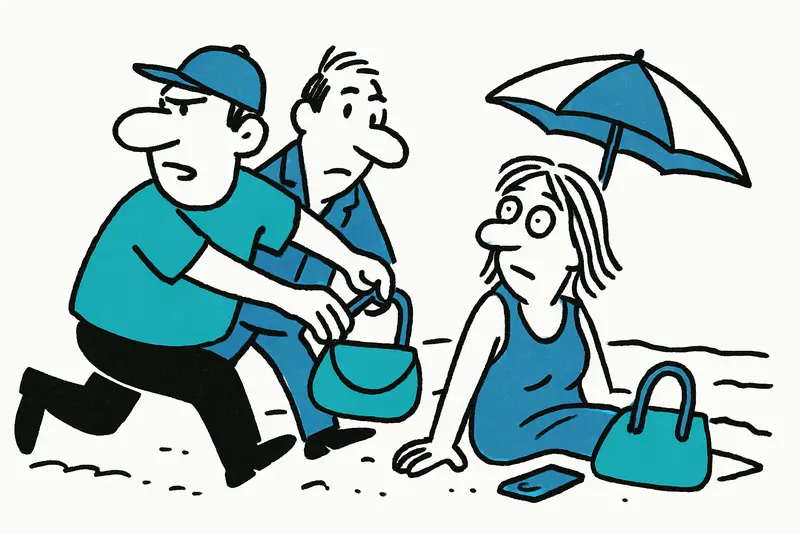
It's late evening, the Gloria bar bass mixes with the waves, the last sun-seekers are rolling up their beach towels. It is exactly in these moments that thieves exploit inattention. No brawl, no big drama — just a quiet hand and the bag is gone. Tourists observed such scenes at the end of August at Playa de Palma, as noted in a Mallorca Magic report on Ballermann thieves. The police later dug up a buried handbag and a mobile phone from the sand, only a few meters from the scene.
How the scheme really works
Those working here are often organized. They are not always lone opportunistic thieves. We see groups that operate in roles: distractor, pickpocket, lookout. The distractor starts the show — asks for change, starts a loud complaint, or drops a glass. While everyone's looking, the second person reaches in. Calm, practiced, without drama.
An example: a street vendor ("Helmut") was arrested because he allegedly pulled money from one woman's bag and stole another woman's phone. Ironically, the stolen phone's watch betrayed the perpetrator — the device sent a location message when the thief was more than ten meters away. This echoes other ruses described in the 'Defective Key' trick report. Such technical traces are helpful, but they do not replace what is missing on site: attention and prompt reporting.
What many overlook
Public debate often focuses only on police staffing. Other points are less visible: the role of seasonal worker groups, arrivals from abroad, the use of shifts, targeted cashing in at busy exits of beach bars. Small things are also underestimated: beach-lounger rentals, inattentive managers of rental stations, missing multilingual notices for tourists.
Another underestimated trick: briefly burying loot. The sand acts like camouflage. Perpetrators hope that tourists, after the initial shock, will not search thoroughly. When the group leaves, the search often never happens.
Concrete, immediately actionable measures
Some measures really help and cost little:
For tourists: Keep bags closed and on your body, not open next to your towel. Activate location services for phone and smartwatch, following the Apple support guide to locating a lost iPhone. Share your location if you need help — three attentive strangers often help more than a distant police officer. If in doubt, photograph license plates, descriptions, time and place; for practical local advice see Stay Safe: How to Avoid Pickpocketing in Mallorca.
For bars, lounger rental companies and hosts: Display visible notices in multiple languages. Train staff to address suspected street vendors and suspicious people — politely but directly. Small measures like lockable bag compartments or secure handover points greatly reduce opportunities.
Longer-term approaches — politicians and police are called upon
More uniforms alone are not enough. Coordinated measures would make sense: targeted presence in the evening hours, temporary CCTV zones at critical points, a quick line of communication between beach wardens, rental operators and the police. Cross-border cooperation is equally important: those who work in shifts and across national borders need cross-border police work.
Preventively, municipalities and tourism providers could invest in secure lockers bookable by QR code, or start info campaigns that explain, concretely and in multiple languages, how thieves operate. A small sign at the beach bar saying "Watch your belongings" may sound trivial, but it often acts as a deterrent; for official travel guidance see the UK Foreign Travel Advice for Spain on safety and security.
A look at everyday life
In the evening on the Paseo Marítimo: taxi drivers call out, the last lights flicker, somewhere a glass clinks. The scene is familiar, it's Mallorcan. But something has changed — not everything, but enough to make you look more closely. Distrust is not distrust of the island; it is a small shield against professional exploiters of inattention.
The local police acted quickly in one case. That was right. But relying on that alone would be naive. We need a mix of community vigilance, technology and better coordination between hosts and authorities. Then the Playa will be once again more a place for an evening beer by the sea and less for pickpockets.
Note: In case of theft, report it immediately and have stored devices located. Write down the time and place — this helps the police.
Frequently asked questions
How do pickpockets usually work at Playa de Palma in Mallorca?
What should I do immediately if my phone or wallet is stolen in Mallorca?
Is Playa de Palma safe in the evening?
What are the best ways to protect my bag and phone at the beach in Mallorca?
Why do pickpockets target tourist areas like Ballermann in Mallorca?
Do beach bars and lounger rentals in Mallorca do anything to prevent theft?
Can buried items in the sand be stolen at Playa de Palma?
What practical anti-theft steps really help on a Mallorca beach holiday?
Similar News
Why the Striped Breams in Cala Pí Should Be a Wake-up Call
Once again bathers in Cala Pí were surrounded while swimming by small, nippy fish — some wounds bled. Time for clear rul...

Daily from New York: How Palma's Air Traffic Is Growing — and What Must Change
United will increase the Newark–Palma service to daily flights in 2027 (Boeing, 231 seats). Strong tourist numbers clash...

When Love Ends in Shards: Destruction in Son Vida and the Questions That Remain
In Son Vida a relationship dispute escalated: a woman destroyed furniture in a luxury villa, later pressed a panic butto...

Who Bears the Burden? Mallorca Between Tenant Protection and Landlord Fears
Madrid's new housing decrees strengthen tenant rights — but on Mallorca concern is growing: will the law drive small lan...
On the Edge: What Mallorca's Airport Loses If a Major Low-Cost Carrier Falters
The company that operates numerous connections from Palma to France and domestically is negotiating with creditors to re...
More to explore
Discover more interesting content

Can Cap de Bou

Townhouse Lleo 72
