
Before the New Year Festival: How Palma's Chinese Community Blends Everyday Life and Celebrations
Before the New Year Festival: How Palma's Chinese Community Blends Everyday Life and Celebrations
In Pere Garau and on Carrer Rafael Rodríguez Méndez, Chinese ways of life and Mallorcan everyday life meet. A look at work, language and the shared celebration of the Spring Festival.
Before the New Year Festival: How Palma's Chinese Community Blends Everyday Life and Celebrations
Between the counter, tostada and the dragon: integration, work and a shared place at the table
On a sunny morning strolling through Pere Garau, the scent of freshly brewed café con leche mixes with the distant clatter of a food processor and the rumble of a delivery scooter. In recent years many people from China have settled in these streets — not only with classic Asian restaurants, but with bars and cafeterías where Mallorcans and newcomers have breakfast together and chat about the latest neighborhood gossip.
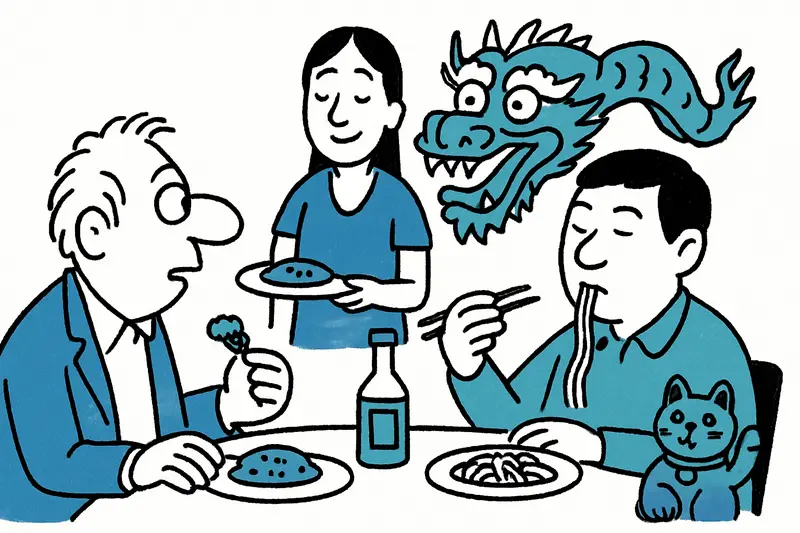
The scene is practical: the counter, a few tostadas, olive oil, small tapas and next to them a golden beckoning cat (maneki-neko). Places like those on Carrer Rafael Rodríguez Méndez combine bocadillos and croquettes with fried rice or spring rolls. The result is not a cultural clash but a practical mix: Spanish is spoken here, Mandarin or Cantonese there, and children switch into Mallorcan in the middle of a sentence.
Around 12,000 Chinese citizens live in the Balearic Islands; over 10,000 of them on Mallorca. Many work in gastronomy and retail and in recent years have made the leap from small snack bars to larger businesses. Associations like Achinib accompany this development and show that it is often about economic stability — and about reuniting families when parents have established themselves here.
The everyday picture is varied: in a small bar in the neighborhood you can hear the laughter of the server taking orders in Spanish while calls are heard in Chinese from the kitchen. Some entrepreneurs talk about hard work and that at least they have weekends in Spain — a luxury compared to the everyday life they knew back home. At the same time many are proud of their language progress; Spanish is often learned here at the counter, between order slips and small conversations with regulars.
Multilingualism is part of daily life: children from Mallorcan–Chinese families grow up with Mandarin, Cantonese, Spanish and Catalan — some also learn English or even German at school. This younger generation often acts as a bridge between two worlds: they bring both traditions to the table, whether at a shared Sunday meal or at neighborhood celebrations.
These days red lanterns already hang in Pere Garau, and small groups are rehearsing dragon dances for the Spring Festival. The festival is an anchor: it brings neighbors together, makes cultural differences fade and invites Mallorca to experience a piece of another culture in the middle of the city. Such street festivals, whether a local fair like First 'Fira del Variat' in Pere Garau: Palma celebrates sharing on small plates or larger events such as Palma as a Stage: FiraB! Brings Dance, Circus and Street Art to the Old Town, are not just a show; they are lived integration — in practice, not on paper.
What you notice is that integration is not a one-way street. Many Chinese people have adapted to local customs — meal times, language habits, shop opening hours — and at the same time they bring something new to the neighborhood. The mix of tapas with fried rice or the spontaneous invitation to a family meal shows how practical and friendly coexistence has become.
This is valuable for Mallorca. The island gains not only economically through jobs and new businesses; it also becomes culturally richer. When on the weekend the streets of the neighborhood are filled with the beat of drums and children run around the houses with red ribbons, it is an image that clearly shows: something joint is emerging here. A festival that preserves traditions while making room for new things is a gain for everyone.
Looking ahead: anyone walking through Pere Garau in the coming months can observe the change — small shops that continue to evolve, families being reunited, and neighbors sitting together to celebrate. These are inconspicuous but reliable signs that integration works in a practical way: with work, exchange and a full plate on the table.
On the day of the Spring Festival, when the dragon parades through Plaça Pere Garau, the island sounds a little more Chinese — and Mallorca has gained another piece of openness.
Frequently asked questions
How is the Chinese community in Mallorca part of everyday life in Palma?
What is the Spring Festival like in Palma's Pere Garau district?
Why do so many Chinese families settle in Mallorca?
How do Chinese-owned cafés and bars in Palma work with local Mallorca habits?
Do children in Mallorcan-Chinese families grow up speaking several languages?
What is Pere Garau in Palma known for in relation to the Chinese community?
How does integration work for Chinese residents in Mallorca?
When is the best time to see Chinese New Year celebrations in Palma?
Similar News
Fewer Airlines, Fewer Destinations: What Palma's Winter Flight Schedule Means for Mallorca
Analysis shows: Winter at Son Sant Joan Airport will be quieter, with significantly fewer airlines and destinations. Who...
German tourist dies in Sa Calobra – a reality check for emergencies on Mallorca's beaches
A 40-year-old tourist died at the Torrent de Pareis. The emergency call, a doctor who happened to be present, a defibril...
Deadly Tractor Accident in Bunyola: What Needs to Be Done Now
In a work accident on an estate near Bunyola, a roughly 40-year-old man lost his life. His wife and a small child were o...
Head-first dive into the shallow part of Cala Fonoll: An accident and the unresolved question of responsibility
A young tourist dove into Cala Fonoll and was seriously injured. Key question: Why are clear warning signs missing at da...

Mistaken identity with fatal consequences: Brutal assault in S'Aranjassa — what's missing in the follow-up?
At S'Aranjassa a visitor to a finca was tied up, beaten and thrown out of a van. Three men have been arrested, including...
More to explore
Discover more interesting content

Can Cap de Bou

Townhouse Lleo 72
