
Blood Traces on the Engine: The Bird Strike and the Question of Our Flight Safety
Blood Traces on the Engine: The Bird Strike and the Question of Our Flight Safety
A Ryanair flight (FR2753) collided with a vulture during climb, damaging the left engine. Why such incidents also affect Mallorca — and what should be done.
Blood Traces on the Engine: The Bird Strike and the Question of Our Flight Safety
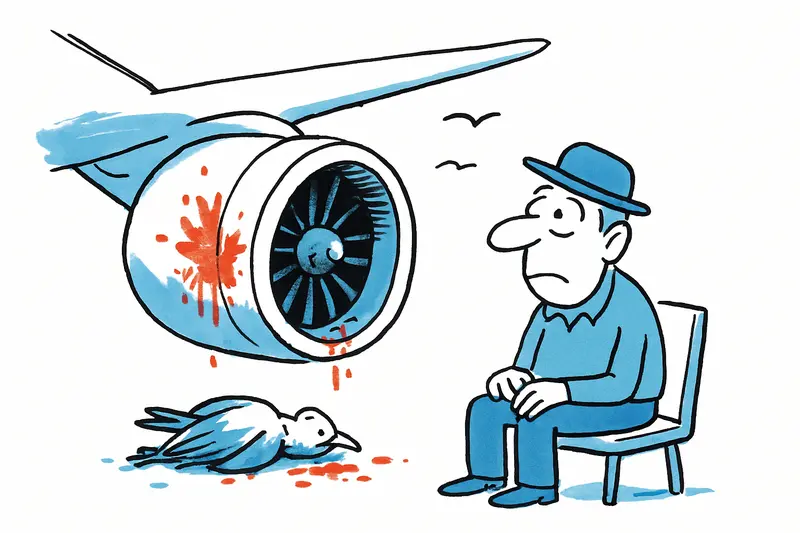
A Ryanair flight on the Madrid–Milan route had to turn back on Monday after a collision with a large bird. The Boeing 737-800 struck a vulture during the climb; the inlet of the left engine was damaged. The crew aborted the climb at about 4,000 meters and returned to the departure airport. Passengers reported seeing blood traces on the engine; the aircraft could not be used further and a replacement plane picked up the travelers later, resulting in a delay of around two hours and forty minutes, similar to other operational disruptions reported in Back after takeoff: What a 'toilet problem' reveals about flight safety.
Key Question
How well do procedures at our airports — including here in Mallorca — work when a large bird damages an engine?
The incident reveals a simple but worrying mechanism: a large bird weighing several kilograms collides at high relative speed with delicate components. The result can range from visible damage to the partial failure of an engine. The risk is particularly high during takeoffs and climbs because aircraft operate in the dense airport environment where they can encounter birds.
Critical analysis: The on-board systems, crew training and standardized safety procedures worked — pilots brought the aircraft back under control and service continued with a replacement plane, while other incidents highlight different onboard security challenges such as When a Female Martial Artist Strikes On Board: Security Gaps We Must Not Overlook. But repeated occurrences expose two problems: the proximity of flight paths to bird-rich habitats and the lack of transparency about preventive measures. Data on frequency, species involved and countermeasures taken are often not easily accessible. At the same time, public debate rarely distinguishes between small songbirds and large raptors like vultures, even though the latter present a very different risk profile.
What is missing from public discourse: First, a clear overview of which species are particularly problematic at which airports. Second, an open exchange between airport operators, conservation authorities and local residents about land-use plans, waste sites and feeding of animals near airports. Third, clear communication to passengers: how likely are bird strikes, what procedures apply in an emergency, and what rights do passengers have in case of cancellations and delays, as discussed in Crack in the window — what an aircraft defect means for Mallorca travelers?
Everyday scene from Mallorca: On the Passeig Mallorca in front of the editorial office an old man sits under the plane tree, the ice cream machine rattles, and flocks of gulls glide along the coast above the sea. When holiday planes climb over Palma, people stop briefly and look up — a daily reminder of how closely island life and air traffic are intertwined. The same kinds of birds, in different numbers, are also found around airport surroundings: open areas, places to loiter, carrion or waste attract them.
Concrete solutions: There is no magic bullet, but a combination of measures significantly reduces the risk. First, targeted habitat management around airports: no open waste dumps, and vegetation designed to be less attractive to large birds of prey. Second, enhanced wildlife monitoring and regular controlled culling or relocation programs where legally permitted. Third, the use of radar or acoustic systems to monitor and disperse birds in critical phases such as takeoff and climb. Fourth, closer coordination between operators, environmental authorities and ornithological experts so measures are effective and species-appropriate. Fifth, transparent reporting channels and public statistics on bird strikes so affected airports can be compared.
For passengers this means: adhere to hand-luggage rules, stay calm during delays and, if in doubt, ask about alternatives — the technology and the people on board do a lot to ensure safety. For those responsible, however, this is a reminder: protecting flight safety must not be sacrificed to short-term cost considerations.
Concise conclusion: A bird strike involving a large raptor is no longer a curiosity but a serious safety risk that also affects Mallorca. The necessary steps are known and technically feasible — what is needed is their consistent, transparent implementation. Whoever watches the departing planes on a hot summer evening in Palma should see that not only as scenery but as a task: airports and communities must work together so that such returns become rarer in the future — for the safety of passengers and the welfare of the birds themselves.
Frequently asked questions
When is the best time to visit Mallorca for pleasant weather and fewer crowds?
What should I pack for a trip to Mallorca?
Are Mallorca’s beaches suitable for swimming year-round?
What are some family-friendly activities in Palma, Mallorca?
Is a day trip from Mallorca to Sóller or Valldemossa worthwhile?
What should I know about Mallorca's beaches and sun safety?
How can I get around Mallorca without a car?
What’s the weather pattern like across Mallorca’s seasons?
Similar News
Rental Car Theft in El Arenal: What This Incident Reveals About Our Gaps
A teenager steals a running rental car in El Arenal, flees on foot, climbs over walls and is caught by the Guardia Civil...

Red Rope in Palma's Library: What Helps Against Selfie Tourism — and What's Missing
Palma's city library cordoned off an area with a red rope to keep selfie tourism away from reading and working activitie...

Fort San Carlos: Museum, Harbor Dispute — and a Conflict That Demands Answers
The military museum at Fort San Carlos sits right on Palma's harbor, with unexpectedly quiet rooms filled with cannons a...
Old Town Under Pressure: When a Doorway Becomes a Sleeping and Shower Place
For months a woman has been living with a parasol, a clothes rack and personal belongings next to the social welfare off...

When Shopping Weighs Heavier: Mallorca Demands a Tax Pause on Food and Fuel
Rising prices are putting pressure on households and agriculture. The Balearic Islands are calling for temporary tax rel...
More to explore
Discover more interesting content

Can Cap de Bou

Townhouse Lleo 72
