
Break-in series at Tramuntana viewpoints: Why a stay ban is not enough
Break-in series at Tramuntana viewpoints: Why a stay ban is not enough
Several cars were broken into at popular miradors in the Tramuntana. A 32-year-old was caught — despite a stay ban and without a driving licence. What does this say about our prevention measures?
Break-in series at Tramuntana viewpoints: Why a stay ban is not enough
Arrest in Palma after several car break-ins near Banyalbufar and Esporles — a situational critique
The short version: In recent weeks reports accumulated of broken-into vehicles at viewpoints in the western Tramuntana mountains, especially around Banyalbufar and Esporles. The Guardia Civil arrested a 32-year-old man in Palma; he faces charges for multiple thefts from cars, a judge ordered pretrial detention without bail. This development echoes earlier reporting on Nighttime Break-ins in Palma: Arrest Stops the Spree — But How Safe Is the Old Town Really?. Particularly notable: the suspect was already subject to a court-ordered stay ban for the area and is said to have no driving licence, yet apparently used the viewpoints by car anyway.
Key question: Why do court bans and threats of punishment alone not stop recurring petty crime at tourist viewpoints?
Critical analysis: A stay ban is a legal instrument, not a surveillance network. It looks strong on paper — but in practice it only works when controls are in place and the locations are designed to make crime more difficult. On Mallorca, where narrow parking bays on the MA-10 or small side roads attract people from the city, residents and visitors alike, opportunities arise easily, as seen at popular miradors such as Mirador d'es Colomer: Three Arrests — How Safe Are Mallorca's Viewpoints Really?. Hot summer days, parked cars with visible valuables and poorly lit stopping points are both invitation and risk. That the suspect was driving without a licence also shows how thin the chain of control is in some rural stretches: traffic monitoring, licence plate checks and on-site presence do not coordinate effectively enough.
What is often missing in public debate is a sober discussion about infrastructure and everyday protection. It is not just about more police or harsher penalties. Simple measures are lacking: clear signage, secure parking spaces with sightlines to the road, information leaflets at popular miradors to raise visitor awareness about not leaving valuables in view. The perspective of victims is also hardly addressed — people who discover after a hike or a photo stop that their car has been ransacked are left alone with bureaucratic procedures and a feeling of vulnerability.
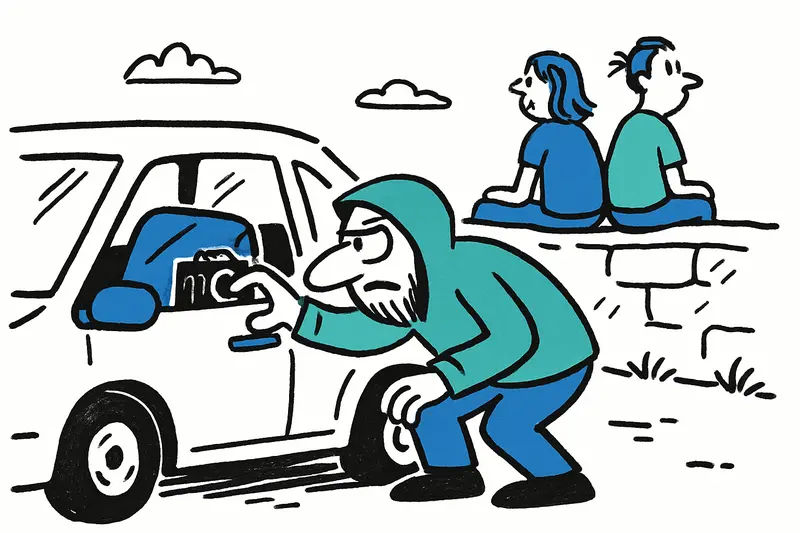
A small everyday scene from the Tramuntana: On a late afternoon at a viewpoint above Banyalbufar two friends sit on a low wall, the smell of pines and damp stone in the air, a delivery van rattles down the switchbacks. They briefly leave the camera on the back seat to enjoy the view of the sea. These moments happen all the time — in seconds a peaceful photo stop can turn into an annoyance if someone approaches the car in the meantime.
Concrete solutions — practical and locally implementable:
1) Increase visibility: Regular, variable patrols by the Guardia Civil at especially affected days and times; not as permanent presence, but as targeted patrols that deter, and information about their responsibilities is available on the Guardia Civil official website. Cooperation with local police and forestry authorities.
2) Improve infrastructure: Create a few but secure parking areas at popular viewpoints — with clear entrance and exit, better lighting and sightlines so vehicles are not hidden from view.
3) On-site prevention: Information signs in several languages at miradors: Do not leave valuables visible. Mobile warning boards for busy weekends or holidays.
4) Victim support: Simplified reporting procedures, a checklist for those affected (police report, insurance, evidence preservation), information leaflets in town halls and tourist offices.
5) Use technology where it makes sense: Targeted cameras at access roads or temporary thermal imaging or automatic number plate recognition measures in particularly affected zones — with a clear legal basis and transparent time limits.
Another often overlooked issue: social causes and resocialisation. Ignoring a stay ban and driving without a licence can point to deeper problems — access to work, homelessness or a lack of support for those at risk of reoffending, as other cases such as Serial thief in Marratxí: Arrest brings relief — but questions remain show. Measures should therefore be not only repressive but also preventive and social.
Conclusion: The arrest of an alleged repeat offender is necessary and right. But it alone is not enough to break the cycle. Court bans need enforcement, places like miradors need secure, well-thought-out facilities, and victims need clear support after a break-in. On a warm summer evening, when you hear the cicadas and the creak of the pines, you should not also have to calculate the risk of returning to your car empty-handed. A few consistently implemented measures could prevent exactly that.
The Guardia Civil continues its investigations; it is to be hoped that the arrest will prompt not only thoughts of punishment but also of protection — so that we can continue to enjoy our miradors without fear.
Frequently asked questions
What is the weather usually like in Mallorca in February?
Can you swim in Mallorca in February?
What should I pack for Mallorca in February?
Is February a good time to visit Mallorca?
What can you do in Mallorca in February?
Is Palma de Mallorca worth visiting in February?
What is Sóller like in February?
What is the weather like in Alcúdia in February?
Similar News

Nine-year-old rescued after cliff fall at Cala Murada — How safe are Mallorca's coastal paths?
A boy fell roughly five meters down the rocks near Cala Murada. The dusk rescue was elaborate; a helper also had to be r...

How safe are tourists in the luxury marinas? After arrests: a reality check
The Guardia Civil arrested two men in Calvià who are suspected of stealing luxury watches in Port d'Andratx and Puerto P...

Palma Chases Wealthy US Tourists — The Key Question: Who Should the City Actually Serve?
The city is investing more than €200,000 to attract high-paying visitors in several US cities. A good idea — but what is...

Enough swimming: Why Port de Pollenca is louder than the sea
More than 200 people formed a human chain in Port de Pollenca — not only as a protest but as a wake-up call. Guiding que...

Mysterious disappearance in Alcúdia: Where is 24-year-old Lisa B.?
Since August 3 there has been no trace of 24-year-old German Lisa B. The family has traveled to Mallorca and urgently re...
More to explore
Discover more interesting content

Boat Tour with BBQ along Es Trenc Beach

Private transfer from Mallorca Airport (PMI) to Pollensa
