
"Go Home" in Bunyola: When frustration meets cars
"Go Home" in Bunyola: When frustration meets cars
A rental car defaced in Bunyola with a green spray-painted "Go Home" is more than property damage. A reality check: what's behind such actions, what's missing from the discourse, and how can escalation be avoided?
"Go Home" in Bunyola: When frustration meets cars
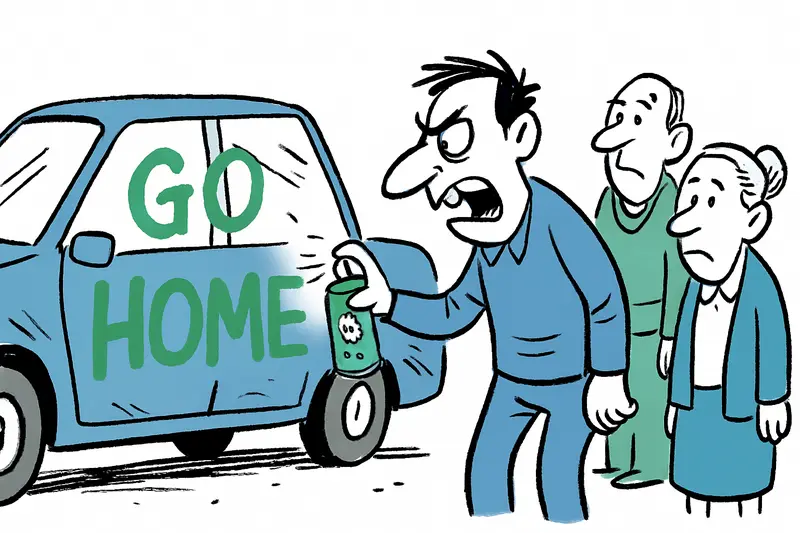
A rental car parked in the centre of Bunyola was recently defaced on the right side with a large green spray-painted slogan reading "Go Home." The vehicle also shows visible bodywork damage, so paint needs to be removed and the extent assessed. Residents discovered the inscription and expressed their annoyance: for many this is an eyesore because it affects the village's appearance and turns the quiet hamlet near the Serra de Tramuntana into a politicised showcase.
Key question
Is sticking labels and spraying rental cars in Bunyola an expression of legitimate protest or already a criminal act that further undermines coexistence on the island?
Critical analysis
Spray paint on a parked car is more than unpleasant: it is property damage. At the same time the choice of target is not random: rental cars symbolise tourism — they are mobile, visible and easy to find. That similar incidents have occurred in recent weeks — from sticker campaigns to vandalism in Cala Millor — shows a pattern, not an isolated episode. The pattern has two sides: an unmistakable frustration that points to mismanagement in tourism, and the danger that this frustration may turn into illegal action. In some cases police involvement has followed escalations, as with an arrest in Capdepera.
Legally the matter is clear: anyone who damages property is committing an offence. For the affected vehicle owners (often companies) costs arise that go beyond repairs and can harm the town's reputation. These disputes have even reached the courts elsewhere, for example a parking dispute in Ses Illetes. For residents the situation is more ambivalent: many are annoyed by noise, litter and parking pressure, yet most reject vandalism as a means. This ambivalence is often missing from public debates, which quickly polarise into camps.
What is missing from the public discourse
The debate often focuses on symbols — tourists versus locals — instead of concrete problems: infrastructure strain, seasonal supply bottlenecks, and a lack of dialogue formats between residents and tourism representatives. Also neglected are effective prevention strategies: where do CCTV, municipal patrols, faster cleanup and neighbourhood work stand? Instead, simplified slogans and waves of outrage dominate.
Everyday scene from Bunyola
In the early morning, when the church bell rings at the Plaça, delivery vans line the Carrer de sa Vila, the market surface is swept, and older residents sit on the bench in front of the bar with an espresso. Right there you see the consequences: an uncertain glance at a foreign licence plate, a child asking why someone would do such a thing, and the landlady saying she understands the frustration but not the method. This small, concrete scene shows: this is not anonymous politics but relationships strained by such actions, and tensions fuelled by incidents on the roads such as an aggressive driver in Bendinat.
Concrete solutions
1) Clear law enforcement and rapid damage remediation: municipal contact points that record property damage and coordinate cleaning reduce the impact of such actions. 2) Prevention through local communication: regular town meetings where topics like traffic, waste and noise protection are discussed reduce the feeling of not being heard. 3) Targeted infrastructure measures: signage, parking zones for rental cars outside sensitive residential streets and coordinated schedules for holiday traffic help reduce conflict potential. 4) Mediation offers: independent moderators can mediate between affected residents, rental companies and the municipality before protests drift into illegality. 5) Transparent statistics and measure parts: making figures on waste volumes, visitor flows and parking usage public removes the fuel for rumours.
What can be done immediately
For the municipality: set up a damage reporting office, organise visible cleaning measures, consider temporary parking bans. For residents: collect evidence (photos, times), file a report and seek dialogue with the town hall. For companies operating rental cars: better marking of fleets, cooperation with municipalities to provide secure parking areas — as operators faced with scratches in Santanyí know — and rapid damage reports to local services.
Pointed conclusion
Sprayed cars do not solve political problems. They intensify discord and create unnecessary mistrust among residents, business owners and visitors. Those who want sustainable change must move from symbolism to structures: discussion rounds, concrete infrastructure and a reliable response to criminal acts. Otherwise what remains is a green slogan on metal — and a village that is a little less welcome because wounds have not healed.
This incident in Bunyola is a warning: when anger slips into illegality, everyone loses. It is not about condemning or defending tourism across the board, but about finding ways for island and visitors to live together so that no one feels the need to answer with paint.
Frequently asked questions
When is the best time to visit Mallorca for warm weather and outdoor activities?
Is it safe to swim in Mallorca's sea, and what should I watch for at the beach?
What should I pack for a trip to Mallorca?
What are the best ways to get around Mallorca without renting a car?
What family-friendly activities are worth trying in Mallorca?
Are windy days common in Mallorca, and how does that affect beach plans?
What language and currency should I expect in Mallorca?
What should I know about beach etiquette and sun protection in Mallorca?
Similar News
When the Wallet Becomes a Danger: Attack in Peguera and Lessons for Mallorca
In Peguera, two women are said to have stolen the wallet from a 75-year-old German couple. When the victim intervened, t...
Plata stays Plata: Young people take over, Llonguets remain
A small bar on Carrer de l'Argenteria will continue: Tolo Serra hands the place over to young Mallorcans at the end of t...
Unnoticed in the Luggage Compartment: How a Boy Traveled More Than 100 Kilometers in a Team Bus
A minor traveled in the undercarriage of a team bus for more than 100 kilometers until his cries for help were heard. A ...

Cap Vermell Grand: Second Michelin Key – a Gift for the East
The Cap Vermell Grand in Capdepera has been awarded its second Michelin key. For the region this elevates the luxury off...
Eurowings lets four aircraft carry names – a friendly idea that also reaches Mallorca
Eurowings is launching a campaign: four Airbus A320s are to carry the first names of people who help others in everyday ...
More to explore
Discover more interesting content

Can Cap de Bou

Townhouse Lleo 72
