
Son Hugo Caravan Site: Residents Form Neighborhood Association
Son Hugo Caravan Site: Residents Form Neighborhood Association
More than 150 people now live at the Son Hugo caravan site in Palma; at the end of January they plan to organize as a community to fight housing shortages and rising rents.
Son Hugo Caravan Site: Residents Form Neighborhood Association
Guiding question: Who listens when people at the edge of the city seek a voice?
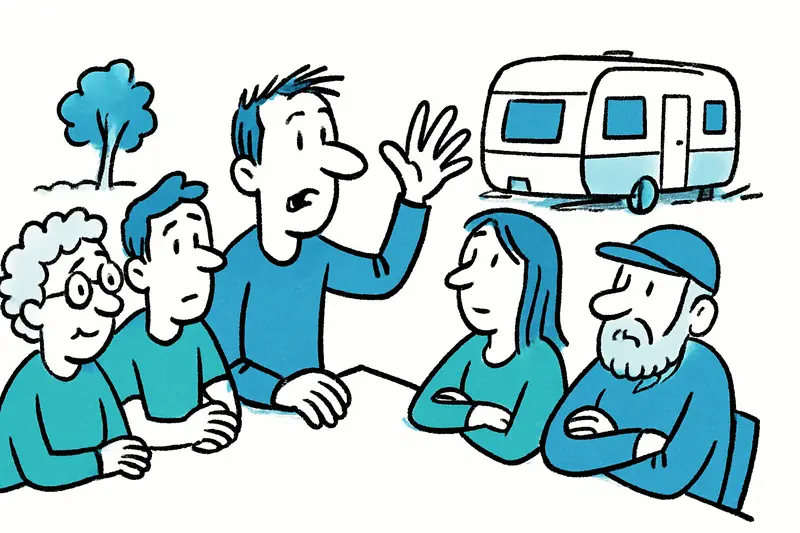
Early in the morning in Son Hugo it smells of strong coffee, burnt toast and the sweat of blankets that are already drying on the railing of a caravan before the day's heat. Children run barefoot over the dusty ground, a bicycle bell rings, a dog barks somewhere. In the middle of it all: an improvised living room under awnings, plastic tables with half-eaten breakfasts and conversations that increasingly share the same tone – worry about the next rent payment, worry about having a fixed address, worry about the children's schooling.
According to the residents, more than 150 people live on the site, including about a dozen children. At the end of January they plan to organize as a neighborhood association to better represent their concerns to the city and authorities. This is not a spontaneous club born from good cheer; it is a reaction to housing shortages and sharply rising rents that have pushed many into precarious living conditions, as reported in When Caravans Become the Last Address: How the Housing Crisis Is Changing Mallorca.
Critical analysis
The situation in Son Hugo is not an isolated grievance but a mirror of what is happening in Palma and across the island, where Palma plans 3,600 homes — Opportunities, risks and the big question of infrastructure: scarce housing, a market that rewards higher returns, and people waiting out in precarious corners of the city. When people live on caravan sites, it is usually an indicator that the bridges between social assistance, affordable housing and administration are not working. The founding of a neighborhood association makes the concerns visible, brings negotiating power and a minimum of self-organization. But the question remains: is that enough to solve structural problems?
There is often a lack of clear responsibilities and transparent pathways for how people can exit precarious housing situations. Authorities operate in layers and programs that do not always reflect the urgency of a tent, a caravan or a temporary pitch. At the same time, many affected people exist in a gray zone: not always registered, in unstable employment, with children who have the right to attend school but not to a stable home.
What is missing from the public discourse
Public debate often fails to show what everyday life actually looks like: the commutes to work, access to healthcare, the question of how children are supposed to do their homework when electricity or internet are unreliable. The perspective of those affected themselves is missing – not as isolated cases, but as an organized neighborhood with concrete demands. It is also rare to discuss how short-term emergency solutions can be linked with long-term strategies: social housing, interim use of vacant buildings, cooperative housing projects and low-threshold local counseling.
The dialogue between the city council, social services and residents is often too bureaucratic. Someone living in a caravan needs uncomplicated, immediate answers: help with documentation, placement into housing programs, legal support against exploitative rents. And: reliable information in Spanish, Catalan and German – so that no one gets stuck between forms and reality.
Everyday scene: A Tuesday in Son Hugo
A Tuesday in the settlement: the garbage truck passes, two women exchange recipes, a man repairs a loose awning pole with pliers, children draw with chalk on the ground. Next door a van parks that delivers bread and milk every morning. The neighbors organize a list for shared rides to school and the health center. These small, improvised networks are part of the daily survival strategy – and should be a reason for politicians to step in with pragmatic offers.
Concrete solutions
The residents' initiative has the potential to achieve more if concrete measures follow: short-term: mobile counseling centers on the site, support for access to social benefits, emergency shelters for families; medium-term: placement into vacant apartments via municipal agencies, rent subsidies tied to integration and training programs; long-term: investments in social housing, funding programs for cooperative housing and a mandatory vacancy register that is publicly accessible. In addition: a city contact person with specific office hours on site – instead of more forms.
It is important to involve the residents in the solutions. A neighborhood association cannot only make demands; it can help coordinate: joint applications, neighborhood sponsorships for children, organized cleaning and emergency plans, and regional offices for legal assistance. Such approaches cost less than many believe and save long-term social follow-up costs.
Concise conclusion
The formation of a community in Son Hugo is more than a cry for help; it is an offer to the city to make social fractures visible and to act. If politicians merely manage the situation now, improvised living arrangements will become a permanent solution. If they listen, offer binding steps and work with the people on site, a provisional settlement can become a bridge – back to a secure home.
Frequently asked questions
Why are residents at the Son Hugo caravan site in Mallorca forming a neighbourhood association?
What is life like at a caravan site in Palma when housing is unaffordable?
What should people pack if they are staying in a caravan in Mallorca?
How does Mallorca’s housing crisis push people into caravan sites?
Can children living in a caravan site in Palma still go to school?
What kind of help do people living in a caravan site in Mallorca usually need?
Is Son Hugo in Palma a permanent caravan settlement?
What could Palma do to support residents in caravan sites like Son Hugo?
Similar News
Are the Balearic Islands the Southern Border of Europe? A Reality Check on Immigration
The Balearic Islands are again calling for EU aid after a sharp rise in arrivals by sea. Conflicting priorities between ...

"Expensive chaos" and many open questions: What clients can do when a lawyer suddenly stops responding
Several clients complain that a well-known German lawyer in Mallorca has been unreachable for months. Key question: What...

TV tip: 'The Last Problem' — Mallorca as the setting of a classic crime
A classic whodunit on Mallorca: A new miniseries set in spring 1959 brings storm, an isolated hotel and a dense web of s...
Nipping Sea Creatures: Why Bathers in Cala Major and Elsewhere Should Be Cautious
In Cala Major, bathers have reported being nipped by small fish. What is behind it, how can problems be avoided — and wh...
Forced eviction in Santa Catalina: When a 65-year-old slept in her car and showered on the beach — a question of responsibility
The story of Pilar López from Santa Catalina represents a problem affecting many Mallorcans: How can an island with a bo...
More to explore
Discover more interesting content

Can Cap de Bou

Townhouse Lleo 72
