
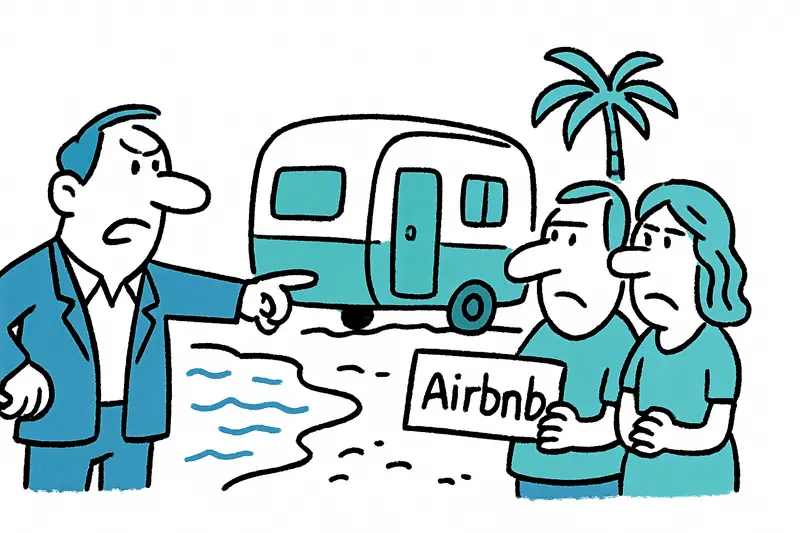
When Caravans Become Holiday Apartments: Who Protects Palma's Coasts?
When Caravans Become Holiday Apartments: Who Protects Palma's Coasts?
The Balearic Islands have imposed penalties on three caravan hosts who offered their vehicles on Airbnb along Palma's coast. It's time for clear rules instead of patchwork.
When Caravans Become Holiday Apartments: Who Protects Palma's Coasts?
The Balearic tourism authority recently imposed sanctions on three providers for offering caravans as short-term overnight accommodations on a booking platform Palma takes action: Over €300,000 in fines for illegal holiday rentals in Llevant. The vehicles were located in the coastal area of Palma. Under the new tourism law such offers are no longer easily tolerated; fines between €4,000 and €40,000 now loom.
Key question
How can we prevent the coastal areas of our city from being gradually occupied by illegal sleeping places without residents, visitors or nature losing out?
Critical analysis
At first glance it's clear: the administration has used an instrument it has had since the law reform by imposing these sanctions. But a penal procedure alone only addresses individual cases. Someone who parks a caravan on a promenade does not primarily present legal arguments, but offers a concrete usage gap: inexpensive, flexible overnight options close to the sea. As long as demand exists and platforms allow listings Airbnb Puts the Balearic Islands Under Pressure: Deleting Illegal Listings — What It Means for Mallorca, a cat-and-mouse game emerges between providers and inspectors. Inspections cost personnel and time; this becomes evident on weekends when the groynes at the Passeig Marítim are filled with sunbed vendors, excursion buses and poorly identified campers.
What is missing in the public debate
The debate often revolves around fine amounts and single cases. Less often asked is: Where exactly should mobile overnight stays be allowed, if at all? What services do people staying in caravans need (sewage, electricity, waste)? How do we deal with seasonal demand? And: What responsibility do the platforms that make such offers visible carry? Legal provisions are useful, but without clear, publicly accessible zoning and digital reporting mechanisms much uncertainty remains — for locals, tourists and the police on site.
An everyday scene from Palma
In the early morning, when the coffee at the kiosk on the Passeig Marítim is still scented with fresh ensaimadas, joggers look out at the sea. Between cyclists and market setups it happens: a caravan, half in the shade of a row of palm trees, two folding chairs in front. A tourist takes photos. A neighbour calls the municipality, but the official is currently dealing with another report. Such scenes repeat; they are small, almost inconspicuous, but they consolidate if no one regulates them permanently.
Concrete solution approaches
1) Registration requirement and digital register: Every mobile provider would have to register in a public register with vehicle number and purpose of use; platforms would be required to display listings with registration numbers. 2) Clear zoning: The municipality of Palma could create designated areas where controlled overnight stays in vehicles meeting hygiene standards are allowed — and equally clear no-go zones at sensitive coastal sections. 3) Platform cooperation and sanctions: Booking portals must automatically block listings without registration proof. 4) Service islands instead of wild camping: Small seasonal service stations (electricity, fresh water, waste) would reduce illegal dumping and make control easier. 5) Municipal reporting app: Residents, beach operators and hotels could quickly report violations; cases would be forwarded digitally to the responsible officials. 6) Adjustment of fines: Penalties must be scaled to deter but graduated so first-time offenders can respond with obligations. 7) Prevention through education: Leaflets in the port, multilingual social media campaigns and information to rental car companies about legal alternatives.
Why this matters for Palma
The seafront promenade, the fishing ports and small coves are public goods. When caravans staying overnight occupy these spaces, local quality of life changes: litter problems, nighttime noise, restricted access to the beach. It's not just about order, but about preserving the lively mix of everyday life, tourism and nature that makes Palma what it is.
Concise conclusion
Sanctions against three providers are right but not sufficient. A comprehensive package is needed Palma pulls the emergency brake: Short-term rentals, party boats and hostels to disappear: registration, clear zones, cooperation with platforms and pragmatic service solutions. Without this triad fines remain piecemeal and Palma's coasts continue to be exposed to shifting chaos. The next morning jog on the Passeig Marítim should no longer sound like a caravan check, but like the sound of the waves and the runners' footsteps — not the beep of a policeman noting another violation.
Frequently asked questions
Are caravans allowed to sleep overnight on Palma's seafront?
Why is Palma fining providers who rent out caravans on booking platforms?
What kind of fines can illegal caravan accommodation in Mallorca lead to?
What would help reduce illegal caravan stays along Palma's coast?
Where could legal overnight stays for caravans be allowed in Palma?
What services do caravan travellers need if overnight stays are regulated in Mallorca?
Why do illegal caravans on Palma's beaches worry local residents?
How can people report illegal caravan stays in Palma?
Similar News
Magaluf: Watchtower Alarm – Lifeguards Pull Unconscious Beachgoer from the Water
After a drama in the late afternoon, two lifeguards at Magaluf beach rescued an unconscious 44-year-old man. He was stab...
Turquoise in the City: How dangerous is the color play of the Sa Riera?
The Sa Riera in Palma suddenly turned turquoise — a pretty motif, but behind the effect lies a discharge of saline waste...

Jeckliner at Sunnesching: Cologne spirit sets sail from Palma
In September 2027 the Mein Schiff 2 briefly becomes a floating carnival stage: four days with Cologne bands, comedy and ...
Finally Home: Mike and Leyla Heiter Buy Villa with Sea View in Mallorca
The reality TV couple Mike and Leyla Heiter have bought a house in Mallorca with a roof terrace and sea view. An Instagr...

Arrest after series in Palma: Who protects apartments from repeat offenders?
The National Police arrested a man in Palma who investigators say may have broken into several apartments. In one incide...
More to explore
Discover more interesting content

Can Cap de Bou

Townhouse Lleo 72
