
120-year-old yacht 'Owl': A British team rescues the iconic sailing vessel from Palmanova
120-year-old yacht 'Owl': A British team rescues the iconic sailing vessel from Palmanova
After a storm and failed self-salvage attempts, a British seaman with divers recovered the historic yacht 'Owl' from the beach at Palmanova. A piece of maritime island history is now being repaired in Palma.
120-year-old yacht 'Owl': A British team rescues the iconic sailing vessel from Palmanova
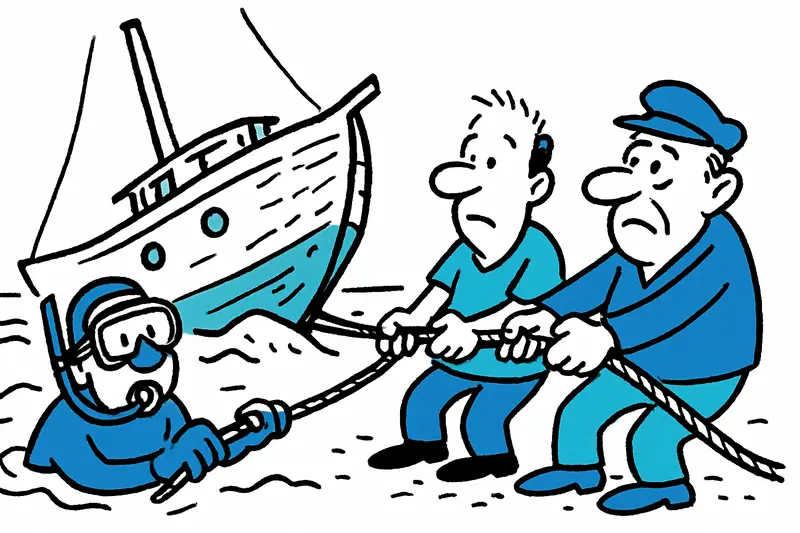
Early Monday morning, under partly cloudy skies and around 16 °C, a scene unfolded on the shallow coast of Palmanova more reminiscent of seafaring tales than everyday life on the beach: an old yacht, its planks marked by time, lay stuck in the sand while a small team of divers, helpers and an experienced British seaman worked to get her afloat again.
The yacht, called 'Owl' and more than a century old, had been torn from her moorings earlier this year by an unusually violent storm. She drifted and finally came to rest on the shore of Palmanova. Several attempts by the owner to recover the boat himself failed; at times there was even talk of dismantling the wreck on site, a fate avoided in other local salvage stories such as Seven Meters from the Mud: Volunteers Recover Boat in Puerto Portals. For many residents and passers-by, that would have been a sad end for a vessel that had survived two world wars.
The unexpected turnaround began during a simple walk along the beach: the seaman, who runs a yacht management company, discovered the damaged boat and acted without hesitation. He quickly organized a team of eight divers, specialized equipment and two small dive boats. On Monday morning the group arrived, rigged diving and towing lines and prepared lifting operations. Fish sellers on the jetty and a few early joggers stopped to watch; gulls circled overhead and now and then a wave slapped against the stone groynes.
Technically the operation was no easy task: wind and current, the shallow water and the age of the hull required a cautious approach. The team worked with lifting slings, controlled pumping and attached tow ropes. The aim was to free the 'Owl' the same day and transfer her into the harbor basin with the support of a tug.
If the maneuver succeeds, the next step is already planned: the yacht is to be taken to a shipyard in Palma where specialists will inspect her and carry out the necessary repairs, similar to the refit and conversion described in A man from Bremen, his boat and the new heartbeat: how a sailboat in Mallorca quietly went electric. For craftsmen, rigging specialists and woodworkers on the island this work will not only bring income but also preserve knowledge and tradition.
What stood out in these hours was that the help did not come from an authority but from an individual who felt responsible, and from a team willing to perform the unusual operation. Stories like this create a little spirit of initiative in Mallorca. On the promenade relief and pride mixed; the scent of sea salt and diesel hung in the air, children pointed excitedly at the scene, and a fisherman leaning against his boat's railing said that such events are rare.
The action also serves as a reminder of a practical problem: how do we deal with abandoned or damaged vessels on our beaches? The voluntary initiative shows that solutions are possible when people work together. At the same time, it is clear that coordinated procedures and defined responsibilities among authorities, owners and salvage companies are needed to minimize environmental damage and safety risks, a point highlighted by debates over "Yasmine of the Sea" in Palma: Luxury, Noise and the Bill for the Island.
For the 'Owl' the salvage means more than just a transport to the dry dock: it is the beginning of a second life. Those on Mallorca experienced in woodworking, sail repair or historic shipbuilding will now be in demand. And the scene on that Monday morning in Palmanova remains a good example of how local initiative, craftsmanship and a bit of maritime zeal can keep an island's story alive.
Looking ahead
If everything goes according to plan, hammers and planes will soon be heard in a Palma shipyard, and the 'Owl' may once again glide across the Mediterranean – perhaps not in every detail as a hundred years ago, but as a living piece of craft and memory. For Palmanova and the people living on the coast, it feels like a collective sigh of relief.
Frequently asked questions
Why was the old yacht Owl stuck on the beach in Palmanova?
How are damaged boats recovered from shallow water in Mallorca?
Can a century-old yacht like Owl still be repaired?
What happens to an abandoned boat on the Mallorca coast?
What does the Owl salvage in Palmanova say about Mallorca's maritime culture?
What is the best time of year for swimming in Palmanova, Mallorca?
What should you wear on a breezy morning in Palmanova, Mallorca?
Where would a historic yacht be repaired after being recovered in Mallorca?
Similar News

Four goals, heart-stopping moments, a message: Germania Mallorca takes three points in Consell — questions remain
The new German club on the island won its first away game in Consell 4:3. Celebration, a 4:0 lead, then a nervous finish...

Mueller continues expanding in Mallorca: Artà in 2026, Can Picafort in early summer 2027
The drugstore chain Mueller is opening two new stores in Mallorca: a 1,400 m² shop in Artà on 5 November 2026 and a bran...
The Painter Who Lived Mallorca: Franz Taussig and His Century-Old Secret
A hundred years ago a young Viennese arrived in El Terreno, sketched the island and called himself Francis Caron. Today ...

Airport dispute: Bridge, forecasts and the question of responsibility
A video by the Spanish transport minister has ignited the dispute over DORA figures, capacities and local governance pow...

The Painter Who Invented Himself: How a Young Viennese Drew Mallorca
A hundred years ago a 19-year-old draftsman arrived in El Terreno. His diary and sheets, long known under the pseudonym ...
More to explore
Discover more interesting content

Can Cap de Bou

Townhouse Lleo 72
