
"Yasmine of the Sea" in Palma: Luxury, Noise and the Bill for the Island
The 79-meter superyacht "Yasmine of the Sea" was berthed yesterday on the Passeig Marítim — a shimmer of steel and aluminum that briefly dominated the harbor. Time to ask: what does Mallorca get besides astonished tourist photos?
A gift for the eyes, a question for the city: the "Yasmine of the Sea" in Palma
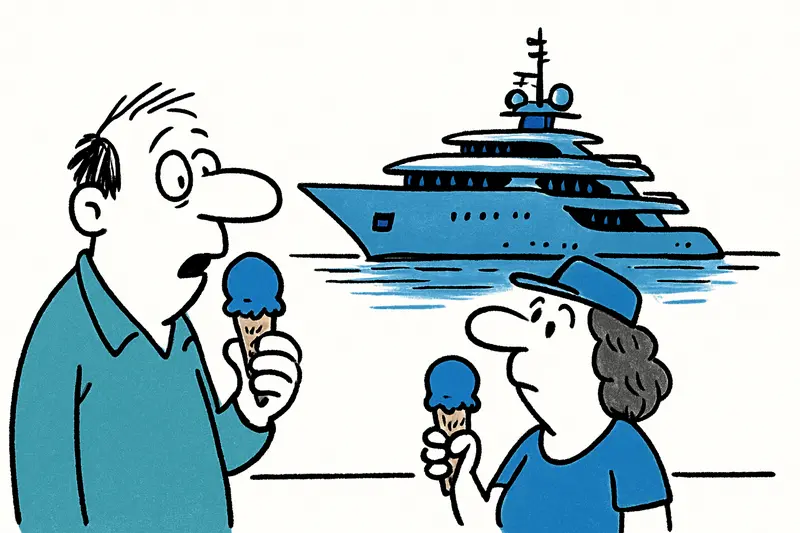
Yesterday evening, Passeig Marítim, August heat, ice cream in hand — and suddenly a shadow that changed the familiar shoreline. The 79-meter "Yasmine of the Sea" lay so present that even regular walkers did a double take. The boat gleamed, photographers stopped, and the dockworkers shrugged: "Another one." But is a shrug enough as a response to such an appearance?
What the numbers reveal — and why they should concern us
The facts are quickly told: roughly €100 million estimated, space for about 24 guests and around 33 crew members, powered by two MTU diesel engines with a combined output of about 8,160 hp. Top speed just under 23.5 knots. Owner: a member of the Qatari ruling family, Sheikh Abdullah bin Khalifa Al Thani. At first glance a technical masterpiece, at second a symbol of unequally distributed wealth — right in a city that already juggles people, cars and heat in summer.
The smaller picture at the quay: sounds, glances, everyday life
At the harbor the honk of a worker on the quay mixes with a seagull's screech and the soft clicks of camera phones. A couple debated whether "something like this even fits here"; an older man only said: "There used to be fishing boats here." Such scenes are typical — as another quiet visit like the Silver Whisper in Palma: A Touch of Ultra-Luxury — and What It Sets in Motion in the City showed — for some the yacht is a shiny eye-catcher, for others another building block of runaway luxury tourism that changes prices and space. Dockworkers mentioned how often service teams come and go, how much logistics is behind such a berth — and which extras are often demanded: high security requirements, discretion, but also special treatments.
What photos rarely show
The big pictures forget small consequences: fuel consumption and emissions while maneuvering and idling without shore power, possible stern anchors that can damage sensitive seagrass meadows, or the logistics when several superyachts simultaneously request water, oil changes and waste disposal. Such costs are often externalized — they do not appear on the visitor's bill, but are borne by port infrastructure, the environment and sometimes residents.
The central question: Welcome them — or tighten the rules?
The city faces a simple but crucial question: should we continue to see Palma as a welcoming stage for these floating palaces — or as a place that adapts its rules and fees to the new status? At the moment local businesses profit (berthing services, cleaning companies, caterers), as reported in Playa de Palma at the Season Finale: Profits, Noise — and Who Pays the Bill?, but do the neighborhoods that lose parking spaces and see rising rents (see Palma at Two Prices: Why the Same Square Meter Can Suddenly Be Luxury) benefit as well? The answer is not in blanket bans, but in smart, well-thought-out regulations.
Concrete proposals — so Mallorca gets more back
Some ideas the port and city could examine immediately: mandatory shore power at major berths so engines don't run all night; higher special fees that flow into local environmental projects; clear rules against anchoring in protected Posidonia meadows; transparent registration of beneficial owners; and environmental bonds to cover damages. Such measures wouldn't stop the "Yasmine" from coming — but they would ensure the island is not just a spectator, but a beneficiary.
A call for balance
Palma is proud of its harbor: it links work, tourism and everyday life, it is a backdrop for sunrises, boulevards and conversations. When superyachts like the "Yasmine of the Sea" dock, they create attention — and responsibility. It's not about envy of luxury, but about how Mallorca's community, environment and infrastructure can be protected while the city continues to welcome visitors.
So: next walk along the quay — eyes open, ears attentive and one idea in mind: if giants are going to come, then please with rules that make our island and its people stronger, not weaker. The "Yasmine" may stay only a few days. Decisions about fees, environmental requirements and transparency will last longer.
Frequently asked questions
Why do superyachts attract so much attention in Palma?
Do superyachts in Palma create noise and disruption for nearby residents?
What are the environmental concerns around superyachts in Mallorca?
What kind of rules could Palma introduce for superyachts?
Is Palma a good place to see luxury yachts?
What does a superyacht visit mean for businesses in Palma?
Why are people in Palma debating luxury tourism so much?
What should visitors know before walking along Palma’s harbour in summer?
Similar News

Death in the Gorge: Key Questions on the Safety of Rallies on the Ma-10
A Porsche plunged into a ravine during the 550 Challenge near Mortitx. Who bears responsibility, what safety gaps were r...

Eighth BAF surge: Why freight costs in Mallorca are rising now — and what it means for us
Fuel surcharges (BAF) for ferries between the mainland and the Balearic Islands rose by around eight percent in October....

O'zapft is! Island Oktoberfest in Santa Ponca: Ten Days of Bavaria on Mallorca
From October 23 to November 1, Santa Ponca will turn blue and white again: Hofbräu beer, Schuhplatteln, a dirndl contest...

Sudden end at the gate: A 70-year-old dies at Palma airport — what now?
A 70-year-old French tourist collapsed at the gate of Palma airport and died despite resuscitation. Who is responsible f...

Rafa Nadal brings tennis greats to dinner in Port Verd – an evening at Sa Punta
For the anniversary of his academy, Rafa Nadal invited international tennis stars to his favourite restaurant on the eas...
More to explore
Discover more interesting content

Can Cap de Bou

Townhouse Lleo 72
