
Energy BYD Challenge in Pollenca: Children Pedal for Electricity and Ideas
Energy BYD Challenge in Pollenca: Children Pedal for Electricity and Ideas
110 pupils on the Plaça Major learned how pedaling generates electricity, designed posters for e-mobility and took seedlings home. A small but concrete sustainability lesson for Pollenca.
Energy BYD Challenge in Pollenca: Children pedal for electricity and ideas
Sustainability was made practical on the Plaça Major — and a bit of everyday life was taken home
Last Friday the Plaça Major in Pollenca was filled with children's laughter. Shortly after school ended, 110 pupils from Montision, CEIP Joan Mas and CEIP Costa i Llobera visited to try out at stations what sustainable mobility and renewable energies can mean in practice. The sun hung mild over the limestone facades — puffins? — sorry, seagulls were actually missing, but the bells of the church of San Salvador sounded in the distance and now and then the scent of freshly harvested oranges from the market drifted over.
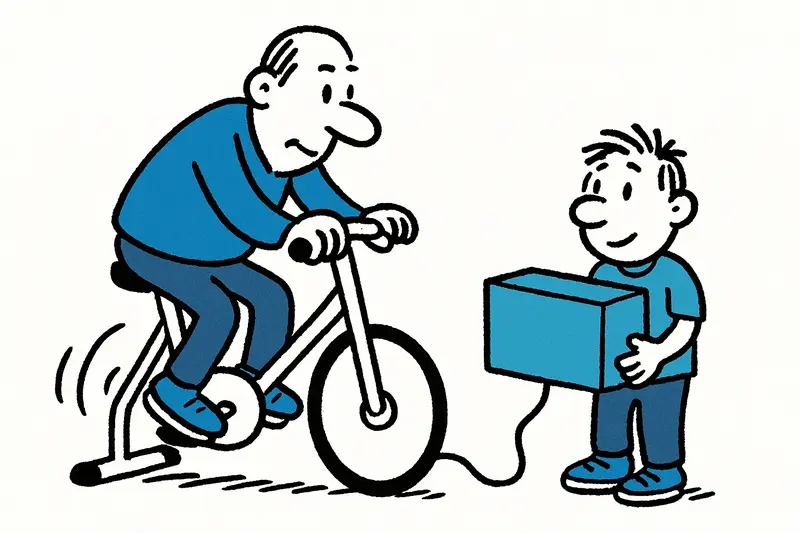
At the centre of the event were six stationary bicycles where the children pedalled and could follow live how much energy they generated. Connected screens displayed the output in real time. The simple message: electricity does not only come from the socket, it can be generated through movement — and most of the children found that immediately exciting.
There was also a mix of information and hands‑on practice. BYD presented short educational films and an interactive questionnaire to explain the basics of electromobility. A technician from Scoobie showcased a special vehicle for technical missions that is electrically powered and designed with efficiency and everyday practicality in mind. Qwello dedicated its presentation to renewable energies; the content was deliberately prepared in a child-friendly way.
Creativity was not neglected: in a workshop teams designed posters for a more sustainable municipal fleet. The pupils from Montision engaged particularly deeply with the topic and formulated a clear request to the municipality: police and civil protection should gradually switch to electric vehicles. The idea provided food for thought among the municipal representatives present, who supported the initiative.
A playful course combined sport with waste separation. In relay races teams had to correctly sort packaging, paper and organic waste. Accuracy and speed counted equally, and mistakes were explained together — learning by doing. Fresh regional fruit and water were available to refresh the participants afterwards. As a memento, each child received a seedling of the Mallorcan tomato variety to take home — a small encouragement to keep planting at home and take responsibility.
The event took place with the support of the municipality of Pollenca and the Ministry of Economy, Employment and Energy of the Balearic Islands, and was aligned with initiatives such as 86 New Info Pillars and 400 Bike Racks: Small Villages, Big Impact. Also involved were the Serra de Tramuntana consortium, BYD Quadis Dream, Qwello, TBC, the Saica Foundation and Viveros Can Juanito. Local municipal representatives from education, tourism, social affairs and sports were on site, observing the activities and engaging with the children.
What remains? Not a tearjerking spectacle, but small, concrete steps: children who understand how energy is produced; posters that carry an idea into municipal policy; seedlings that can grow on windowsills. On Mallorca, where narrow streets, historic centres and short distances make the use of electric vehicles appear sensible, this is more than a show and echoes the broader debate explored in Palma's balancing act: More parking — more e-bikes — can they coexist?.
The Plaça Major had become a laboratory of everyday life that day. Not a theory course, but a practical experience that can continue to resonate in classrooms and families. For Pollenca the challenge remains to seize these impulses — more charging points in central locations, pilot phases for electric cars in the municipal fleet, and educational concepts that make such activities connectable, as discussed in Palma 2026: More Parking Spaces, 230 E‑Bikes — Opportunity or Detour?. Small ideas implemented locally move the island forward step by step. And you can keep pedalling on that.
Frequently asked questions
What happened in Pollenca’s Plaça Major with the schoolchildren?
How did the children in Pollenca generate electricity during the event?
Why are events about electric mobility important for Mallorca?
What did the Pollenca pupils learn about recycling and waste sorting?
Did the children in Pollenca take anything home from the sustainability event?
What kind of weather is best for outdoor school events in Mallorca?
What is the Plaça Major in Pollenca used for besides tourism?
What practical steps can Mallorcan towns take to support cleaner transport?
Similar News
Serious fall at Port d’Andratx: Who protects cyclists on this route?
A 66-year-old German cyclist fell between Port d'Andratx and Camp de Mar, hit his head and was taken to hospital. One ac...
Four goals, heart-stopping moments, a message: Germania Mallorca takes three points in Consell — questions remain
The new German club on the island won its first away game in Consell 4:3. Celebration, a 4:0 lead, then a nervous finish...
Mueller continues expanding in Mallorca: Artà in 2026, Can Picafort in early summer 2027
The drugstore chain Mueller is opening two new stores in Mallorca: a 1,400 m² shop in Artà on 5 November 2026 and a bran...
The Painter Who Lived Mallorca: Franz Taussig and His Century-Old Secret
A hundred years ago a young Viennese arrived in El Terreno, sketched the island and called himself Francis Caron. Today ...
Airport dispute: Bridge, forecasts and the question of responsibility
A video by the Spanish transport minister has ignited the dispute over DORA figures, capacities and local governance pow...
More to explore
Discover more interesting content

Can Cap de Bou

Townhouse Lleo 72
