
The Sweet Comeback: Carob, a Museum and a Chance for Mallorca's Countryside
In Llucmajor an old cultivated plant has found new fans: at Finca Ca s’Hereu the Museu de la Garrova shows how the brown pod can be turned into regional products, jobs and a small piece of the future — visits by appointment and a tasting afterwards.
The Sweet Comeback: Carob, a Museum and a Chance for Mallorca's Countryside
How a hardy pod makes Llucmajor visible as a place where agriculture is more than sun umbrellas
On a cool morning, when you drive from Campos toward Son Noguera with the windows slightly open, a warm, slightly bitter scent often drifts through the car. You briefly think of roasted cocoa or dried figs — and then you realise: this is carob. On Mallorca the brown pod has come a long way: from donkey feed to the shelves with vegan spreads.
In Llucmajor the company Es Garrover de Mallorca has made a decision that can be read here as a small but visible signal. Instead of exporting pods unprocessed, they now roast, grind and bottle on site. Under the brand name Johannis they produce syrups, caffeine-free coffee substitutes, baking ingredients, gluten-free pasta and some products sought after in organic shops. This is not only about taste but about value creation: part of the profit thus remains in the region — jobs for people, machines, transport routes and packers.
Technically, carob is not an easy crop: the thick branches do not allow large harvesting machines. Harvesting still means: laying out nets, beating down the pods with long poles, picking them up. It is strenuous, but the tree itself is undemanding. It often manages without artificial irrigation, withstands dry summers and yields where almond groves are thinning out. In times when water is scarce, that is more than a historical footnote — it's an argument for diversification.
Price explosions have marked recent years: per-kilo prices fluctuated from a few cents in the field to times when every pod suddenly became sought after. Demand for carob seed flour — a plant-based binding agent used in ice cream or baby food — drove the market up, then demand dropped. Currently the raw material price has settled back to a moderate level after wild swings. For producers, the numbers add up better when processing and distribution take place on the island.
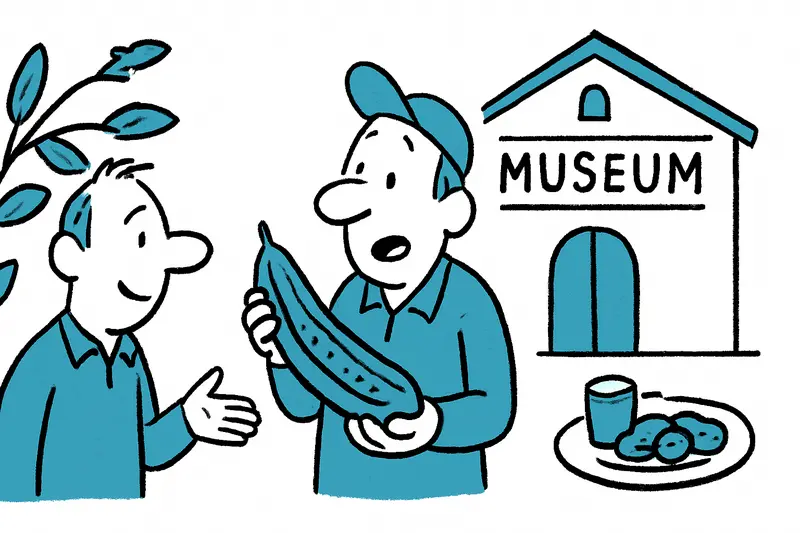
Those who want to see this with their own eyes can visit the Museu de la Garrova on the historic Finca Ca s’Hereu. The museum is the first of its kind dedicated exclusively to the carob; it displays old tools, variety documents and explains how the pod was used by earlier generations on Mallorca. Important: the tours are not drop-in. Guided visits require prior registration (see the operator's website). This ensures groups remain small, the plantation is protected and the hosts have time for questions.
The experience does not end at a display case: at the end there is a berenar — a small Mallorcan breakfast — during which the products are tasted. The combination of craft, the scent of roasted pods and a plate of local creations makes clear why the pod can be more than just a raw material. The shop in town, Carrer de la Marina 107, is another option for people who want to try spontaneously without booking a tour.
For Mallorca this is more than a pretty backdrop. It is an example of how rural economies can work when tradition, artisanal processing and a bit of entrepreneurial spirit come together. Carob brings jobs to villages, preserves landscapes with gnarled trunks and offers products that can survive in niche markets — regardless of flight traffic or hotel occupancy rates.
A small everyday scene: at the finca you hear dogs barking, the soft thud when a pod falls from a crown, the squeak of a sack-filled cart. People in weatherproof jackets sort pods while an old tractor slowly rolls across the field in the background. Such scenes are what visitors take away from a tour — not glossy images, but real work and flavour.
If this makes you curious: plan rather than turn up on the spur of the moment. Online registration or a phone call arrange the visit, afterwards there is still time for a walk nearby or a detour to the shop in Llucmajor. And if you want to offer a little support: buy local products, ask questions at tastings, maybe ask about ways to increase on-island processing.
It is a quiet but crucial message: Mallorca's future cannot be measured only by hotel figures. Sometimes it is hidden in an inconspicuous pod, in knotted trunks and in people who do not romanticise the old but further process it. Carob is not a panacea — but it is a building block in an island economy that needs diversity.
So next time you drive toward Llucmajor with the window open, take a deep breath. The scent might be a small hint that something long overlooked has returned — and that more can be made from it than just memories of the past.
Frequently asked questions
What is carob and why is it important to Mallorca's countryside?
How can I visit the carob museum in Mallorca?
What makes carob a practical crop for Mallorca's climate?
Where can I buy carob products in Mallorca?
Are guided tours of the carob plantation available, and do I need to register?
What is the experience like on a carob plantation tour in Mallorca?
How does processing carob on Mallorca affect the local economy?
What other stops pair well with a carob visit near Llucmajor?
Similar News

Villa Cortina in Formentor: From Demolition Order to Luxury Listing — How Much Landscape Protection Is Left?
The controversial Villa Cortina in Formentor is back on the market — nine years after a disputed legalization. What does...

Meliá Takes Over Beach Hotel in Cala Millor – a Boost for the East Coast
The long-established hotel company Meliá took over a 171-room property in Cala Millor on November 1. Direct beach access...

Escarrer inheritance dispute: Who controls the votes in the family empire?
Four grandchildren demand shares — and encounter family rules, contractual obligations and a power core within the hotel...

Between Drama and a Season Decider: What the Dismissal of Thorsten Legat Means for Germania Mallorca
A coaching change, loud accusations and an interim coach under pressure: how a scandal is disrupting FC Germania Mallorc...
Children Clear Up: Colorful Parade in s'Arenal Makes Litter Visible and Wakes Neighbours
In s'Arenal children and environmental groups sent a clear signal against litter: with decorated pedal wagons, drums and...
More to explore
Discover more interesting content

Can Cap de Bou

Townhouse Lleo 72
