
Villa Cortina in Formentor: From Demolition Order to Luxury Listing — How Much Landscape Protection Is Left?
Villa Cortina in Formentor: From Demolition Order to Luxury Listing — How Much Landscape Protection Is Left?
The controversial Villa Cortina in Formentor is back on the market — nine years after a disputed legalization. What does this say about how we handle landscape protection?
Villa Cortina in Formentor: From Demolition Order to Luxury Listing — How Much Landscape Protection Is Left?
Key question: How can a building that was once ordered to be demolished as a measure to protect a protected landscape now change hands as a multimillion-euro luxury property?
On the narrow coastal road toward Formentor the air in the morning smells of pine resin and wet stone. Cyclists strain up the climb, and at the port of Port de Pollença a fisherman cleans his nets. Between these everyday scenes stands Villa Cortina: around 1,000 square meters of living space on a 5,000-square-meter plot, eleven bedrooms, 13 bathrooms, an additional guest apartment and a conspicuous pool. The estate is currently offered exclusively — no specific sale price has been published, but reports suggest a high double-digit million sum.
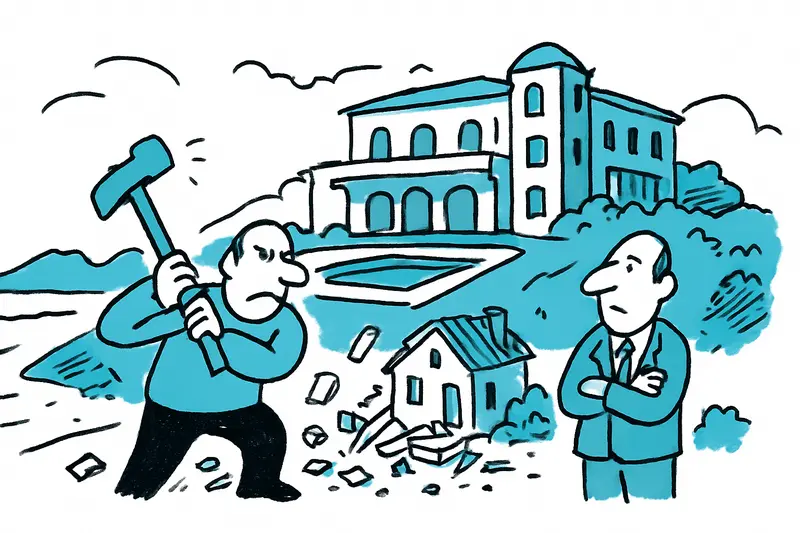
The facts are known: in 2005 the municipality granted a building permit. A neighbor took the case to court. In 2014 a court ordered demolition because the scale and visual dominance of the building impaired the exceptional landscape of Formentor, a dynamic also echoed in Demolition halted in Palma: What Gaspar Bennazar’s house teaches us about heritage protection. Years later, measures to integrate the property into the landscape were implemented — hedges, planting, visual screens and work on the roof covering. In 2017 a higher court lifted the demolition order and allowed legalization on the condition that the measures would mitigate the impacts.
Critical analysis: The ruling that once demanded demolition and the later legalization reveal a weakness in the system between environmental protection and private investor interests. A building that judges said permanently disturbed the landscape remained because technical and horticultural remedial measures seemed possible. That raises the question of who verifies the actual reduction in visibility and how lasting these interventions are. A planted hedge works only as long as it is maintained; visual screens and planting can take decades to really "grow in" and appear natural — or they can wither, be cut back or even removed when ownership changes.
What is often missing in public discourse is transparency about legal side effects: Were conditions such as maintenance obligations, financial guarantees or inspection intervals recorded as binding? Who is liable if the measures cease to be effective after years? And: What role did the potential financial burden on the municipality play if a demolition had actually been enforced — did that financial fear influence decisions? Investigations into who is allowed on Playa de Formentor show how access and legal uncertainty can become local flashpoints.
Another blind spot is market logic: Does the possibility of later legalization become part of a plot's value? Potential buyers are willing to pay enormous sums if legal uncertainties are cleared up. That creates an incentive to build massively upfront and, if necessary, rely on later compromises. This is not a theoretical risk; it is an incentive model — similar commercial pressures have sparked debate, for example the controversy over €210 sunbeds at Formentor and responses such as Four Seasons Formentor removes 'private beach' — cosmetic fix or turning point for free access?.
Everyday scene: On a Friday afternoon people sit in the café on the Pollença promenade, hear the clink of cutlery and the distant hum of boat engines. Conversations here are not only about tourism and festivals — some residents quietly talk about "the villa up there," about the wall that has recently become greener, about the worry that the view they moved here for is being lost piece by piece.
Concrete proposals that would help make the discussion more factual:
- Binding maintenance plans: For retrospective legalizations, clear, time-bound maintenance and reforestation obligations must be entered in the land register. Not mere declarations of intent, but sanctions for neglect.
- Financial security/guarantee: A deposited bond or guarantee for several years that applies if measures do not hold and demolition would become necessary again.
- Regular inspections: Independent experts should check at fixed intervals whether the landscape integration remains effective. Make results publicly available so neighbors stay informed.
- Resale obligations: When sold, continuing the obligations should be mandatory; changes to the appearance must not be made without renewed approval.
- Transparency about cost risks: Municipalities should disclose what financial risks they must weigh in comparable procedures. Public knowledge reduces pressure on local politicians.
Conclusion: The possible sale of Villa Cortina for high sums is more than just a real estate deal. It is a test of how seriously we take landscape and coastal protection when large sums of money come into play. Sitting on the promenade in Pollença, one sees waves breaking on the cliffs and wonders whether our protection is legally robust enough to withstand such financial forces in the long term. Small rules, clear enforcement and more public scrutiny could prevent individual cases from becoming precedents for future interventions.
Frequently asked questions
When is the best time to visit Mallorca for pleasant weather and easy swimming?
What should I pack for a trip to Mallorca to stay comfortable in the sun?
Are there family-friendly beaches in Mallorca suitable for kids?
How can I get around Mallorca without a car?
Is Mallorca safe for solo travelers and what precautions?
What outdoor activities should I consider when visiting Mallorca?
How does the sea and beaches vary across Mallorca?
What should I know about exploring Mallorca’s villages and countryside?
Similar News

Despite Rain: Why Mallorca's Water Situation Remains Unstable
October brought abundant rainfall — yet the islands still have partially critical storage levels. A reality check: where...

Why Housing Construction in Mallorca Is Stalling: A Reality Check
Construction plans gather dust, investors hesitate: A look at approval backlogs, cost drivers and concrete steps that co...

FC Germania: Coach Poker in Mallorca — Coup or Blind Gamble?
Negotiations with a former national-team player, an interim coach after a 9:0 win and several new signings — yet FC Germ...

Bomb threats in Europe: Why airlines and airports are in a frenzy — a reality check for Mallorca
A wave of bomb threats grounded flights at the end of the week and led to evacuations and military jet escorts. What doe...

Watch Robbery at Playa de Palma: The Ruse That Targets Tourists
Two alleged robberies at Playa de Palma: A man is said to have taken luxury watches worth a total of €34,000 from touris...
More to explore
Discover more interesting content

Can Cap de Bou

Townhouse Lleo 72
