
Checks at Playa de Palma: What do the raids targeting German license plates achieve?
Checks at Playa de Palma: What do the raids targeting German license plates achieve?
In a large-scale operation on Maravillas Street, police and customs officers checked 28 vehicles. Eight drivers were charged for not switching their license plates; two more were cited for expired ITV. Our analysis asks: Who pays the price for the fines — and what is missing from the public debate?
Checks at Playa de Palma: What do the raids targeting German license plates achieve?
Reality check: Between safety concerns and administrative chaos
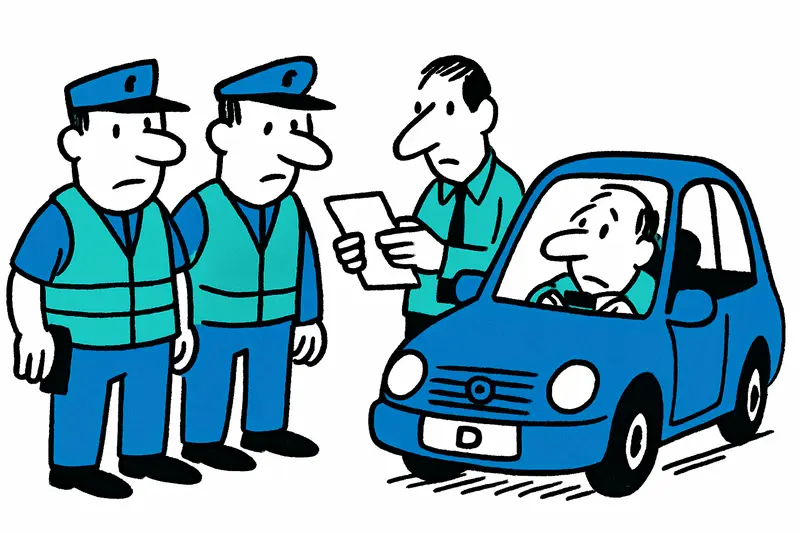
Last week, officers from the Litoral district, together with the traffic authority and staff from the customs surveillance service, moved into Maravillas Street amid the tourist bustle of the Playa de Palma. A total of 28 vehicles were checked. Eight times a charge was filed because the required change of foreign license plates had not been carried out; two other drivers received proceedings for expired technical inspection (ITV). The facts are clear — but what does this say about the purpose and consequences of such actions?
Key question: Are we here enforcing road safety and regulatory compliance, or do sanctions primarily hit people who already feel disadvantaged by long waits and bureaucratic hurdles?
The police measure can be formally justified: laws require that imported vehicles be re-registered within a deadline, usually within a month. Yet on Mallorca, appointments for re-registrations and ITV have been backlogged for months. Those trying to meet a deadline often face fully booked centers and months-long waits. The tension is obvious: officers on the street are enforcing the law — many affected people complain that the administration cannot keep up.
What is often missing in the public discourse is a distinction between deliberate rule-breaking and people who fail because of systemic bottlenecks. The control reports list numbers. They do not say how many of the 28 drivers were recent arrivals, how many were tourists or long‑term residents, or whether anyone could already prove they had appointments for re-registration/ITV. It also remains unclear how long customs processing and subsequent handling of the cases actually take and what penalties are realistic in the end.
An everyday scene: It is early afternoon, the cool sea breeze mixes with the smell of fried tapas from a stall on the corner. Two officers in high‑visibility vests stand beside a car with German plates, alongside them a customs officer checking papers. An older couple from Germany waits nervously nearby; they say they have been trying for weeks to get an ITV appointment. A young mother pushes a stroller past and asks in Spanish whether everything really has to be this strict. The mood is factual, not hysterical — but clear: the presence of authorities changes everyday life, even on a promenade that otherwise looks like a holiday scene.
Critical analysis: Checks are necessary to ensure road safety. But as a policy measure they only work if the administrative infrastructure is accessible. Fines alone do not solve the underlying problem: insufficient capacity at ITV stations, delayed appointments at registration offices, complicated multi‑country rules for residents and second‑home owners. Without this perspective there is a risk of imbalance: the police fulfil their duty to check, but politicians leave those affected with unresolved problems.
There is also a lack of transparency about sanctions and procedures after a charge: How long does further processing at customs take? What fees and deadlines will affected people face? Who offers assistance in German? Such information would reduce confrontations on the street and create legal certainty.
Concrete proposals that could help immediately: mobile ITV days in heavily affected places like Palma and Playa de Palma, more appointments in the evening hours, centralized online slots for re-registrations with clearly stated priorities for new arrivals, a multilingual hotline for practical help and an official leaflet that officers hand out during checks. A tiered fine schedule that distinguishes between negligence and intent would also mitigate hardship.
Responsible bodies are known: the ITV operators, the local administration (Ayuntamiento/Delegación de Transporte), the Agencia Tributaria for customs matters and the national traffic authority. In the short term, better coordination between these bodies could relieve much of the pressure on affected drivers.
Conclusion: Checks at Playa de Palma address a real problem, but they are only part of the solution. Those who want to enforce the law must at the same time ensure that the administration provides appointments and capacity. Otherwise what remains is a lot of bureaucracy and a widespread feeling of injustice, while the stated goals — more safety and clear rules — are only partially achieved.
Frequently asked questions
Why are cars with German license plates being checked at Playa de Palma?
What happens if an imported car in Mallorca is not re-registered on time?
Can you still get fined in Mallorca if the ITV appointment is fully booked?
What do police checks at Playa de Palma usually look for?
How long do you have to change foreign license plates in Spain?
What should I do if I drive a foreign-plated car in Mallorca?
Where in Mallorca are foreign-plated car checks most visible?
What is the problem with Mallorca's re-registration and ITV system?
Similar News

Fewer Airlines, Fewer Destinations: What Palma's Winter Flight Schedule Means for Mallorca
Analysis shows: Winter at Son Sant Joan Airport will be quieter, with significantly fewer airlines and destinations. Who...
German tourist dies in Sa Calobra – a reality check for emergencies on Mallorca's beaches
A 40-year-old tourist died at the Torrent de Pareis. The emergency call, a doctor who happened to be present, a defibril...
Deadly Tractor Accident in Bunyola: What Needs to Be Done Now
In a work accident on an estate near Bunyola, a roughly 40-year-old man lost his life. His wife and a small child were o...
Head-first dive into the shallow part of Cala Fonoll: An accident and the unresolved question of responsibility
A young tourist dove into Cala Fonoll and was seriously injured. Key question: Why are clear warning signs missing at da...
Mistaken identity with fatal consequences: Brutal assault in S'Aranjassa — what's missing in the follow-up?
At S'Aranjassa a visitor to a finca was tied up, beaten and thrown out of a van. Three men have been arrested, including...
More to explore
Discover more interesting content

Can Cap de Bou

Townhouse Lleo 72
