
Last-minute failure: Escape with forged passport at Palma airport raises questions
Last-minute failure: Escape with forged passport at Palma airport raises questions
A man who had been arrested for at least twelve home burglaries and whom a judge had forbidden to leave the country was stopped at Son Sant Joan airport with a forged passport. The case reveals weaknesses in checks and precautions.
Last-minute failure: Escape with forged passport at Palma airport raises questions
How could a convicted suspect almost escape despite an exit ban?
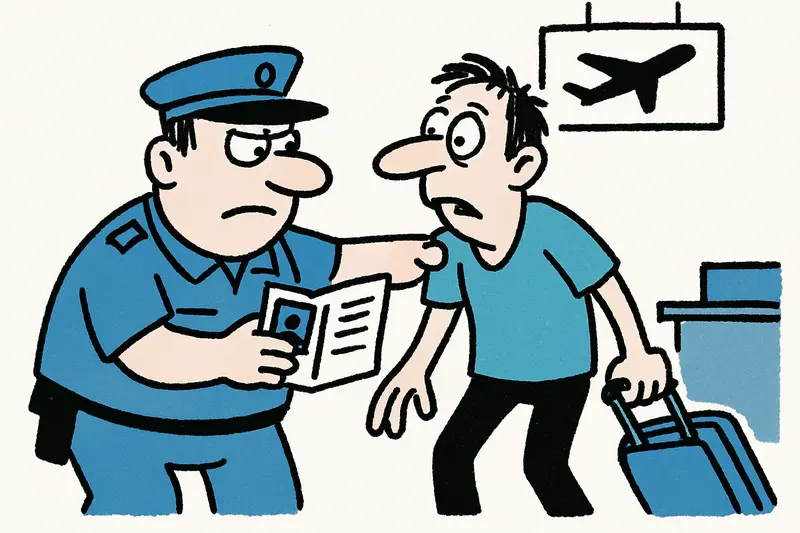
The place is familiar: the Son Sant Joan terminal, rolling suitcases, announcements over the loudspeakers and the last cafés opening for night flights. There, officers of the National Police (Policía Nacional) stopped a man who had already been arrested on May 19 for at least twelve residential burglaries, in an airport environment that has seen other arrests such as Arrests at Palma Airport: Two employees detained after alleged thefts. A judge had confiscated his passport after the arrest and imposed a ban on leaving the country. Nevertheless, he attempted to leave the island with another passport and was intercepted during routine checks; around 9 p.m. the police intervened and initiated new custody measures.
Key question: Why was the existing restriction not enough to prevent the departure? This is not an academic question but one with immediate consequences for public safety — for homeowners, late-night travelers and the colleagues carrying out checks at the airport, and it echoes concerns raised in Handcuffed Straight from Palma: Cross‑Border Manhunts, Mistakes and Mallorca's Image.
Critical analysis: At first glance the controls worked: the forged passport was noticed and the escape attempt failed. But the incident also reveals vulnerabilities. Judicial orders such as passport confiscation and exit bans depend on how they are implemented on the ground — on the safekeeping of seized documents, on the rapid dissemination of information to border and check-in points, and on airport practices where hundreds of people are processed every hour, and on physical perimeter security as incidents like Car breaks through airport fence: How close was Mallorca to a catastrophe? illustrate. A forged travel document was enough to start the attempt. Who checks the chain that allows an already barred man to reach the gate at all?
What is missing from the public debate: The conversation often focuses on the crime itself and the satisfying thrill of an arrest. Hardly anyone asks the systemic "why": How binding and how quickly are court decisions communicated to airports and airlines? What technical and personnel resources are available to the National Police and control points at night? And not least: why were certain repeat offenders not kept in custody immediately after a series of burglaries instead of being released under conditions?
Everyday scene from Mallorca: I can picture the scene — late evening, the display above check-in reads Salida a las 21:10, a taxi driver pushes suitcases, an elderly couple laughs over a misunderstanding, a security officer leafs through papers. Amid this ordinary hustle a man with a forged passport walks toward the gate. It does not take much imagination to see how quickly routine becomes risk.
Concrete solutions: First, the flow of information between the judiciary, the National Police and airport staff must become more reliable and faster. A mandatory electronic notification to all relevant checkpoints that automatically flags current exit bans would reduce gaps. Second, control points need more document-checking tools and regular training for check-in and gate staff: a reduced night shift has less room for corrective action.
Third: the state's decision-making regarding repeat offenders should be reviewed. With at least twelve documented burglaries, the question arises whether preventive detention or electronic monitoring would be more effective than house arrest or passport confiscation alone. Fourth: secure custody of seized passports and follow-up checks — who keeps the document, how is its absence verified and how often are such measures audited?
Practical community-level solutions: Homeowners and neighborhoods should be more closely involved in prevention strategies. A simple, well-coordinated reporting chain for burglaries, combined with camera evidence and local information sharing, increases the chances of restricting offenders before they strike again.
One last note on proportionality: Security measures must not be blanket policies. The aim is not more control for its own sake but targeted improvements where there is a clear gap between a court order and its enforcement. Technical tools, better communication and clear rules for detention and travel bans can help close those gaps.
Conclusion: The arrest at the gate was correct and necessary — a success for the night shift at the airport. But the incident is also an alarm signal. It shows how close everyday life and risk are in Palma: a delayed flight, a tired inspector, a gap in information flow is all it takes and a suspect is already at the gate. Those who want security must not only stop individual offenders but repair the chain that makes their actions possible. Otherwise the scene will repeat itself — perhaps without a lucky outcome for the victims.
Frequently asked questions
How can someone try to leave Mallorca if a judge has already banned them from travelling?
What happens when police stop someone with a forged passport at Palma airport?
Is Palma airport well protected against forged travel documents?
Why do exit bans and passport confiscations sometimes fail in Mallorca?
What does the Palma airport case say about security at night flights?
How are repeat burglary suspects dealt with in Mallorca?
What should homeowners in Mallorca do to reduce burglary risk?
What does the Palma airport incident reveal about coordination between courts and police in Mallorca?
Similar News

Ryanair Flight Diverted to Barcelona: An In-Flight Emergency and the Questions That Follow
A Ryanair jet from Pisa to Málaga landed in Barcelona after a passenger became acutely ill. Why these cases need more at...
Alarm in Port de Pollença: What now for the polluted bay?
Hundreds of people protested on the beach of Port de Pollença. The environmental organization Arrels Marines demands a p...

Micaela Schäfer: Between Playa de Palma and a Berlin Law Firm — New Calm, an Old Tomcat and Solid Finances
The party artist from the Ballermann scene appears surprisingly down-to-earth: a new relationship with a Berlin lawyer, ...
At Playa de Palma: Fire in Residential Building – six people rescued on the roof, what is missing in prevention?
In the evening a fire broke out on the first floor of a five‑storey building on Calle Trasimé. Six residents fled to the...
New License Requirement for Mini-Boats in Mallorca: Protection Measure or Tourism Brake?
From October 1 renters of small recreational boats in the Balearics must present a boating license. Critical questions r...
More to explore
Discover more interesting content

Boat Tour with BBQ along Es Trenc Beach

Private transfer from Mallorca Airport (PMI) to Pollensa
