
Handcuffed Straight from Palma: Cross‑Border Manhunts, Mistakes and Mallorca's Image
A 28-year-old was arrested immediately after landing in Cologne/Bonn. What such scenes mean for Mallorca — between a gain in security and a risk to its image.
Handcuffed Straight from Palma: Cross‑Border Manhunts, Mistakes and Mallorca's Image
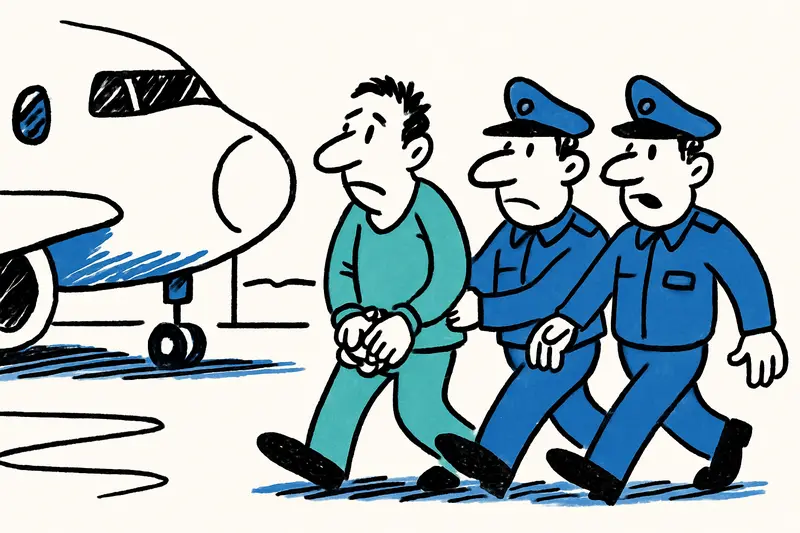
The scene was short, abrupt and felt like a foreign body in the bare arrivals hall: a young man lands in Cologne/Bonn and instead of luggage and a bus, the justice system is waiting. Federal police lead him away, hands in handcuffs, while surrounding travellers stand stunned. At first glance, such moments look like police success — on closer inspection they raise questions we do not often consider amid ensaimadas, rolling suitcases and sun loungers.
Key question: How well does cross-border policing work — and what does that mean for holidaymakers and Mallorca's reputation?
The answer is not simply yes or no. Yes, European policing systems work in the sense that they produce hits. Interpol notices or checks in the Schengen Information System (SIS) ensure that an arrest warrant does not stop at a national border. But how reliable are these hits? And how often do typos, name variants or outdated information cause unnecessary delays or even wrongful arrests?
At Palma airport, where the morning air smells of freshly baked ensaimadas and the soft beeping of roller suitcases accompanies the departures hall, few think of wanted persons lists. On the return journey, when the arrivals hall is lit by neon and families have lost their calm, such operations feel all the harsher: conversations fall silent, babies begin to cry, and for a short time official procedure takes over.
Technology and law: How does a hit unfold?
Search requests are distributed over international networks. If a name is recorded at control, an automatic check can be carried out. For authorities, this is an important tool to enforce judgments or arrest warrants. For those affected, a hit means: the border is no longer just a line on the map — it can mean immediate deprivation of liberty.
The problem lies in inaccuracies: one extra letter, a missing accent, an old address. Such small details can lead to unnecessary arrests or long waiting times, as documented in Accidentally Detained: When a Wrong Turn After Returning from Mallorca Becomes Costly. Therefore, what is needed is not only technical systems but also human procedures for rapid clarification — and treatment that remains dignified if something goes wrong.
What effect does this have on Mallorca's image?
A single case is not a pattern — and yet images stick. When someone sees a video on social media or reads a dramatic report, such as Arrest in Mallorca after European arrest warrants: How safe is the island as a hideout?, they easily associate the scene with its point of origin: the island. For an economy that depends on trust and holiday perceptions, this is sensitive. Buzzwords like "arrest" or "arrest warrant" do not always land with tourists in a nuanced way.
On the other hand, cross-border law enforcement can strengthen the sense of security. That justice works across borders can also build confidence: guests and residents know that offences will not go unpunished simply because they occurred on holiday. The crucial thing is balance — between consistent enforcement and the public framing of isolated cases.
Aspects that are rarely discussed
Consular assistance: Those affected and their relatives need fast, comprehensible information. Consulates could be more proactive in informing about rights during arrests and offer multilingual hotlines.
Data accuracy: Authorities should invest more resources in clean, standardized datasets. Plausibility checks, uniform name fields and regular updates could reduce false alarms.
Public communication: Airports could explain, in concise and easily understandable language, what happens when a hit occurs. That would reassure travelling families and reduce speculation in the queues.
Concrete opportunities and solutions
- Information points at Palma airport: Small stands or leaflets about rights and procedures at border controls would create clarity — not to unsettle, but to build confidence.
- Better interfaces: Early communication between airlines, the airport and the consulate can prevent escalations. A short pre-warning to the responsible authorities could help defuse conflicts.
- Voluntary online check: Through official embassy pages there could be the option to check before travelling whether investigations are pending against a person. This would be voluntary, legally compliant and could avoid embarrassing situations.
- Training for staff: Staff at passport controls and in arrivals halls need training to carry out checks professionally and humanely — clear, brief language, calm demeanour, clear information for bystanders.
A bitter aftertaste — and the sober reality
The cited case ended with the 28-year-old being placed in a prison in North Rhine-Westphalia; legal proceedings are now taking place in German courts, as reported in From the Beach to Handcuffs: Mallorca Holiday Ends with Arrest at Düsseldorf Airport. For Mallorca, the challenge remains to classify such isolated cases objectively while increasing transparency. Border control does not automatically mean excess; holiday does not mean immunity from the law.
A pragmatic tip for travellers: keep passports and address details up to date, contact the consulate if in doubt and stay calm. For the island: more information, more dialogue, more precision in the data — that would help ensure that the many everyday, quiet Mallorca moments remain undisturbed.
Frequently asked questions
How can someone be arrested at a European airport after flying from Mallorca?
Are airport police checks after a Mallorca flight always reliable?
What should I do if I am stopped at Palma airport by police?
Does a police arrest abroad damage Mallorca’s image?
Why do people suggest better information points at Palma airport?
Can a typo in my passport details cause problems when leaving Mallorca?
What role do consulates play if someone is detained after a Mallorca trip?
Is it normal for Mallorca holidaymakers to face border checks on the way home?
Similar News
When coercive fines aren't enough: Could holiday rental owners soon face prosecution?
The island administration is stepping up action against unauthorized holiday rentals: high daily coercive fines up to €5...

Palma Airport on an Expansion Course — Who Decides How Much Growth the Island Needs?
Aena and Madrid are planning multi-million euro investments for Son Sant Joan and project higher capacities. Concern is ...
Who Gets Left Out? Why Overbookings Will Hit Many Mallorca Travelers This Summer
On hot check-in days at Son Sant Joan, frustrated travelers pile up. New figures from Reclamador.es show that a large sh...
When the Handyman Came: How an Engagement Ring Disappeared in Mallorca and What It Says About Trust
During a repair in Andratx a highly personal engagement ring went missing — a case that calls not only for punishment bu...
How Burglars Test Fincas in Mallorca — and What You Can Do About It
The Spanish National Police warn of a simple but effective trick: small markings on doors reveal whether a finca is occu...
More to explore
Discover more interesting content

Can Cap de Bou

Townhouse Lleo 72
