
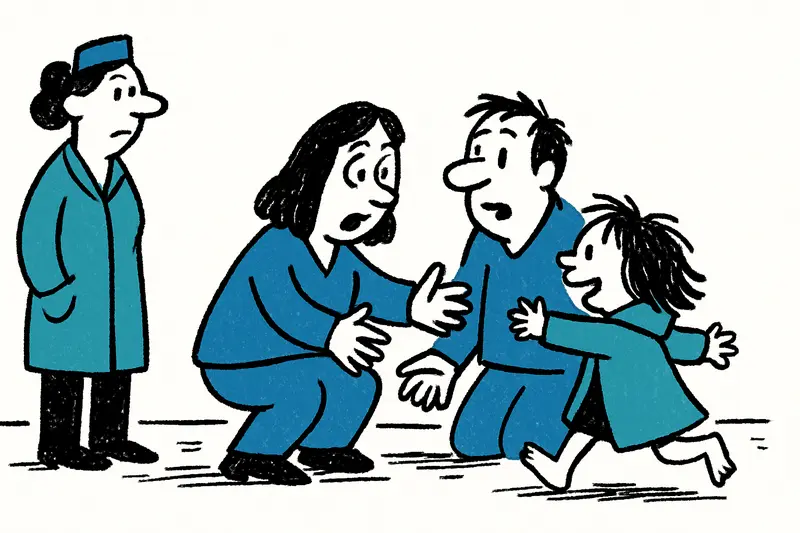
Riddle in Coll d'en Rebassa: Six-Year-Old Girl Found Ten Kilometers Away
A six-year-old girl disappeared on Sunday morning in Coll d'en Rebassa and was found about ten kilometers away. Police are investigating — the key question remains: How did the child get so far?
Key question: How did a six-year-old girl end up ten kilometers away from home?
The Sunday began quietly in Coll d'en Rebassa: birdsong, church bells in the distance, a bakery pulling the first loaves from the oven. Then an eerie silence in a side street when parents realized their daughter was no longer in the apartment. Minutes stretched into a painful eternity. Around 11:30 a.m. the uncertainty ended — for now. A little girl was found almost ten kilometers away at the General Riera. Awake, oriented, but exhausted. The answer to the key question remains open. What is clear: there are many gaps in the story that urgently need to be closed.
The facts — short and clear
A nurse noticed the child on the pavement, wrapped her in a coat and alerted the police. National Police officers verified the identity, called the parents and organized a medical check. Official authorities are releasing information only step by step: the family raised the alarm shortly after the disappearance, as reported in a news report about the girl's disappearance in Coll d'en Rebassa, investigations are ongoing, witnesses are being interviewed and footage from the area is being reviewed.
What is often missing in the public debate
When a child disappears, the discussion quickly turns to a simple question: abduction or running away? Both assumptions are possible, but the following aspects are rarely examined in sufficient depth:
1) The role of urban infrastructure: On Mallorca, walking paths, country roads and quiet neighborhoods are closely interwoven. Children can use routes that adults barely notice — footpaths along driveways, construction-site tracks or quiet side streets. How well are these areas monitored? Are there blind spots in camera coverage or gaps in responsibility between municipalities?
2) Time windows and information flows: Minutes are crucial. How quickly were neighbors informed? Was an alert or search mechanism activated (similar to a Amber Alert system in Europe/Silver Alert)? Experience shows that fast, coordinated communication between family, police, neighbors and transport operators increases the chances of finding a child quickly.
3) Bystander effect and shame: Neighbors often say: “We didn’t see anything.” In reality, the bystander effect often prevents people from intervening or later disclosing details. In addition, shame — for example, if parents were briefly inattentive — leads to information being withheld.
Concrete questions for the investigation
The police must clarify: Did the child have access to public transport? Was she accompanied by a known person? Are mobile phone traces or GPS data available? Were camera recordings along possible routes secured? In many cases, the correct order of securing traces determines the progress of the investigation.
Practical proposals — what can help now
The situation also offers concrete approaches to prevent repetitions:
1) Improve immediate measures: A local alert chain for missing children that quickly reaches neighbors, taxi companies and bus drivers. Many people listen to the radio while driving or are members of street WhatsApp groups — these channels could be formally integrated.
2) Prevention instead of panic: Education in daycares and primary schools about how to behave in emergencies. Children should know simple rules: do not go with strangers, be able to name destinations, have meeting points. Lively neighborhoods and engaged residents are often the best protection.
3) Use technology sensibly: GPS watches for children, secure family apps and checking public cameras along common footpaths. It is important to balance data protection and practicality so that technology actually helps and does not only provide a false sense of security.
What the municipality should do
Coll d'en Rebassa and neighboring municipalities should review their protection concepts after this incident: lighting on footpaths, clear responsibilities for cameras and fast information channels between small communities and the National Police. A local crisis team that is activated immediately in missing-person cases could save valuable minutes.
The end of the story — and an open look ahead
First and foremost: the girl is back with her family. Hearts can breathe again; the street fills with the sounds of normal Sundays. Nevertheless, the mystery remains unsolved. That a child was found ten kilometers away should not be accepted with mere relief. It must prompt a review of processes, prevention and solidarity.
Out of respect for the affected child, no photos or private details are being published.
Frequently asked questions
What happened in Coll d'en Rebassa when the six-year-old girl went missing?
How far can a child travel in Mallorca before anyone notices?
What should parents in Mallorca do if a child goes missing?
Is General Riera in Mallorca a place where children can get lost easily?
What role do cameras and footpaths play in missing-child cases in Mallorca?
How fast should a missing child alert be issued in Mallorca?
What can schools in Mallorca teach children about staying safe?
Can GPS watches or family apps help find a missing child in Mallorca?
Similar News
Eviction in El Arenal: Who protects neighbors — and who protects the homeless?
A vacant hotel on Carrer Girona was cleared and secured. The neighborhood breathes a sigh of relief. But the action trea...
'La Tapita' loses its home: Who will protect Palma's last affordable meeting places?
The bar 'La Tapita' on Simó-Ballester Street will close at the end of December. For neighbors, police officers and small...

Million Heist at Bulgari: Who Is Responsible for Palma's Security Gaps?
Three men stole jewelry worth around one million euros – the crime series began at the end of September and was likely c...

Who pays the bill? Tourists, prices and the reality in Mallorca
Rising costs are felt by travelers and locals alike. A walking observation through Palma's old town shows how tourists e...
Phone robbery at Playa de Palma: Two juveniles arrested — a reality check
On Monday morning three young women were attacked at Playa de Palma; two youths snatched a phone from one of them. The N...
More to explore
Discover more interesting content

Can Cap de Bou

Townhouse Lleo 72
