
Collective Agreement in Retail on the Balearic Islands: What Really Reaches Workers' Pay
Collective Agreement in Retail on the Balearic Islands: What Really Reaches Workers' Pay
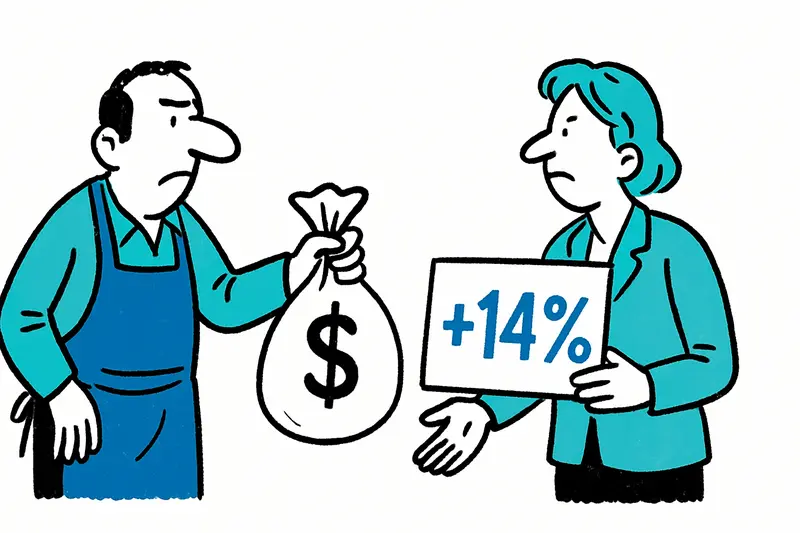
Employers and unions have agreed a four-year collective agreement: 14 percent in total, 4.5 percent for this year. Is that enough for Mallorca's shop workers?
Collective Agreement in Retail on the Balearic Islands: What Really Reaches Workers' Pay
Four years, 14 percent – an agreement with question marks
Employers and unions have agreed on a new collective agreement for Retail on the Balearic Islands grows — but for whom?: wages are to rise cumulatively by 14 percent over four years, with a 4.5 percent increase planned for this year. At first glance this is news that gives employees hope. On closer inspection, however, it remains unclear how much of this increase actually ends up in people's wallets.
Key question: Does this wage increase cover the reality in which many retail workers live, or is it more of a symbolic signal ahead of the tourist season?
Analysis: The total of 14 percent sounds solid — but it is spread over four years. On Mallorca and the other islands many retail employees are part-time, seasonal workers, or work in small shops with thin margins. A percentage figure says little about local purchasing power trends, rental costs, commuting distances or extra shifts during the high season. If inflation, energy and transport costs and rents rise faster than wages, less will remain than expected.
What is missing from the public debate: detailed figures on employment contracts and hours worked. There is much talk about percentages, but little about average monthly salaries, allowances for night and Sunday work, or the number of unpaid overtime hours that are common in many small stores. Also rarely discussed: how many wage earners are on fixed-term contracts and how often these are extended during tourist months.
Everyday scene from Mallorca: It's Tuesday morning at Mercado de l'Olivar in Palma. Between fruit stalls and cafés a saleswoman pushes a crate of oranges from the delivery van into the shop. She works 25 hours a week, is woken early by deliveries, pays a high parking surcharge and lives on the periphery because affordable housing in the old town is scarce. For her, an average wage increase means little if allowances, childcare and commuting costs are not taken into account.
Concrete solutions that go beyond percentage figures: first, link collective agreements to a regional basket of goods — an index that specifically reflects the cost of living on the islands; second, define minimum standards for seasonal contracts, including minimum hours and clear renewal rules; third, raise and enforce allowances for typical retail burdens (Sunday, night and last-minute work); fourth, expand cooperation between municipalities and employers so that employees can live closer to their workplace (micro-housing, subsidised rents for shift workers); fifth, targeted inspections by labour authorities to uncover sham self-employment and abusive contracting practices.
Additional useful measures would be transparent salary information in job postings so applicants can immediately see whether a job is economically viable, and more support for training programmes in retail — from digitalisation workshops to customer service training that can raise productivity and thus wages.
One final point: collective agreements only help if they are applied and monitored, and ongoing negotiations in the public sector highlight how fragile progress can be Balearic Islands: Pay talks with civil servants stall — negotiations to continue tomorrow. Unions and employers must not only negotiate levels, but also agree mechanisms for control and sanctions. Without practical enforcement, even a good agreement remains a piece of paper.
Conclusion: The deal brings movement to the wage landscape of Balearic retail. For many employees the increase could be noticeable; for others it will be a drop in the ocean unless seasonal uncertainties, high housing costs and allowance rules are addressed in parallel. An effective step would be to link wage policy to concrete measures on working hours, housing and enforcement — only then will the pay rise feel like a real increase in everyday life.
Frequently asked questions
When is the best time to visit Mallorca for good weather?
What is the weather usually like in Mallorca during summer?
Can you swim in the sea in Mallorca year-round?
What should I pack for a trip to Mallorca?
Is Mallorca a good destination for hiking?
Is Palma de Mallorca worth visiting for a short break?
What is Sóller like for visitors in Mallorca?
Is Mallorca better for a beach holiday or a sightseeing trip?
Similar News
Car accident on the MA-1: Mother and daughter on a bicycle struck by a fellow countryman – Who protects cyclists here?
On the MA-1 between Portopí and the Cala Major exit, a mother and her daughter on a bicycle were struck by a car. A para...
Smoke over the UIB: Who is responsible for the fire on the roof?
On Saturday afternoon a fire broke out on the roof of the Arxiduc Lluís Salvador building at the University of the Balea...
Short Getaway with Sea View: Inmood Aucanada among Spain's Top Hotels for Dinner Breaks
A small hotel on the coast of Alcúdia was highlighted by a Spanish experience platform as particularly suitable for shor...
Cala Pi crowned Mallorca's most beautiful beach: A morning at the rocky cove
The travel portal Holidaycheck praises Cala Pi as Mallorca's most beautiful beach: a narrow, romantic cove, clear water,...
Injured captain, big plans: Germania Mallorca before the away match in Consell
The newly founded FC Germania Mallorca travels to Consell on Saturday. Captain Bastian Müller is out injured, but coach ...
More to explore
Discover more interesting content

Can Cap de Bou

Townhouse Lleo 72
