
Roig CS – Farewell to Palma's Most Famous Police Horse
Roig CS – Farewell to Palma's Most Famous Police Horse
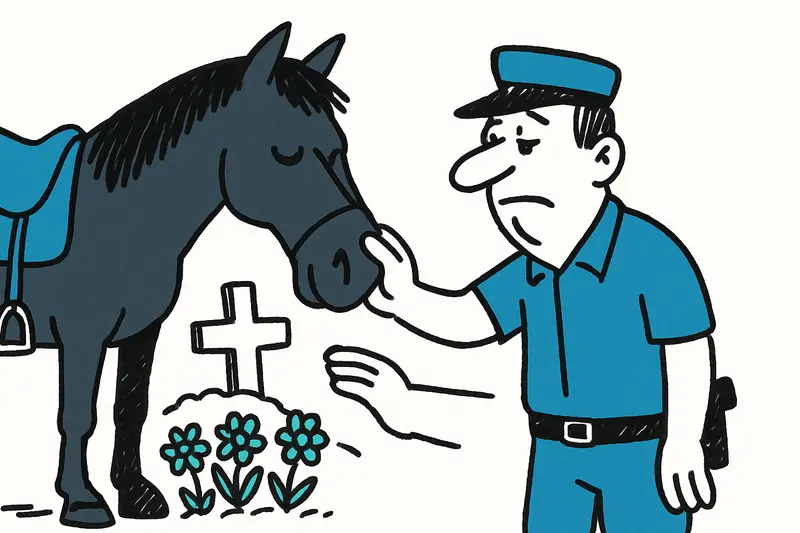
Roig CS, 17 years in service with Palma's mounted police, died after a short retirement due to illness. A farewell that brings the island community together.
Roig CS – Farewell to Palma's Most Famous Police Horse
17 years of service, a few months of retirement, great sadness in the city
The sound of the bells of La Seu, the rattling of buses on the Passeig del Born and the familiar snort of a horse — that's how Palma is known. Now one voice is missing: Roig CS, who worked for decades in the city's mounted unit, has died after an illness. Only a few months earlier the animal had officially retired and returned to its breeder to spend its last weeks in a familiar environment.
Roig was not just a working animal. For many residents he was part of the daily backdrop: in the mornings at the Plaça de Cort when pupils with backpacks crossed the street; in the late afternoon when tourists strolled along the harbor and locals drank a glass of water in the café. He was a calm presence amid the urban bustle, a four-legged contact for children with outstretched hands and a reliable companion for colleagues on duty.
Palma's mounted unit honored Roig as a longtime companion. The phrases that appear in exchanges with the public sound less like protocol and more like gratitude: memories of joint deployments, rides through the old town, the indispensable calm a horse radiates when it stands in the middle of a crowd. It is precisely these everyday scenes that make clear why animals in public service are more than just "equipment."
The short retirement period causes quiet regret: 17 years of service and only a few weeks back at the home stud. That is also a topic that prompts reflection when walking the cobbled lanes of Palma and greeting older riders, a debate captured by After Two Collapsed Horses: Palma Faces a Decision — Rethinking Carriage Rides.
How do we care for our animals when their work is done? Roig's return to the breeder shows that it is possible to spend the final phase of life in a familiar setting — but it also raises the question of whether such solutions are available across the board for all working and service animals.
A small, very local moment puts this in perspective: on a sunny morning at the Parc de la Mar I watched a girl pull a carrot from her pocket. She shyly approached the barrier and waved back as a horse passed by. Encounters like these are what make Roig unforgettable. The sympathy in the neighborhood, the flowers at the entrance to the mounted unit's stables, the handwritten notes on some notice boards — that is the real monument.
Why is this, as sad as it sounds, also good news for Mallorca? Because the farewell reminded many people how important care, welfare and respect are. It has sparked conversations: about species-appropriate retirement for service animals, about linking breeding farms with municipal programs and about small initiatives that make sponsorships for older animals possible, as explored in Horse Falls in Palma: Do Carriages in the Old Town Need Rethinking?.
Concrete ideas are on the table: memorial plaques at the unit's stables, open days where children can learn about the life of a service horse, or cooperation models between municipalities and breeders for eldercare. Such steps are not a major administrative act but a sign of appreciation — and often cost less than one might think. Those who knew Roig know: it is enough for people to stop for a moment, say thank you and do a little planning.
In the end there remains the memory of an animal that carried, calmed and sometimes even saved people through the streets of Palma. The grief is real; it is shared in conversations over a café con leche at the Mercado del Olivar or during a walk at Porto Pi, where people recall moments like Horse collapses in front of San Nicolás: A wake-up call for Palma. Roig left his marks not only on the cobbles but in people's minds. And perhaps the most important lesson is this: when island communities mourn such losses together, small, sustainable changes often follow — more care, more respect, a clearer awareness of what we owe those who stood by us for years.
Rest in peace, Roig. Your hooves made Palma's alleys feel more familiar. The idea of honoring you is becoming visible in small steps: conversations, plans, flowers — and the memory of a horse that was more than a service object.
Frequently asked questions
What is the weather usually like in Mallorca in April?
Can you swim in Mallorca in April?
Is April a good time to visit Mallorca?
What should I pack for Mallorca in April?
What is Palma de Mallorca like in April?
Is Sóller worth visiting in April?
What is the weather like in Alcúdia in spring?
Are there nice things to do in Mallorca if the weather is not great?
Similar News
Rental Car Theft in El Arenal: What This Incident Reveals About Our Gaps
A teenager steals a running rental car in El Arenal, flees on foot, climbs over walls and is caught by the Guardia Civil...

Red Rope in Palma's Library: What Helps Against Selfie Tourism — and What's Missing
Palma's city library cordoned off an area with a red rope to keep selfie tourism away from reading and working activitie...

Fort San Carlos: Museum, Harbor Dispute — and a Conflict That Demands Answers
The military museum at Fort San Carlos sits right on Palma's harbor, with unexpectedly quiet rooms filled with cannons a...

Old Town Under Pressure: When a Doorway Becomes a Sleeping and Shower Place
For months a woman has been living with a parasol, a clothes rack and personal belongings next to the social welfare off...

When Shopping Weighs Heavier: Mallorca Demands a Tax Pause on Food and Fuel
Rising prices are putting pressure on households and agriculture. The Balearic Islands are calling for temporary tax rel...
More to explore
Discover more interesting content

Can Cap de Bou

Townhouse Lleo 72
