
Alone in the Blue: The Cook Who Cleans Mallorca's Coasts
At sunrise a Palmanova cook leaves his kitchen not to serve, but to retrieve trash from the sea with fins and snorkel. His finds range from phone cases to a firearm. But can one person really make a difference?
A cook between stove and sea
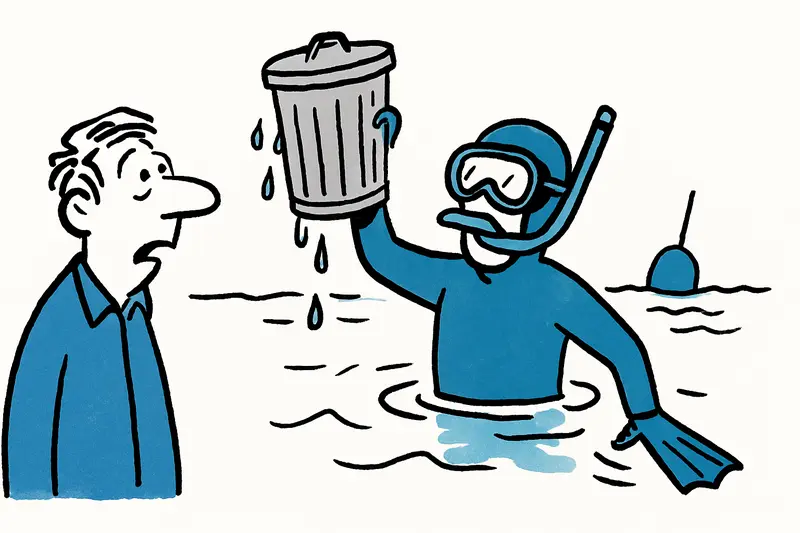
When at 7:30 a.m. the scent of hot coffee still hangs over the cafés on the coast and fishermen check their nets, Kamil pulls on his old wetsuit. People in Palmanova simply call him "Kamilo". A Spanish report on the Palmanova cook who dives for trash has covered his routine. By day he stands at the stove in the small Max Garden, serving tacos and wok dishes. In the early mornings, however, the cook becomes a freediver: mask, snorkel and a small buoy on the water.
A question that remains
Can a single person make a difference against the growing marine litter on Mallorca? That is the central question that occupies him on the bow while seagulls cry and fishing boats chug into the bay. Kamil dives without a tank, sometimes to depths of 30 meters. "I hold my breath for about a minute to a minute and a half," he says, sipping from his thermos of tea. He is always careful. Being alone under water has a special silence, but also risk.
More than empty cans
In seven years he estimates he has pulled about 3,000 kilos of debris from sand and seagrass meadows. Much of it is banal: plastic parts, cans, old fishing line. But surprising finds keep coming up—Apple Watches, iPhones, cash in a plastic bag, even an old firearm that he handed over to the Guardia Civil. An octopus that had made a can its home remained particularly memorable.
What stands out here: the story does not end under water. Kamil takes photos, films his dives and uses local Facebook groups to track down owners. He has returned over a hundred items this way. It is a small but remarkable service that shows how connected the island is even offline.
The quiet costs
Materially the cleanup has brought little. His rewards are wild, small and often immaterial: a seahorse in the seagrass, a passing ray, the feeling of giving back. Legally his actions are in order—he completed a freediving course (Level One)—but the burden grows: more trash, fewer clean spots, more hazards like entangled fishing line.
What is often overlooked
Public discussion often focuses on large campaigns and photos of plastic piles. Less noticed is how much work takes place below the waterline: recovering lost personal items, safely handling potentially dangerous finds and informally returning them to owners. Equally underestimated is the contribution of people like Kamil, who achieve a lot with minimal equipment—while putting in time and risking their health without pay.
Concrete opportunities — and simple approaches
It is not only about individual heroes. The island could do small things that have big effects:
1. Support equipment: Grants or loan fins and signaling buoys for local divers. Carbon fins, Kamil says, would be a dream.
2. Official networking: A digital reporting and return system for found items that connects municipalities, divers and owners.
3. A culture of shared responsibility: More beachside collection points for fishing line and nets, cooperation with angling clubs and boat operators.
4. Safety and training: Free or subsidized freediving and safety courses so volunteers are not left alone.
5. Prevention: Information campaigns in hotels, with landlords and boat rental companies about how to avoid creating trash and secure lost items.
A look ahead
At the end of our conversation Kamil looks out over the water once more. The buoy rocks. Out there lie work, frustration and also beauty. He messages owners, fills a sack with plastic, drinks his tea and laughs softly: "I want to give something back. The island gave me a home."
The island needs more than recognition. It needs structures that can turn lone fighters into a network. Then the question of whether one person can change anything would no longer be just a question, but a plan.
Frequently asked questions
Why do some people in Mallorca free-dive to collect litter from the sea?
Is it safe to free-dive while cleaning rubbish in Mallorca?
What kind of rubbish is usually found in Mallorca's sea?
Can lost items found underwater in Mallorca be returned to their owners?
Where in Mallorca does marine litter tend to build up?
What is special about Palmanova in Mallorca for coastal cleanup work?
What can Mallorca do to reduce trash in the sea?
When is the best time to go into the water in Mallorca if you want calm conditions?
Similar News
Masked Images, Real Panic: When Social Media Aesthetics Alarm Neighbors
Five German content creators filmed on a recently vacated detention site using deceptively realistic props. The result: ...
Why the Striped Breams in Cala Pí Should Be a Wake-up Call
Once again bathers in Cala Pí were surrounded while swimming by small, nippy fish — some wounds bled. Time for clear rul...
Daily from New York: How Palma's Air Traffic Is Growing — and What Must Change
United will increase the Newark–Palma service to daily flights in 2027 (Boeing, 231 seats). Strong tourist numbers clash...
When Love Ends in Shards: Destruction in Son Vida and the Questions That Remain
In Son Vida a relationship dispute escalated: a woman destroyed furniture in a luxury villa, later pressed a panic butto...

Who Bears the Burden? Mallorca Between Tenant Protection and Landlord Fears
Madrid's new housing decrees strengthen tenant rights — but on Mallorca concern is growing: will the law drive small lan...
More to explore
Discover more interesting content

Can Cap de Bou

Townhouse Lleo 72
