
German Unity at the Beach: Celebrating, Remembering — and the Question of Engagement
At the reception for German Unity at Playa de Palma, celebrities mingled with neighbours. The celebration was warm — but the consul's speech left a central question open: How can German life on Mallorca remain vibrant and future-proof?
Relaxed atmosphere, sea air and a serious undertone
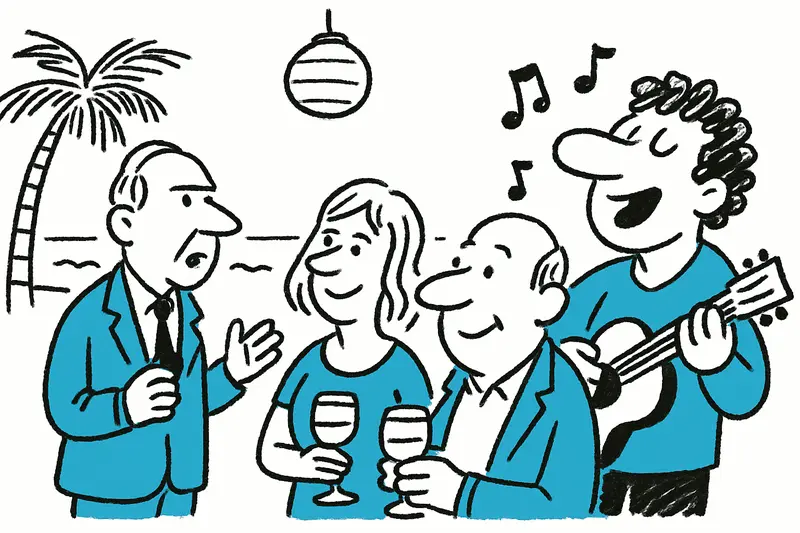
The evening of October 2 at Playa de Palma began just as one imagines a Mediterranean commemoration: a light travel spirit, the lapping of waves, the clink of the first champagne glasses on the terrace of the Joy Palace at the Universal Hotel Neptuno. People stood in groups, listened to the seagulls and laughed at small anecdotes. Yet between the lamps slowly coming on and the sound of footsteps on the paseo there was also a moment of reflection — prompted by a quiet speech that was more than a pleasant remembrance.
The guiding question that lingered
Host Wolfgang Engstler, the German consul, recalled 1989 and warned against taking democracy for granted. He also announced that he would be leaving the island next year. That caused a brief silence and raised a question that went largely unanswered that evening: How does the German community in Mallorca ensure that political engagement and cultural life remain sustainable beyond individual celebrations, as discussed in Between Welcome and Wariness: Germans in Mallorca — What's Really Happening?
Prominence meets neighbourhood — a double-edged picture
Between well-known faces like Peter Maffay, Tina Ruland and Uwe Ochsenknecht and representatives of the local cultural scene, the gathering felt deliberately open: celebrities mixed with people, chatting about theatre plans or the best paella near Balneario 6. That is likeable and useful for visibility. At the same time, the question remains whether such events are enough to build long-term networks that also include politically and educationally oriented offerings for the younger generation; this debate also ties into concerns about tourist patterns discussed in When the Germans Stay Away: Opportunity or Risk for Mallorca?.
Music as a bridge — Juanjo Monserrat showed how it works
An undisputed highlight was the performance by Juanjo Monserrat, two-time Latin Grammy winner from Arenal. With “La Balanguera” and Mallorcan pieces he created a moment in which language and island feeling came together. Music can create integration, memory and identity — but such emotional bridges need routines: regular programmes, young talents, cooperation with schools and cultural centres so the spark can be passed on.
What is usually neglected
At celebrations like this, conversations about projects, theatre and film ideas dominate. Rarely do you hear concrete plans: How are volunteers mobilised? How do political topics remain present without polarising? What role do the consulate and German associations play in nurturing young talent? The debate about long-term engagement often remains in the pleasant evening light — visible but not very systematic.
Concrete steps that would strengthen Mallorca
A few easy-to-implement suggestions were obvious: regular discussion rounds on social issues at the consulate or in cultural centres, a mentoring programme linking experienced migrants with young Germans on Mallorca, and above all more cooperation with local schools and the Balearic cultural sector. Even a small fund for cultural projects that foster German–Mallorcan encounters could make a big difference.
Between festive mood and responsibility
Away from the official words the evening remained warm and personal: walkers who strolled the beach at 9 p.m. still heard laughter and saw groups winding down the night. That is important — such connections are the salt of any community. But if the memory of 1989 is not to remain merely nostalgic, more is needed than pleasant evenings: lasting structures, youth work and cultural continuity.
Conclusion: The reception at Playa de Palma showed that celebration and reflection can go hand in hand. The challenge is to turn these moments into lasting offerings — so that on Mallorca people not only celebrate, but also shape the future.
Tags: German Unity, Playa de Palma, Juanjo Monserrat, Consulate, Balneario 6, Culture, Expatriates
Frequently asked questions
Why are German community events in Mallorca important beyond the social side?
What is the weather usually like in Mallorca at the beginning of October?
Is Playa de Palma a good place for an evening event or reception in Mallorca?
What role does music play in German–Mallorcan cultural life?
Who is Juanjo Monserrat and why is he significant in Mallorca?
What can German associations in Mallorca do to involve younger people?
What is the role of the German consulate in Mallorca’s community life?
How can cultural events in Mallorca become more than just celebrations?
Similar News

Orange Alert over Parts of Mallorca: Are We Prepared?
Dark clouds and an announced wet spell have triggered an Orange alert in parts of Mallorca. A reality check: what's miss...

Sundair & Co.: Sale speculation and what it could mean for Mallorca
Rumors about a possible sale of the airlines Sundair and Fly Air 41, which belong to Schauinsland-Reisen — and whether b...
Anne Wünsche in Mallorca: A job offer with a catch — who fits the role of personal assistant?
Influencer Anne Wünsche has left Berlin and is urgently looking for a full-time personal assistant in Mallorca. Why the ...

Daily from New York: Palma Between Boom and Strain
United will increase the Newark–Palma route to daily flights in 2027 using Boeing aircraft (231 seats). What does the in...

Palma Gets a Welcoming Park: Tirador Goes Greener — and a Café Is Coming
A new green project in Es Fortí/Camí de Jesús will transform the old Voltadora into a city park with an experience fores...
More to explore
Discover more interesting content

Can Cap de Bou

Townhouse Lleo 72
