
Dinosaurs in Palma: A Window into the Distant Past
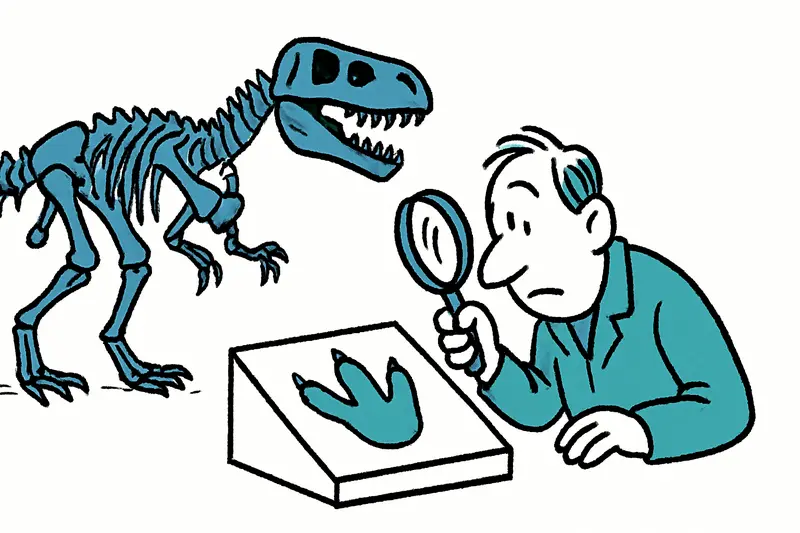
An exhibition about the dinosaurs of Patagonia invites visitors to take a closer look at CaixaForum Palma—not only at the giant creatures, but also at the traces scientists use to piece together their story.
When Palma Turns Its Gaze to Patagonia
At CaixaForum Palma, the focus is currently on animals that vanished millions of years ago—and on a landscape on the other side of the world. The exhibition “Dinosaurs of Patagonia” is more than a parade of enormous dinosaur skeletons. Its most intriguing idea is a different one: how do bones, imprints, or layers of rock become a story?
It’s a good question for a November day in Mallorca. Outside, a cloud might drift over Plaça Weyler, dishes clatter somewhere on a café terrace, and inside, visitors are looking at a span of time that is almost impossible to imagine. Dinosaurs disappeared around 66 million years ago. Suddenly, Palma seems very young—even the old city walls are newcomers by comparison.
More Than Big Teeth and Long Necks
Dinosaurs are a crowd-pleaser. Children stop in front of a huge skull, adults pretend they’re only taking a quick look, and ten minutes later everyone is discussing the size of a thigh bone. It’s not a bad introduction to science. But the exhibition also draws attention to what lies behind each display: research, patience, and the question of what a discovery can really tell us.
A fossil is not a ready-made chapter from the past. It is a clue. Experts examine the rock in which it was found, determine the age of the layer, and look at what other traces have been discovered nearby. A single bone can tell us a lot, but not everything. Without context, a scientific interpretation can quickly become a nice-sounding guess. That is precisely the difference between a spectacular object and a well-supported reconstruction.
Patagonia is a particularly fascinating place for this kind of work. The region in southern Argentina has yielded important dinosaur discoveries. Its fossils help us better understand the wildlife of the southern continents. It looks far away on a map; in an exhibition, the distance seems to shrink. Mallorca may not lie on the route between Trelew and the major excavation sites, but an afternoon in Palma is enough to travel a long way in your imagination.
What Rock Can Preserve
The work often begins long before a bone is uncovered. Researchers look for suitable rock formations, record the position of each find, and carefully secure the material. Even small details matter: its orientation, the layer, and the surrounding environment. Fossils do not form according to a simple recipe. Sometimes remains are quickly buried by sediment; over time, minerals may replace or preserve parts of the original material. Even so, much remains incomplete.
That does not make paleontology any less fascinating—just more honest. Science works with evidence and uncertainty at the same time. New finds can add to or change the picture we already have. A museum therefore shows more than what we know. It can also reveal how knowledge is created—and why researchers keep testing their conclusions.
For families, there’s a welcome bonus: you don’t need to memorize names to come away with something. The simple question “How do we know?” can guide you through the entire visit. It works just as well for a skeleton as for a piece of rock. And it’s a good question to bring up at the kitchen table later, if someone claims their favorite dinosaur must have been the strongest. What does “strong” even mean? In what environment? Based on what evidence?
A Great Reason for an Afternoon of Culture
In everyday life in Palma, a museum isn’t always the first thing that comes to mind. You run errands, wait for the bus, or make a quick detour down a side street. That makes exhibitions that appeal beyond a narrow specialist audience all the more welcome. A dinosaur show can be an outing for everyone, where adults don’t have to play the role of mere chaperones. The giant creatures draw you in; the questions often stay with you longer.
If you’re planning a visit, check the latest opening hours and ticket information directly with CaixaForum. Details can change, and a quick look before you set off can save you the less-than-prehistoric disappointment of finding a closed door. Afterwards, it’s easy to extend the afternoon in Palma: take a walk through the old town, stop for something warm in a café, and perhaps discuss whether a dinosaur would even fit in the city today. It would certainly be too big for the bus.
The exhibition brings a piece of Earth’s history to Palma, but its greatest appeal lies in more than the enormous animals. It reminds us that our understanding of the past grows through careful work—from traces someone has found, compared, and interpreted. A good museum visit doesn’t make the world smaller. It fills it with questions. And sometimes all it takes is a fossil that has been waiting a very long time for its next curious visitor.
Frequently asked questions
What can families do in Palma for a cultural afternoon?
Is the dinosaur exhibition in Palma suitable for children?
What is the Dinosaurs of Patagonia exhibition in Palma about?
Where can I see dinosaur fossils in Palma?
How do scientists work out what dinosaur fossils can tell them?
Why is Patagonia important for dinosaur discoveries?
What should I check before visiting CaixaForum Palma?
What can I do in Palma after visiting the dinosaur exhibition?
Similar News
Santa Catalina in Port de Sóller: A Neighborhood with Its Own Rhythm
Away from the promenade, Port de Sóller reveals a quieter side. Santa Catalina invites you to slow down and see the town...

If Madrid Swings Right: What It Could Really Change for Mallorca
A change in tone in Madrid would be felt in Mallorca—but it would not automatically lead to a political breakthrough. Re...

La Victòria Needs More Than a New Roof
Renovating the La Victòria youth hostel would only be the beginning. The key question is whether Mallorca will make last...

Four New Venues on the Airport Terrace: What the Plans Still Leave Unanswered
Aena plans four new commercial and food-service units on the sun terrace at Palma Airport. The tender is underway, but k...

When Farewell Becomes a Season of Its Own: What Playa de Palma Sells with Its Closing Parties
Closing parties at Playa de Palma are more than one last night of music: they turn the end of the season into a product ...
More to explore
Discover more interesting content

Can Cap de Bou

Townhouse Lleo 72
