
When Farewell Becomes a Season of Its Own: What Playa de Palma Sells with Its Closing Parties
Closing parties at Playa de Palma are more than one last night of music: they turn the end of the season into a product of its own. Who benefits—and who bears the consequences?
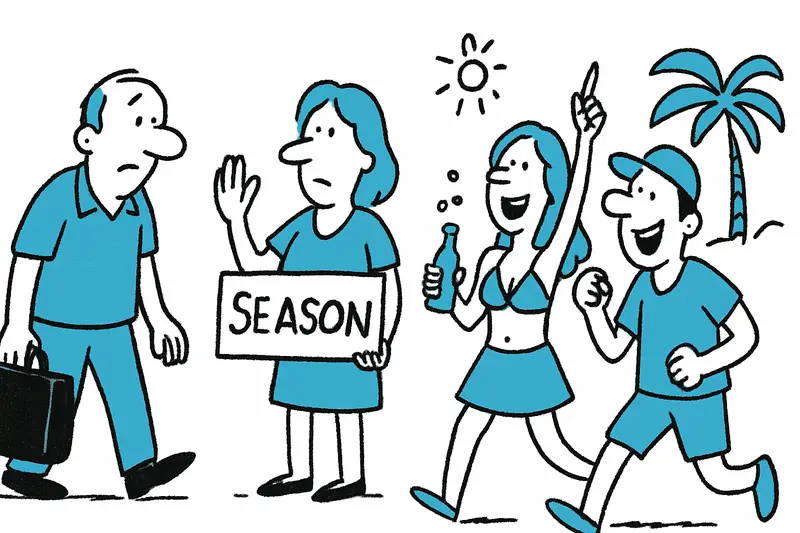
The end of the season has long been an event in its own right at Playa de Palma
A season comes to an end. You might expect that to mean stacking chairs, counting the till and finally taking a breath. At Playa de Palma, it can become a travel occasion of its own: a closing party promises more music, familiar faces and the feeling of being there for one last big moment. So the key question is not just whether these celebrations are fun. It is: What exactly is being farewelled—and who profits from it?
The business model is easy to spot without dismissing every celebration out of hand. An ending makes a good story. Anyone who regularly returns to the same place each summer associates it with more than drinks and speakers. There are holiday rituals, a song that plays every year, a group of friends who meet only in Mallorca. A closing party brings those feelings together for one evening or a weekend. The last visit becomes an occasion, perhaps even an extra trip.
That is not automatically objectionable. Bars and venues have to contend with a season that is not evenly spread throughout the year. Guests decide for themselves what to spend their money on. And on an island whose economy relies heavily on tourism, jobs and revenue are no small matter. But the staging should not be mistaken for a selfless farewell ceremony. The feeling is real. So is the sales pitch behind it.
A finale with an extension built in
The irony lies in the contradiction: a closing party is meant to mark the end while drawing in as many people as possible one more time. The calendar is charged with emotion. “Last chance” sounds like a loss, but it is also an effective sales pitch. You are not simply travelling there; you want to feel that you might miss out—and that is exactly what is supposed to feel unbearable.
You can easily picture this shift in everyday life on Schinkenstraße: in summer, groups squeeze between bars and the promenade, a suitcase rolls over the paving joints somewhere, and a chorus drifts out through an open door. Later in the year, the street feels wider, the sea breeze makes itself felt, and dark façades stand between the businesses that remain open. Even an ordinary walk sounds different then. Playa has not disappeared; it has simply slowed down.
Public attention at events like these tends to focus on whether it will be loud and crowded. That is understandable, but it is not the whole picture. Less visible are the workers whose shifts depend on seasonal peaks, the neighbours who have to live with the traffic and noise, and the question of whether a short-lived party atmosphere leaves anything behind beyond the event weekend. Who cleans up? What are the working conditions? How are arrivals and departures organised? And what is left for local businesses once the last guest is back at the airport?
The word “Mallorca” can also quickly become a backdrop for a familiar holiday script. But the island is not a theme park that switches off the lights in autumn and opens again in spring. People live in Palma and the surrounding neighbourhoods all year round. For them, the change of season is not just a sentimental moment; it affects work, customers, traffic and income. A meaningful discussion about closing parties should put these perspectives alongside the holiday photos.
What organisers, the local council and guests can do
Organisers can provide clear information well in advance about timings, entry, departures and noise control. They can plan shifts and contracts so that workers are not left wondering until the last minute where they stand. A clear point of contact for complaints is more useful than a vague promise that everything will be taken care of. And if an event trades on the name of Playa, it makes sense to involve local service providers and businesses visibly rather than using the neighbourhood as nothing more than a stage.
The local council can communicate and enforce rules transparently: permitted event hours, safe routes, waste disposal and traffic should all be addressed in advance. Guests have a smaller part to play, but it is not insignificant. Plan your journey there and back, do not spill into doorways or gardens, do not leave rubbish on the kerb, and do not treat workers as part of the scenery. That is not a major sacrifice. It is simply consideration for a place that has to keep functioning after the party.
It would also be worth trying to promote Playa as more than a stage for one last big night. Small cultural or sporting events outside the high season, welcoming public spaces and events designed for people from the surrounding area could make the calendar more varied. Not every solution has to be a huge festival. Sometimes it would already be a step forward if a November visit were not marketed solely as an afterparty for summer.
The end is no free pass
A closing party can be exuberant. It can also be a business. It becomes a problem only when the emotional packaging swallows up every other question: work, noise, traffic and life in the neighbourhood. Playa de Palma does not need a moral lecture about people who like to party. It needs organisers who do not abandon their responsibilities on the last night, and a public willing to look beyond the edge of the stage.
Summer ends whether or not there is a countdown. When farewell becomes a business, it should at least be clear who profits, who organises it and who clears up the mess the next morning. Then people can celebrate without pretending the island exists only for the final encore.
Frequently asked questions
What is a closing party in Playa de Palma?
What is Playa de Palma like after the summer season?
Is it worth travelling to Mallorca for a closing party?
What should I check before going to a closing party in Mallorca?
How can visitors be considerate at a closing party in Playa de Palma?
Do closing parties in Playa de Palma affect local residents?
Who benefits from closing parties in Mallorca?
How do closing parties affect seasonal workers in Playa de Palma?
Similar News
Four New Venues on the Airport Terrace: What the Plans Still Leave Unanswered
Aena plans four new commercial and food-service units on the sun terrace at Palma Airport. The tender is underway, but k...

Squatting in Mallorca: What the €33 Million Figure Really Tells Us
A study puts the annual cost of squatted homes in the Balearic Islands at €33 million. The figure is a warning sign—but ...
Mallorca in Late Autumn: When the Northwesterly Wind Turns the Day Upside Down
Thursday will be cool, gusty and occasionally wet on Mallorca. After a windy day, the weather is expected to settle down...

A Red Smile with Staying Power: TUI Brand Turns 25
Since 2001, the TUI logo has linked the different divisions of the travel group. On Mallorca, it now represents a brand ...
Tanker Sinks off Ibiza: Alert Level 2 Is a Precaution, Not an All-Clear
A cargo ship has sunk about 25 nautical miles off Ibiza. Spain is reinforcing its response teams over the risk of diesel...
More to explore
Discover more interesting content

Can Cap de Bou

Townhouse Lleo 72
