
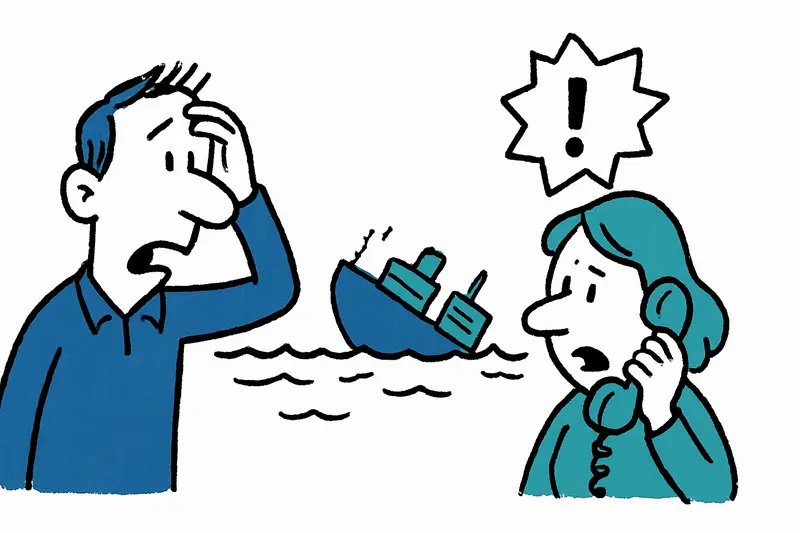
Tanker Sinks off Ibiza: Alert Level 2 Is a Precaution, Not an All-Clear
A cargo ship has sunk about 25 nautical miles off Ibiza. Spain is reinforcing its response teams over the risk of diesel pollution. What the alert level means—and which questions matter now.
What does Alert Level 2 mean after a cargo ship sank off Ibiza?
A ship sinks out at sea, and shortly afterward a higher emergency level is activated. At first, many people may take this to mean that an environmental disaster has already occurred. But that cannot be concluded from the alert alone: Alert Level 2 means the authorities are stepping up their response because pollution could occur. It does not yet establish whether any fuel has entered the water, or how much.
According to the information available, the cargo ship sank about 25 nautical miles off Ibiza. It was sailing under the Maltese flag; one of its 17 crew members died. The vessel was carrying diesel. The Spanish government activated Level 2 of the National Maritime Plan. The specialist vessel Clara Campoamor was mobilized for the response, and aerial surveillance flights were also planned.
An alert is a response signal, not a measurement
The distinction matters. A high alert level initially says something about how the response is organized and its scale—not necessarily that an oil slick has already been spotted or that a coastline has been affected. Level 2 is intended to make additional government resources available if existing teams are insufficient or a particularly sensitive area could be at risk. It is a precaution. And when a sunken ship is carrying fuel, taking precautions is no overreaction.
At the same time, the alert level should not be a substitute for specific information. For residents, fishers, and people at sea, other questions are crucial: Has fuel been detected on the surface? Have measurements or samples been taken? How are the wind and currents developing? Which areas are being monitored, and when will the next situation update be issued? The alert itself does not answer these questions.
When diesel pollution is possible, what happens over time matters. Some fuel may spread across the surface; other parts may change or mix with water and particles. The consequences depend on factors including the amount, the weather, and the location. This is no reason to make dramatic claims—but neither is it a reason to downplay the risk. While the situation is being assessed, clear interim updates are more valuable than a premature verdict.
The Balearic Islands are not ecological islands
The accident occurred off Ibiza, not Mallorca. But attention should not stop at an invisible line between the islands. The Balearics share a sea, and currents do not follow administrative boundaries. That does not mean pollution will reach Mallorca; there is no evidence of that in the information available. It does, however, explain why careful monitoring and clear communication matter here too.
We know the everyday view of the water: a halyard taps against a mast in the harbor, an outboard motor starts somewhere, and someone pauses at the quay to look out to sea. On days like these, the sea seems calm and familiar. That is precisely why possible pollution can be difficult to grasp when there is neither a visible slick nor reliable measurement data. There is a difference between “nothing to see” and “everything is fine”—a distinction the authorities should make clear to the public.
What should be publicly verifiable now
Good crisis communication does not need grand words. It needs a reliable schedule. The incident command should explain clearly when and where monitoring took place, whether fuel was detected, and which areas will be checked next. If there are no confirmed results yet, that should be stated too, along with the time of the next update. This leaves less room for rumors and false certainty.
A central, easy-to-find situation overview for the islands would also be useful, showing the location of the sinking, the areas currently being monitored, and guidance for shipping, fishing, and coastal communities. Measurements should be documented transparently, without concealing uncertainty. And if fuel is detected, people need prompt, specific information about which activities or stretches of coast could be affected. This kind of information is more helpful than a blanket “no danger” or a vague warning.
The causes and consequences should also be addressed in due course: What happened, which measures were actually deployed, and how will the ecological condition be monitored? For now, however, clarifying the situation comes first. The mobilization of a specialist vessel and the planned aerial surveillance show that the response has been stepped up. They do not answer the key question of whether diesel has leaked.
The sober assessment is this: Alert Level 2 is a serious precautionary signal, but it is not yet proof of widespread pollution. The authorities must do both at once—act quickly and explain precisely what is known, what is being investigated, and what remains unclear. The sea off Ibiza does not need a premature headline. It needs monitoring, verifiable facts, and sustained attention.
Frequently asked questions
What does Alert Level 2 mean after a ship sinks off Ibiza?
Has diesel been found in the water after the ship sank off Ibiza?
Is it safe to swim in Mallorca after the shipwreck off Ibiza?
Could fuel from the sunken ship off Ibiza reach Mallorca?
Where did the cargo ship sink, and what was it carrying?
What are authorities doing after the ship sank near Ibiza?
Where can people in Mallorca check for updates about possible sea pollution?
Why has there been no all-clear after the ship sank off Ibiza?
Similar News

Mallorca in Late Autumn: When the Northwesterly Wind Turns the Day Upside Down
Thursday will be cool, gusty and occasionally wet on Mallorca. After a windy day, the weather is expected to settle down...

A Red Smile with Staying Power: TUI Brand Turns 25
Since 2001, the TUI logo has linked the different divisions of the travel group. On Mallorca, it now represents a brand ...

Palma’s Shared-Room Prices Are Rising: When Even a Room Becomes a Housing Issue
A room in Palma costs an average of €586 a month. The figures show more than rising rents: supply is struggling to keep ...

Endangered Balearic Lizards: Why Mallorca Is Only Part of the Story
When discussing endangered lizards in the Balearic Islands, it is worth taking a closer look at the map: endemic species...

Tanker Sinks off Ibiza: What Matters Now Is Reliable Clarity
The sinking of a tanker off Ibiza raises questions that reach far beyond the site of the accident. What matters now is v...
More to explore
Discover more interesting content

Can Cap de Bou

Townhouse Lleo 72
