
Conflict at Ballermann: Song Line, Sunglasses, Egos
Conflict at Ballermann: Song Line, Sunglasses, Egos
A new party song ignites a heated debate between Tim Toupet and Heino. Between stage humour and personal dignity: who overstepped, who is exaggerating?
Conflict at Ballermann: Song Line, Sunglasses, Egos
Key question: How much mockery can the stage tolerate before it is considered disrespectful – and who decides that in a loud party mile like the Schinkenstraße?
What's it about
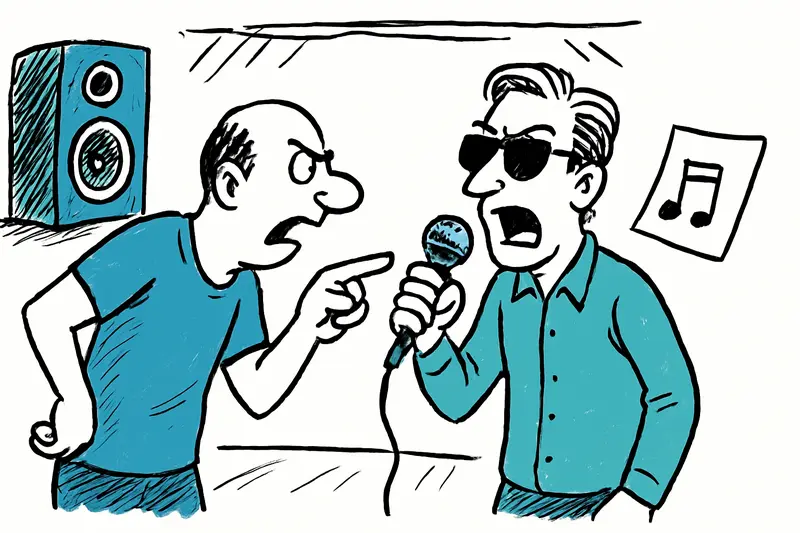
On the Bierkönig stage, where beer clinks in plastic cups and the speakers are rarely quieter than the conversations, Tim Toupet recently performed a new set. He introduced a song in which he refers to the distinctive sunglasses of a well-known folk musician and combines the state of having to party with a catchy word. That triggered strong reactions online and on the island: some see a cheeky tribute, others perceive the line as crossing a line toward an 87-year-old artist.
Critical analysis
One must not forget: Ballermann shows thrive on exaggeration, irony and winked self-exposure. Precisely for that reason, the conflict is not only a personal confrontation between two names, but a small lesson about public perception. If a song on stage produces roaring laughter and at the same time outrage in comment sections, the question arises whether the outrage comes from genuine hurt feelings or from a distribution of cultural sensitivities: older fans who expect respect, versus an audience that understands provocation as entertainment.
Added to that is the dynamics of social networks: viral videos — a short clip is replayed, ripped from context and commented on within seconds. A line that works live in a loud club acquires a different meaning online, because readers don't experience the scene – no music, no lighting effects, no pealing laughter that marks a statement as ironic.
What's missing in the public discourse
Talking about taste alone falls short. There is a lack of debate about how artists may deal with the age of their role models and what limits apply when health or dignity hypothetically come into play. Equally little is discussed about how event organizers should react: venues like the Bierkönig are not just stages, they are also public spaces with a responsibility for atmosphere and respectful interaction.
Everyday scene from Mallorca
Late in the evening on the Schinkenstraße it smells of grilled fish, churros and sunscreen, the bass keeps pumping, the group next to me toasts with plastic cups, and two pensioners on a bench shake their heads or laugh along – depending. This is where the ambivalence arises: for some the line is a gag, for others an unnecessary jab at an age that deserves respect.
Concrete solutions
1. Dialogue between those involved: A short conversation between the artists, moderated by a neutral party – that clarifies intentions and can clear up misunderstandings. Not every dispute needs loud social-media turmoil.
2. Marking context: Artists could briefly indicate for controversial pieces whether a text is intended ironically or takes a critical stance. It sounds simple, but context prevents misinterpretations online.
3. Event code of conduct for organizers: Clubs and party temples could develop guidelines that help avoid insults against particularly vulnerable groups or the elderly – without deadening artistic freedom.
4. Conscious use of clips: Promoters and acts should consider which scenes they share as short videos; an excerpt can appear completely different online than in a live set.
Conclusion
The dispute over a song line is more than celebrity gossip: it shows that language on and off the stage has effects that not everyone can see at first laughter. In Mallorca, where audience and artists are often very close, less distant outrage and more open conversation would be a more sensible approach. Those who laugh or furrow their brow on the Schinkenstraße in the heat of the night should be aware: stage is action, net is reaction – both need more context and sometimes a bit of consideration.
Frequently asked questions
When is the best time to visit Mallorca for good weather and outdoor activities?
Is it possible to swim in Mallorca year-round, and when is the water warmest?
What should I pack for a trip to Mallorca?
What are some essential Mallorca experiences for first-time visitors?
What are good ways to get around Mallorca without renting a car?
Which Mallorca beaches are family-friendly and safe for kids?
How can I budget for a Mallorca trip, including food and activities?
Is Mallorca a safe destination for travelers, and what practical tips should I know?
Similar News
Heat Bonus in Mallorca: 100 Euros Extra for Outdoor Staff at MarSenses
MarSenses pays employees who worked outdoors in August an extra €100 as recognition. Lighter uniforms, reduced hours for...
Renovating in Mallorca: What You Really Can Do Without Neighbour Consent
Many think they can do whatever they want in their apartment. That's partly true — but only as long as structural elemen...
Cafetería San Siro: A Meeting Place on Schinken Street Since 1966
In the middle of Schinken Street, Cafetería San Siro has been offering Mallorcan hospitality for more than six decades —...
From Ballermann to Prison: What the Verdict Against the Femina Operator Means for Palma
The Munich Regional Court convicted a German operator for subsidy fraud. What does the verdict mean for the Femina Club,...
Underpass Verge de Lluc: 19-year-old fights her way out of flooded car – a warning sign for Palma
A 19-year-old recently escaped swimming from her car after the Verge de Lluc underpass held up to one and a half meters ...
More to explore
Discover more interesting content

Can Cap de Bou

Townhouse Lleo 72
