
Cafetería San Siro: A Meeting Place on Schinken Street Since 1966
Cafetería San Siro: A Meeting Place on Schinken Street Since 1966
In the middle of Schinken Street, Cafetería San Siro has been offering Mallorcan hospitality for more than six decades — a family-run business that combines tradition, regulars and jobs.
Cafetería San Siro: A place where time and tapas meet
Walking along Schinken Street, San Siro is hard to miss: the clink of glasses, a few Spanish pop songs from the 80s in the background, the muted laughter of German guests and the scent of frying fat and ham drifting from the open kitchen. The café-restaurant has stood here since 1966 and doesn't feel like a relic, but like a piece of living island history.
Family, staff, regulars
Today the establishment is run by Laura Mestres Mut, who leads the house in the third generation. Her father Bartolomé Luis Mestres Bauza still drops by regularly; that's part of the rhythm here. Head chef Raúl González Moral and a team of 17 employees make sure the classics reach the table: chorizo, croquetas, boquerones, fried calamari and of course ham, often hanging here in whole legs. Many employees have been with the place for two or three decades — you can tell by their routine and the way orders arrive almost by instinct. This local continuity is also highlighted in Palma's Quiet Favorites: Where Neighborhood Still Comes to the Table.
Who sits at the table?
In high season the guests are predominantly German-speaking; the owners appreciate that many visitors return year after year, some even for around 20 years. In winter the picture changes: then it is mainly locals who visit — estimated to be a high share of about 80 percent. The mix is what makes it: young holidaymakers, couples, taxi drivers after work and regulars from the neighborhood share the tables.
What people order — and what they don't
Typical are local beers like Mahou or San Miguel and the Mallorcan herbal liqueur Hierbas; Serrano and Ibérico ham are popular souvenirs, available here in portions for around 11 to 15 euros. Notably, you hardly hear German chart music. Instead, Spanish pop and some tracks from the 80s and 90s play. A small innovation that shows how tradition and change are combined: three years ago a kebab stand was added — not because the classics are rejected, but to satisfy even more palates.
Why this is good for Mallorca
San Siro is more than a place to eat. It is an employer, a meeting point and a piece of urban history in a tourist-heavy area. Such family businesses create local identity, provide jobs over decades and act as bridges between visitors and locals. Similar examples of rooted hospitality are explored in Characterful hosts in Soller: How a Palma heritage shapes the mountain town. The combination of consistency (a familiar atmosphere, known dishes) and small adjustments (additional offerings, flexible opening hours) is a model for how traditional gastronomy on the island can endure.
A scene from everyday life
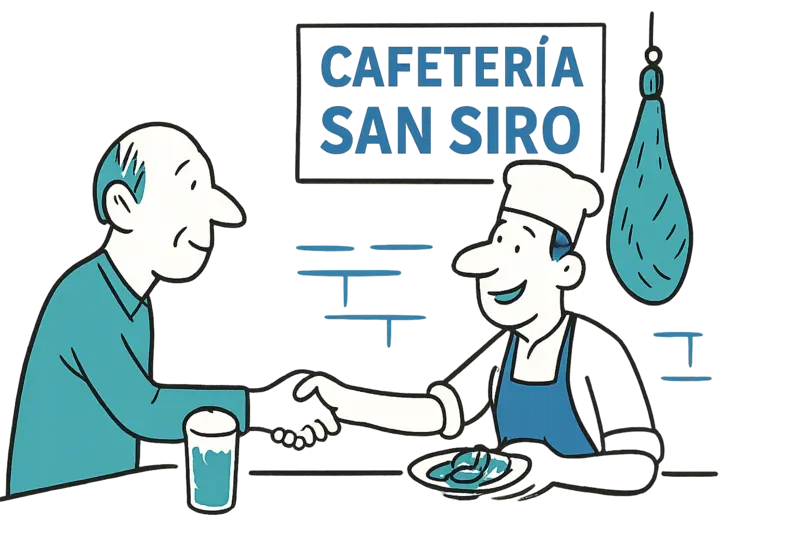
On a late-summer afternoon an older German regular sits at the bar, orders his beer, greets the cook with a handshake and takes his small plate of ham. Outside rolling suitcases clack along the street, it smells of sea and frying oil, and the music switches from a classic to a current Spanish hit. All of this happens without much fuss — and that's exactly what many visitors love. The island's communal food culture is shown dramatically in Sant Joan: 76-kilo Sobrasada Brings the Plaça Together.
Looking ahead
San Siro shows that reliability and adaptability are not mutually exclusive: tried-and-tested recipes, a well-coordinated team and openness to small innovations can keep a place alive. For Mallorca this means: places rooted in their neighborhoods strengthen everyday life on the island and remain anchor points as tourism and habits change. So if you visit Schinken Street soon, pause for a beer and a portion of croquetas — it's a small piece of island culture that still works.
Frequently asked questions
Why is Cafetería San Siro a good place to experience Mallorca’s neighborhood culture?
What dishes and drinks should I try at San Siro in Mallorca?
How does San Siro’s clientele change with the seasons in Mallorca?
How does Cafetería San Siro balance tradition with change?
What makes San Siro a piece of Mallorca’s urban history?
What is the ambience at Cafetería San Siro like?
Is San Siro more of a tourist stop or a locals’ favorite?
Why should I consider San Siro for a meal on Schinken Street?
Similar News

From Ballermann to Prison: What the Verdict Against the Femina Operator Means for Palma
The Munich Regional Court convicted a German operator for subsidy fraud. What does the verdict mean for the Femina Club,...

Underpass Verge de Lluc: 19-year-old fights her way out of flooded car – a warning sign for Palma
A 19-year-old recently escaped swimming from her car after the Verge de Lluc underpass held up to one and a half meters ...

When the Floodgates Open Again: Why Palma's Floods Aren't a Coincidence
A sudden heavy downpour around 5 p.m. brought Palma to a standstill: flooded streets, full basements, panicked commuters...

Playa de Palma: Life-saving at Balneario 11 – Lifeguards Act Quickly
A German holidaymaker suffered cardiac arrest at Playa de Palma. Lifeguards resuscitated her on the beach; emergency ser...

Dizziness at the Wheel: When the Access Road to Sa Calobra Becomes a Nightmare
A trip to the gorge of Sa Calobra ended in panic for a holidaymaker: not the sea, but the hairpin roads of the Tramuntan...
More to explore
Discover more interesting content

Can Cap de Bou

Townhouse Lleo 72
