
Drugs, Crypto and a Well-Known Surname: A Reality Check on the Arrest in Málaga
Drugs, Crypto and a Well-Known Surname: A Reality Check on the Arrest in Málaga
The arrest of Francisco de Borbón in a money-laundering investigation raises questions: How do the links between drug trafficking, cryptocurrencies and individuals from prominent families work? A critical look at what's missing and how authorities, banks and society should respond.
Drugs, Crypto and a Well-Known Surname: A Reality Check on the Arrest in Málaga
Key question: How deep are the connections between organized drug flows, money laundering via crypto companies and established networks?
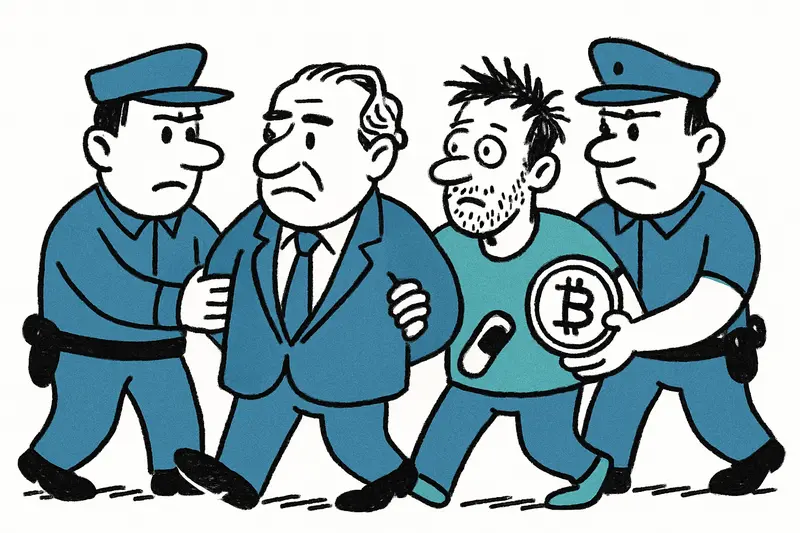
The recent arrest in Málaga, in which Francisco de Borbón is among those suspected of money laundering and which has drawn political, social and legal attention, is more than just another chapter in the long chronicle of organized crime. According to the information available so far, he is accused of being involved in laundering the proceeds of a drug trafficking organization through a cryptocurrency company. Three other people — including a woman and a lawyer — were also detained. The investigation is being led by a judge of the Audiencia Nacional, who has been working on a larger complex case since November 2024.
Critical analysis: At first glance two things stand out. First: the obfuscation of the origin and flow of illegal funds is increasingly digital. Cryptocurrencies create new loopholes because transactions, despite public blockchains, are difficult to link to real identities when professional structures and straw men are used. Second: the involvement of people with established family names shows that criminal networks do not only work with "shadow figures" but also exploit connections in more formal social strata, whether through service providers, lawyers or purported entrepreneurs.
The file concerning cocaine smuggling in fruit containers, which was already the subject of police actions at the end of 2024, provides additional material that invites skepticism: a previously arrested former head of drug enforcement in Mallorca is said to have facilitated the smuggling and collected large sums for each shipment. Investigators say they found €20 million hidden inside walls at his place in Alcalá de Henares, and nearly €1 million in an office — figures that hint at the scale of the money flows and raise the question of how such sums went undetected for so long.
What is missing from the public debate: There is a lot of talk about names, photos and sensational details. Much less attention is paid to how the technical and financial mechanisms actually work. Examples: What role do trust companies, shell companies or offshore structures play in connection with crypto platforms? How do funds move from a smuggling ring’s cash register into a seemingly legitimate company? The vulnerability of public institutions to insider threats — that is, officials who abuse their position — is also often only touched upon, as seen in large-scale raids in Palma, Inca and Binissalem that revealed suspected abuse of office. And finally: how well are banks, crypto exchanges and lawyers protected against targeted, professional concealment?
Everyday scene from the island: Anyone strolling along Palma’s Passeig Mallorca today hears the ferries in the port, sees delivery vans carrying crates, and meets taxi drivers in the afternoon complaining about fares. Under this everyday surface, worldwide transactions run — anonymous, digital, fast. The neighbor in the quarter could be a tax advisor, the man with the briefcase a lawyer: no one necessarily has anything to hide. But the same normality makes it easier for criminals to disguise themselves. Such details help us bridge the gap between headline and daily life.
Concrete solutions: First: stronger regulation and transparency obligations for crypto service providers. Supervisory authorities must require proof of source of funds and the ultimate beneficial owners — not only for large sums at a single point in time, but continuously for suspicious patterns. Second: better interfaces between financial supervisors, police and international authorities. Money laundering knows no borders; investigations should therefore be data-driven and cross-border. Third: protection for whistleblowers in public institutions and private companies; many cases fail due to a lack of internal tips. Fourth: awareness-raising and mandatory compliance training for lawyers, notaries and financial advisers — professional groups that often serve as entry points. Finally: local information campaigns so that citizens and businesses can recognize and report possible indicators — including in Palma, Manacor and Llucmajor.
What the judiciary must deliver: Independent, swift reviews that examine both money flows and potential abuse of office. Investigations aimed only at spectacular results are not enough — detailed forensics, conceptual tracing and transparent reporting on interim steps are needed, as far as legally possible.
Punchy conclusion: The arrest is a signal, but not proof of the full extent. When crypto and classic concealment mechanisms come together, a hybrid emerges that neither old nor new systems automatically protect against. For Mallorca this means: we should cultivate sensitivity instead of shock, ask questions instead of rushing to judgment, and strengthen local and national structures so the island remains not only a tourist destination but also financially clean.
Quiet postscript for the walk along the harbor: while the crows above Passeig Mallorca scavenge for scraps, we should also pay closer attention to the traces that large sums of money leave behind — regardless of which surname those involved bear. In that sense, the episode echoes a major raid in Palma and Son Banya that led to 17 arrests and similar operations that demand deeper scrutiny.
Frequently asked questions
Why do organized crime cases in Mallorca often involve crypto companies?
How do investigators trace money laundering in Mallorca when the funds are hidden through companies?
What does a large drug money case mean for Mallorca’s financial controls?
Can a well-known surname protect someone in a Mallorca criminal investigation?
What should banks and lawyers in Mallorca watch for in suspicious transactions?
Is Palma affected by these kinds of money laundering cases?
What role did the former Mallorca drug enforcement chief allegedly play in the case?
Why are these Mallorca cases often linked to fruit container smuggling?
Similar News
Reality check: Palma's "white" torrent — harmless salt or neglected warning sign?
White crusts on the Torrent de Sa Riera are causing a stir. Emaya describes them as salt deposits. Our reality check: wh...
When Ryanair's fleet grows: What Mallorca's travelers should know
Ryanair will soon receive 737 Max 10 jets. The larger aircraft offer potential savings — but also new risks for flight o...

Rising fuel and housing costs: Why Mallorca's overland buses are suddenly overcrowded
More and more people are leaving Palma — and boarding TIB buses: Between January and August 2026, the network recorded o...

Carriages Without Horses: Palma Plans E-Carriages – a Reality Check
Palma plans to switch to electric carriages in 2027. The prototype was shown near the cathedral. What is the technology ...

Record season, empty coffers: Who really benefits from the tourism boom?
Full hotels and more flights: the numbers sound impressive — yet many locals feel no benefit. A reality check with an ev...
More to explore
Discover more interesting content

Can Cap de Bou

Townhouse Lleo 72
